



Solid Potassium Acetate Deicer: Packaging and Logistics for Bulk Buyers
How the product is packed and how it gets to you are the two most important things that determine how quickly your business runs or whether it runs into costly delays when you need to get a lot of deicing solid potassium acetate(CAS NO.: 127-08-2). Potassium acetate (CH₃COOK, CAS No. 127-08-2) is a white crystalline compound that can melt ice at temperatures as low as -30°C. This makes it the best non-chloride deicer for airports, bridges, and other environmentally friendly infrastructure. This guide tells bulk buyers everything they need to know about everything from shipping regulations to the right way to package items. This way, you can feel confident in your buying decisions.
Understanding Solid Potassium Acetate Deicer
You should know what makes this deicer different before you buy a lot of it. This will help you pack and ship it.
Chemical Identity and Physical Properties
It is a white crystalline solid that dissolves in water. Its molar mass is approximately 98.14 g/mol. Potassium acetate is highly soluble in water. Potassium acetate has a melting point of approximately 292°C. In other words, the chemicals don't change when it's moved or stored regularly. It can be used in infrastructure and industry because its potassium acetate content is ≥99.0% (CH₃COOK), as specified in the product CoA, and it contains ≤0.05% Ferrum(Fe) and ≤0.2% chloride, subject to confirmation by the product CoA.
Why Hygroscopicity Matters for Buyers?
The word "hygroscopic" means that it can hold water from the air. They will soak up water and harden into cake-like blocks that are hard to spread out and dose properly if you don't seal them well after they are packed. On roads and airports, some of your things might not work as well, and your application tools might not work right.
Performance Advantages Over Chloride-Based Deicers
It is known that rock salt and calcium chloride can break down metal, masonry reinforced with steel, and aeroplane parts. However, potassium acetate does not. As soon as it is used, it melts faster because it gives off heat when it mixes with water. It doesn't need as much oxygen (BOD) as urea does to break down. This makes it safe to use near water and other safe places.
Packaging Solutions for Bulk Potassium Acetate Deicing Solids
Good packaging does more than just look nice; it also keeps your product pure, easy to flow, and fresh from the plant floor to the storage center.
Standard Packaging Formats Available
SHANXI ZHAOYI CHEMICAL ships deicing solid potassium acetate in two main types that meet all of your bulk buying needs:
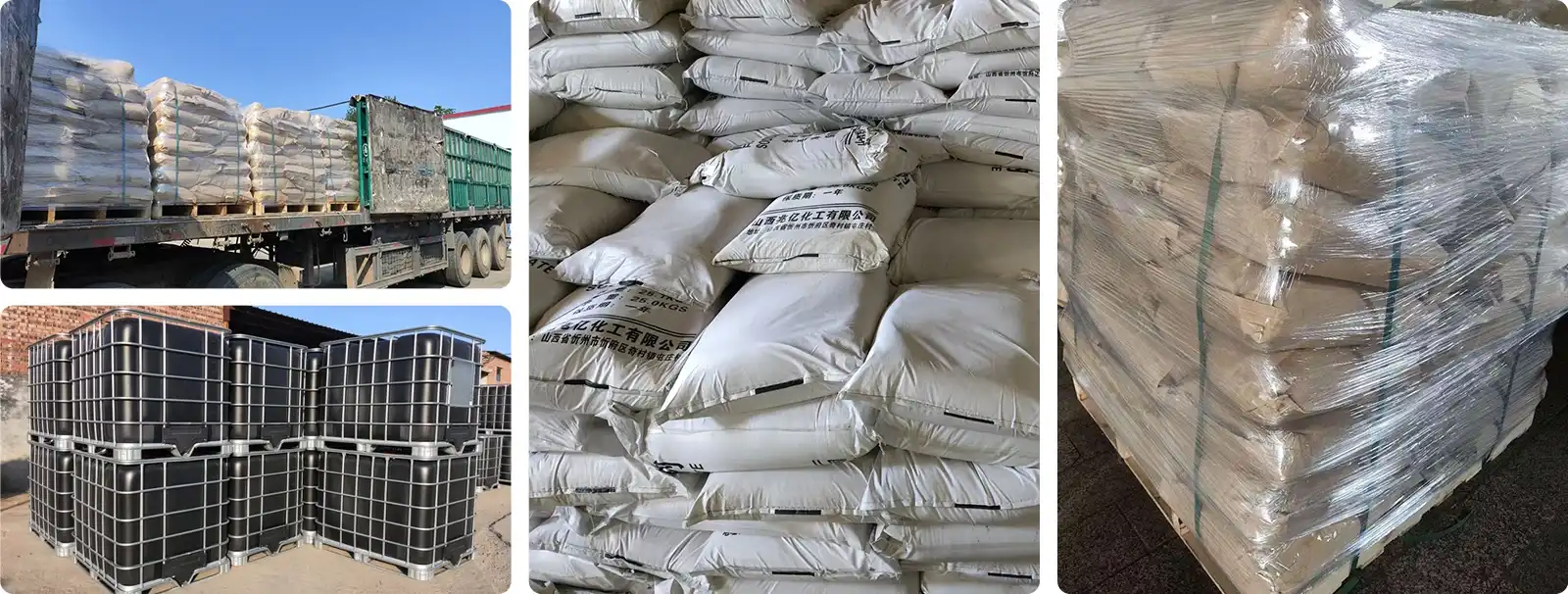
- 25 kg plastic woven bags—These are double-layered and have a moisture-resistant inner liner, which makes them perfect for buyers and distributors who buy in bulk and businesses that need unit weights that are easy to handle by hand or with some automation. Each pallet arrangement keeps bags stable while they are being shipped over long distances.
- Flexible Intermediate Bulk Containers (FIBCs) hold 1,000 kg of goods. These are the standard choice for large buyers like airport operators, chemical distributors, and city road authorities. They cut down on the cost of moving each unit and work well with both forklifts and transport systems.
Both forms of deicing solid potassium acetate are sealed so that moisture can't get in. If a buyer has specific needs for labelling, palletising, or filling containers, they can ask for custom packaging arrangements.
Moisture Control as a Packaging Priority
Every bag that leaves our plant is covered with a moisture shield because potassium acetate crystals soak up water in the air. Buyers should also make sure that receiving warehouses stay dry and have good airflow. Keeping things close to heat sources or in places that don't have airflow speeds up the loss of wetness, even in bags that are still sealed. As important as the packaging itself is, keeping the area dry.
Shelf Life and Inventory Planning
If you store deicing solid potassium acetate the right way, it will keep working perfectly for another one to three years. For big buyers who manage seasonal goods, like cities and airports that stock up before winter, this shelf life window lets them buy more without worrying about the product going bad, as long as the right storage conditions are always used.
Logistics and Shipping Considerations for Bulk Buyers
A chemical that absorbs water and is made in China needs to be bought in the US. It takes more work to plan this than planned goods. Make plans for these things.
Transport Modes and Lead Times
Most of the time, sea freight is the best and cheapest way to get a lot of goods to U.S. ports. After getting through customs, the package is driven to shops in the US. Lead times change with the seasons, the number of orders, and where the port is located. Still, buyers should plan for normal shipping times, which should include the last mile of getting the goods to the US. SINOCHEM can offer set times because they work with well-known foreign goods companies.
Regulatory Documentation and Compliance
When bulk potassium acetate (CH₃COOK) is imported, it needs to be shipped with the right paperwork. An SDS or MSDS sheet for safety information, a COA for analysis, customs forms, and, if needed, import permits are all part of this. Under international shipping rules, the item is not seen as dangerous, which makes it easier to ship than chemicals that are based on chloride. People who want to buy something should make sure their customs broker has all the information they need before the goods arrive at the port.
Supply Chain Reliability for Seasonal Demand
There are times when everything in the supply chain breaks down, but not all at the same time every year. You can almost always get better freight rates and a spot on plant runs if you buy something before winter. This company can handle both one-time sales and long-term order supply plans because it can make 150,000 tonnes a year. This gives buying teams more freedom in how they make plans.
Comparing Potassium Acetate with Other Bulk Deicers
Purchasing managers can better explain to budget boards why they need potassium acetate if they know how it compares to other choices.
Performance Against Rock Salt and Urea
There is no way for rock salt to work below -9°C, and it makes buildings made of metal and concrete rust faster. Because it adds a lot of nitrogen to wastewater and doesn't work below -7°C, urea is not a good choice. deicing solid potassium acetate(CAS NO.: 127-08-2) can still work even when it's cold outside. It doesn't make any chemical waste, as the acetate ions (CH₃COO⁻) may undergo biodegradation under suitable environmental conditions.
Total Cost of Ownership vs. Upfront Price
Potassium acetate costs more per tonne than rock salt. When you add up how much it costs to fix broken buildings, build new ones, and pay fines for not following environmental rules over the course of a season, potassium acetate usually comes out on top. When chloride-based deicers are switched out for acetate-based ones, airports and bridges in the US need to be fixed less often.
Best-Fit Applications
Potassium acetate (CH₃COOK) is one option for solid runway and taxiway deicing; suitability should be verified against the applicable SAE AMS 1431 requirements. K+ is the only thing that can be used to melt snow and ice on airport runways according to SAE AMS 1431 rules. Overpasses with exposed rebar, buildings near water protection zones, and LEED-certified buildings that actively track the chemistry of rainwater are also the best places to put it.
Selecting a Trusted Supplier for Bulk Potassium Acetate Deicer
A good product is only valuable if the company that sells it can back it up with consistent production, well-documented quality systems, and a history of safe exports.
Certifications and Quality Systems
SHANXI ZHAOYI CHEMICAL has ISO 9001, ISO 14001, and ISO 45001 certifications, which cover quality management, being responsible to the environment, and worker safety, respectively. Full-process quality monitoring and traceability records are used for every production batch. For certain uses, there are different Kosher and Halal licenses.
Export Experience and Global Distribution
The company has been making acetate for more than 30 years and usually sends its products to North America, Europe, and Asia. It was founded in 1988. The building is 27,000 m² and has 60 employees, as well as engineering and operations support teams. With this much practical knowledge, there are fewer shocks when it comes to paperwork, communicating wait times, and making sure orders are correct.
Technical Support and After-Sale Service
Buyers get access to full technical instructions, application help, and quick account support in addition to the package itself. Having a technically skilled supplier contact is important whether you are calibrating spreader equipment for granule size or making sure that compliance specifications for a municipal tender are met. For questions about individual products, you can email the team at sxzy@sxzhaoyi.com.
Conclusion
When you buy a lot of chemicals, you need to plan how to transport and pack them. They decide if the things get there on time and are in good shape. Make sure the package stays dry, have the right paperwork for customs, and buy from a company that has used this method before. This is another easy but pricey way to get deicing solid potassium acetate(CAS NO.: 127-08-2). Problems with suppliers are less likely to happen if buyers deal with them early on and work with a provider that has clear quality systems and a variety of packaging options. This makes them more ready for the season.
FAQ
What is the typical shelf life of solid potassium acetate deicing products?
Solid potassium acetate stays chemically active for one to three years if it is kept in a dry, sealed space away from heat and moisture. Being wet is the main thing that shortens the shelf life, so the conditions of the warehouse are just as important as the packaging itself.
How environmentally safe is potassium acetate compared to chloride deicers?
Potassium acetate doesn't corrode and breaks down naturally. Because it pollutes soil and water much less than sodium chloride or calcium chloride, it can be used near watersheds, protected vegetation areas, and LEED-certified buildings.
What packaging options does SHANXI ZHAOYI CHEMICAL offer for large orders?
Standard choices include FIBC tonne bags that hold 1,000 kg and 25 kg moisture-resistant plastic weave bags. Custom packaging arrangements can be made for buyers who have specific needs for handling, labelling, or filling containers.
Is potassium acetate safe to ship internationally without hazardous goods restrictions?
Yes. Standard foreign shipping rules don't consider potassium acetate to be a dangerous material. This makes freight paperwork easier than for many chloride-based chemicals that are similar.
Get Bulk Pricing from a Trusted Deicing Solid Potassium Acetate Manufacturer
All of SHANXI ZHAOYI CHEMICAL's products meet the requirements of ISO 9001, ISO 14001, and ISO 45001, and they can make 150,000 tons of deicing solid potassium acetate every year. This is true whether you need 25 kg bags to send goods across the region or ton bags to store full containers in the city. Our staff can give you exact wait times, all the paperwork you need to export, and quick technical help. If you go to sxzhaoyi.com or email us at sxzy@sxzhaoyi.com, you can get a sample of a product or talk about your seasonal order needs.
References
1. Society of Automotive Engineers. SAE AMS 1431: Compound, Solid Runway and Taxiway Deicing/Anti-Icing. SAE International, 2013.
2. Fischel, M. Evaluation of Selected Deicers Based on a Review of the Literature. Colorado Department of Transportation, 2001.
3. Ramakrishna, D.M., and Viraraghavan, T. "Environmental Impact of Chemical Deicers – A Review." Water, Air, and Soil Pollution, 2005.
4. American Association of State Highway and Transportation Officials (AASHTO). Winter Maintenance and Alternative Deicing Strategies. AASHTO, 2018.
5. Transportation Research Board. Snow and Ice Control: State of the Practice. National Academies Press, 2014.
6. Federal Aviation Administration (FAA). AC 150/5370-30: Airport Winter Safety and Operations. U.S. Department of Transportation, 2020.

USER EVALUATE
Here is the customer's evaluation of us