



How Does Snow Melting Solid Potassium Acetate Perform on Industrial Pavement?
Snow Melting Solid Potassium Acetate(CAS NO.: 127-08-2) works well on industrial pavement when used correctly. The crystals break down when there is water on the surface. This makes water less likely to freeze, which makes it easier for ice to stick to asphalt or concrete. Its acetate chemistry doesn't have any chloride, which is good for metal tools, loading docks, and concrete that is stronger. To fully explain the results, one number is not enough. They depend on the temperature of the road, the depth of the snow, the amount of salt used, and the length of time it was used. We'll show you how to store it, use it, and try it on before you buy it.
How Does Snow Melting Solid Potassium Acetate Melt Ice and Handle Cold?
How do the Crystals Break the Ice Bond?
Solid potassium acetate needs water to work. When the white crystals hit snow or ice, they make a brine. They dissolve in the water present on the surface of snow and ice to form a brine. The resulting brine has a lower freezing point than pure water, helping melt existing ice under suitable temperature conditions. It then spreads along the edge of the ice and pavement, weakening the bond between them. Slush is all that's left, which can be pushed away with a plow or scraper. The chemical formula of potassium acetate is CH₃COOK, and its molar mass is approximately 98.14 g/mol. Potassium acetate is a white crystalline solid that dissolves readily in water. Solids are easier to ship and store than liquids, but they need to be wet first. Speed is determined by how quickly the crystals spread, how deep the snow and ice are, how many cars are on the road, and how long it takes to plow.
Working Temperature: Why One Number Never Fits
A single lowest working temperature is what most people want. We wish it were easy. At -59.4°C (-75°F), a 50% acetate solution freezes, but that temperature is only for the liquid at that concentration. The sentence doesn't say anything about dry ice on a cold road. Before the practical limit can be raised, the solids have to dissolve. As more snow melts, the brine gets thinner, which makes this impossible. As low as -35°C (-31°F), our product data shows that it still works well. Still, you should get a report on a test of how well the de-icing worked and compare it to the surface temperature records you already have. There may be other materials that need to be used, or the ice may need to be pre-wetted or plowed more if it is heavy and packed down.
Anti-Icing Versus Deicing on Pavement
More than most people think, what happens changes when they buy something. You can keep snow and frost from sticking to pavement by treating it so it doesn't freeze. It usually takes less chemical and less time to plow with this method because the ice never sticks to the surface. When you de-ice the road, you do something to it after the snow or ice has stuck to it. That job is usually done with a plow because it takes longer and more chemicals to do. What the Federal Highway Administration says about how to act quickly is the same thing that is said here. Shaded ramps, bridge approaches, and loading dock aprons freeze first, so you should start by treating those areas. If you write down the surface temperature, dose, and melt time for each shift, you can compare them.
Pavement Compatibility and Comparison With Other Deicers
Concrete, Asphalt, and Metal Surfaces
Chloride deicers can bring chloride ions into concrete, where they can hurt the steel reinforcement. This has been known for a long time by people who study transportation. Our standards say that residual chloride must be 0.2% or less, Ferrum (Fe) must be 0.05% or less, and water-insolubles must be 0.05% or less. Acetate chemistry doesn't have any chloride in it. In places with reinforced concrete, parking decks, and metal tools, that profile works well. The condition of the pavement is still important. What happens depends on how old the concrete is, how well it drains, and how often it is used. In the lab, acetate deicers have been linked to a reaction between alkali and silica in concrete that has reactive aggregate. Get corrosion data and look over your aggregate history before you go big. The asphalt should also be checked out in a small area.
Environmental Points to Check
The information we have about Snow Melting Solid Potassium Acetate(CAS NO.: 127-08-2) says that it is biodegradable, but impact-free does not mean biodegradable. Acetate can be biodegraded by microorganisms, a process that may consume dissolved oxygen in water. According to NCHRP Report 577, acetate-based products should pay attention to oxygen demand, especially if they are near small streams and storm drains. Also, keep an eye on the soil, plants, runoff paths, and potassium levels. A lot of industrial sites need discharge permits to operate, so find out what the rules are where you live before you buy something. Trusting broad "eco-friendly" labels is not a good idea. Ask for SDS and test data instead, and then match them to your drainage plan. As long as you ask, we can give you SDS, COA, and TDS files.
Comparison With Sodium, Calcium, and Magnesium Chloride
Temperatures of the eutectic zone taken in a lab give a rough scale. Calcium chloride is close to -51°C (-60°F), magnesium chloride is close to -33°C (-28°F), and Sodium chloride (NaCl) has a eutectic temperature of approximately -21°C (-6°F). It can get as cold as -76°F (-60°C) in potassium acetate solution. These are not the limits of the field; they are the values for the best solutions. In cold weather, calcium chloride melts quickly. Rock salt costs less per ton, and magnesium chloride might work in places where it is easy to get. You can find out how much it costs by adding up how much potassium acetate is used, how often it needs to be used, the work that goes into it, the cost of fixing corrosion in steel and concrete, and the cost of dealing with runoff. Most of the time, the higher price is worth it for places with sensitive concrete, equipment at an airport, or chloride limits. A gravel yard might not.
Applying, Storing, and Handling Solid Potassium Acetate
Application Workflow
Set a clear goal, like melting packed snow, breaking up a bond of ice, or getting the grip back. Then do these simple things:.
- Inspect the pavement and measure surface temperature.
- Plow loose snow first.
- Spread the crystals with a calibrated spreader.
- Allow dwell time.
- Plow again and check traction.
The right rate changes depending on temperature, snow depth, and moisture, so we don't give everyone the same amount. Start with the TDS rates and your trial data. After each event, make changes. Do not forget to record how much you use per room. Extra use raises costs and runoff loads without any promise of a gain. Spreaders and sensors that check the road surface help make sure that each pass is the same.
Storage and Moisture Control
As potassium acetate crystals are stored, they either stay loose or stick together. This is because potassium acetate crystals take in water from the air. Keep the bags closed and out of the heat or rain. Keep them in a warehouse that is dry and has good airflow. Do not let them touch the ground, and make sure that any bags that are only partly used are closed right away. While the goods are being shipped, keep them dry, and be careful not to tear the bags when you reload them. Keep the item away from things that could hurt you. Get your stock ordered early so it gets there before the first storm, and use the older stock first. Send us the batch number and information about how you stored the product, and we'll help you figure out what went wrong.
Packaging, Safety, and Paperwork
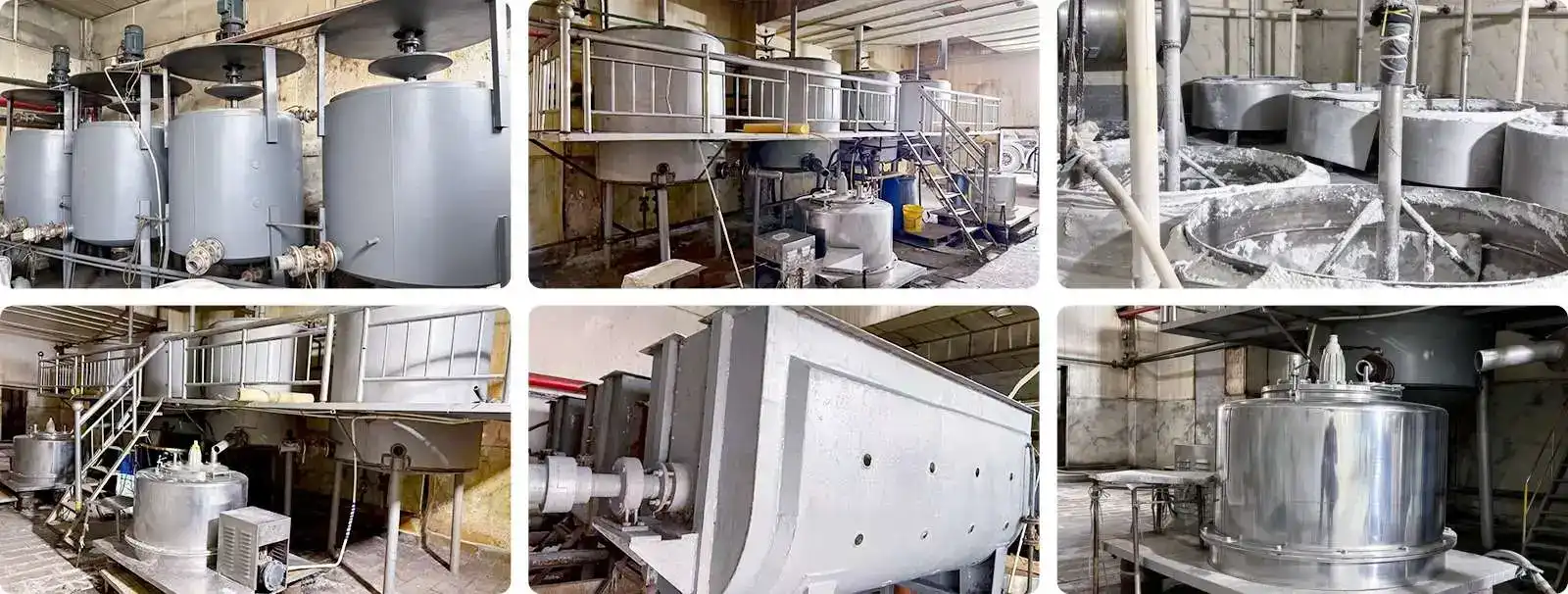
Snow Melting Solid Potassium Acetate comes in ton-bags that hold 1,000 kg or 25 kg of plastic. We can package your order in any way you want. Small crews often choose 25 kg bags because they are easy for workers to carry by hand. When big yards with forklifts need to move a lot of bags quickly, they often choose ton bags. Follow the SDS for safety gear, how to stop dust from spreading, first aid, and how to clean up a spill. Get rid of spills before they get washed down the drains by the rain. The kind of packaging you use should depend on how much you need each year, how much space you have in your warehouse, and how you plan to load containers. Our team can give you COA, SDS, and TDS documents. You can also look at our ISO 9001 and ISO 14001 certificates.
Buying and Validating Before Full-Scale Procurement
What to Ask a Supplier?
It's not enough to just compare prices to be fair. Look at the specification sheet to see the limits for chloride, ferrous content, water-insolubles, and content (ours is 99.0% or higher as CH₃COOK). For each batch, ask for a COA, an SDS, a TDS, and any corrosion or de-icing test reports. Look at the packaging, the minimum order size, and the time it takes to deliver. The company SHANXI ZHAOYI CHEMICAL has been around since 1988 and has 60 workers on a 27,000 m² site. Every year, we can store 150,000 tons of all types of acetate, which helps us plan our seasonal needs. We use FOB or CIF terms when we ship from Lianyungang, Qingdao, or Shanghai. The things we send go to Asia, Europe, and the Americas.
Counting the Total Cost
It's not all about the price paid per ton. A fair cost model takes into account work, spreader time, storage space, freight, and runoff handling, as well as the amount of material used in each storm. You should also think about how much it will cost to fix the damage that chloride deicers cause to steel, concrete, and tools over time. Since potassium acetate costs more per ton than rock salt, the money saved must come from not having to fix things as often, keeping things safe, or staying within chloride limits. You should use the information from your test to figure out how much it costs to treat each area. Your finance team can use that number to compare things instead of just looking at the list price when making decisions.
Running a Field Trial
There is less risk after a controlled trial than after an order in bulk. There are a lot of common places to shoot, such as loading ramps, airport service roads, paved areas with shade, and busy entrances. Keep a control area that you treat with the deicer you already have. Track time to first melt, time to safe traction, leftover slush, dose, reapplication count, equipment condition, runoff, and cost per area. Have the people who work in purchasing, operations, engineering, and the environment all look over the results at the same time. After getting good results, making sure all the paperwork is in order, making sure there is enough supply, and following all the local rules, you should only move on to a bigger contract. Before it can be used at an airport, any new chemical also has to go through an environmental and aviation review process. The FAA uses the SAE AMS specifications as a guide for winter operations when it comes to runway chemicals.
Conclusion
It is possible for Snow Melting Solid Potassium Acetate(CAS NO.: 127-08-2) to work well on industrial pavement if the timing, moisture, dose, and plowing are all right. It melts snow by mixing with water on the surface and making it less likely to freeze. Because it is made of acetate and contains no chloride, it can be used in places with chloride limits, on metal tools, and in reinforced concrete. The number -59.4°C for 50% liquid is not a solid rating because it depends on how much is mixed and the weather at the site. It's still not clear if chloride products will work with the local aggregate, oxygen demand, and runoff. They might work better in areas with less risk. When something is stored dry and sealed, it doesn't clump. To make the best purchase decision, you should compare more than just price per ton. You should look at documents, total cost, and trial results as well.
FAQ
What temperature does solid potassium acetate work at?
The amount of water, the road, and how watered down the oil is all play a role. We can give you a report on how well it de-ices, and our product data says it works at -35°C (-31°F). To be sure of the result, do your own test.
Is it safe for concrete?
Acetate chemistry doesn't have chloride in it, but how well it works with other materials depends on the quality of the concrete, the aggregate, and the drainage. First, check a small area and ask for information on corrosion.
Can airports use it?
Using it at an airport needs to be okay with the right environmental and aviation rules. Before you order, look at the airport's list of chemicals that are okay and the SAE AMS rules.
Can I order a trial quantity, and which documents come with it?
Yes. We have COA, SDS, and TDS paperwork, as well as 25 kg bags and 1,000 kg bags. Tell us about the type of pavement, the treatment area, the temperature range, and the place you want to go so we can make a product suggestion.
Request a Snow Melting Solid Potassium Acetate Quote From SHANXI ZHAOYI CHEMICAL
Are you going to do some repairs this winter? Tell sxzy@sxzhaoyi.com about the type of pavement, the treatment area, the winter temperatures, the yearly volume, and the port where the goods will be shipped. Before you buy a lot, you can place a test order with us. We sell Snow Melting Solid Potassium Acetate that has a minimum content of 99.0%, comes in 25 kg and 1,000 kg bags, and comes with COA, SDS, and TDS documents. We'll get back to you in two hours. Go to sxzhaoyi.com to learn more about the product.
References
1. Guidelines for the Selection of Snow and Ice Control Materials to Mitigate Environmental Impacts (NCHRP Report 577), Transportation Research Board, 2007
2. Airport Field Condition Assessments and Winter Operations Safety (Advisory Circular 150/5200-30D), Federal Aviation Administration, 2014
3. Environmental Impacts of Chemicals for Snow and Ice Control: State of the Knowledge, Water, Air, & Soil Pollution, 2012
4. Corrosion of Deicers to Metals in Transportation Infrastructure: Introduction and Recent Developments, Corrosion Reviews, 2009
5. Manual of Practice for an Effective Anti-icing Program: A Guide for Highway Winter Maintenance Personnel (FHWA-RD-95-202), Federal Highway Administration, 1996
6. Highway Deicing: Comparing Salt and Calcium Magnesium Acetate (Special Report 235), Transportation Research Board, 1991

USER EVALUATE
Here is the customer's evaluation of us