



How Can Airport Maintenance Teams Use Liquid Potassium Acetate for Anti-Icing?
Airport maintenance personnel use snow melting liquid potassium acetate(CAS NO.: 127-08-2) as a preventative anti-icing liquid. Crews spray it on runways, taxiways, aprons, and bridge decks before it freezes to keep ice from sticking to the ground. As soon as it touches water, it starts to work because the water lowers its freezing point. There aren't any granules to break up. It's important to keep an eye on the pavement's temperature, use spray equipment that is properly calibrated, use the right timing, and use mechanical removal methods like plows and scythes. How does the liquid do its job? How should you store and use it? How does it compare to things that contain chloride? How can I move from a test to a full deployment?
Why Airports Are Moving Toward Liquid Anti-Icing Solutions?
Anti-Icing and Deicing Are Different Jobs
Sometimes it frosts, freezes, snows hard, and turns into black ice on airport runways, taxiways, aprons, bridges, and access roads. When it's like this, it's harder to stop, flights are late, and there is more danger for planes, cars, and people working on the ground. Putting something on the road before it rains or snows to keep ice off of it is called anti-icing. When you deice, you get rid of snow or ice that has already formed. The two jobs have different times and rates. From 25 to 50 g/m² for deicing to 50 to 150 g/m² for anti-icing, that's what our product guidance says. If you start treatment early, the rate is likely to be lower. I believe that written instructions should be given for each task.
What Liquid Potassium Acetate Is?
It is the potassium salt of acetic acid. Its chemical formula is CH₃COOK, and its molar mass is approximately 98.14 g/mol. It is an acetate-based deicing product with a low chloride content. The snow melting liquid potassium acetate from SHANXI ZHAOYI CHEMICAL has a potassium acetate content of 50–60%. It is clear, colorless, and slightly sour. Chloride can't be more than 0.01%, according to the spec sheet. Most of the time, they are used on airport runways and taxiways, bridge decks, and sensitive business areas. The fluid is already broken up, so crews don't have to do that on the job site. To make sure the concentration is right, check the batch certificate of analysis at all times.
Why Choose a Liquid for Airport Anti-Icing?
When two liquids touch, the liquids spread out evenly and start to work. But for sodium chloride granules to turn into brine, they need water and movement. That speed helps when crews only have a short time before it freezes. Another thing that a spray doesn't do is leave behind any loose granules that could become large objects on an airport runway. People who study transportation have known for a long time that chloride-based deicers hurt metal parts and the steel that is used to strengthen them. According to our specification sheet, the carbon steel corrosion rate is 0.03 g/m²·h under the specified test conditions. So, a liquid doesn't take the place of a good program; it makes it better. Concentration, pavement temperature, rainfall, traffic, and timing can still change how well a field works.
How Airport Maintenance Teams Apply Liquid Potassium Acetate?
How the Fluid Melts Snow and Ice?
Potassium acetate lowers the point at which something freezes. Ionic particles that are mixed with water stop the formation of ice crystals. This means that the mixture stays liquid when it's cold, and the ice and pavement hold together less well. The reported eutectic temperature of a 50 wt% potassium acetate solution is approximately -60°C (-76°F), subject to verification against the product's technical data. According to our specification sheet, the product has a reported freezing point of -25°C and achieves an ice-melting rate of 85% within one hour at -25°C. Because of those numbers, I know how much I can operate, and I need a report on when a batch will freeze. It's not always better to have a higher concentration because rain thins the fluid on the road.
Monitoring and Equipment Preparation
A reliable program is made up of data, such as sensors that measure the surface temperature, forecasts, reports on the condition of the runway, and rain alerts. Before the season starts, crews should make sure that the tanks, pumps, hoses, valves, seals, and spray nozzles are in good shape. There is no need for a mixing station because the liquid is already mixed. Still, I think you should do a quick spray test and check with our technical team to make sure the materials will work together. To change how the pump works and how far the nozzle goes, you need to know the low-temperature viscosity. Note down the calibration results so that you can compare the rates of application with what would work best in the winter.
Rates, Timing, and Priority Zones
Put down snow melting liquid potassium acetate as soon as possible, if possible, so it doesn't freeze. Also, make sure the rate is right for the concentration, the temperature of the pavement, and the amount of rain you expect. For melting ice, the application rate should be 50–150 g/m², while for melting frost, it should be 25–50 g/m². Your technical team needs to make sure that the rates are correct. Road edges, high-speed exits, slopes, and bridges or elevated roads can freeze earlier than the pavement next to them, so put them at the top of the list. On the aprons where the fueling equipment will go, plan places to board, drain, and keep overspray under control. So, you should plow, sweep, measure friction, and check after each treatment. This is because chemical treatment helps remove the material mechanically instead of replacing it.
How Potassium Acetate Compares with Other Deicers?
Versus Sodium Chloride and Brine
For everyday road work, road salt is cheap, but it doesn't work well below -9°C (15°F), and it needs water to start working. Because snow melting liquid potassium acetate is already a solution, it starts to work right away and stays liquid at lower temperatures. So, there is a trade-off in terms of cost. Acetate fluids cost more per unit than chloride products. I believe you should compare the total cost per treated square meter. This should include the cost of labor, equipment wear, repairs for corrosion, and closures. It also adds chloride to roads, cars, and drains, which is useful for lighting systems and making airfield structures stronger.
Versus Calcium and Magnesium Chloride
Calcium chloride (which is eutectic at -51°C) and magnesium chloride (which is about -33°C) still work well on roads even though it is cold. Both of them still add chloride, which can rust steel, equipment, and concrete reinforcements. Running water can also bring chloride into drains. The chloride content in our batch specification is ≤0.01%, indicating a low chloride level in the potassium acetate product. Look at different choices based on their freezing point, corrosion data, residue, how long they need to be stored, government rules, supply continuity, price, and how well they work with other tools. It's not enough to just believe the advertized melting points; test conditions vary from one supplier to the next.
Benefits and Limits
Here is a list of the trade-offs. Its advantages include quick and even spraying, effective anti-icing performance, low chloride content, and compatibility with automatic spray systems on bridges. This fluid can't replace snowplows, sweepers, or friction monitoring. It also costs more per unit and might not work as well when there is heavy snow that stays on the ground for a long time, when it is applied late, or when it rains and thins the fluid. The product's reported biodegradability is at least 95%, subject to verification by the relevant test report. Soil effects, oxygen demand, runoff, protective gear, and local discharge permits are some of the things that should be looked at before letting a lot of people use an airport.
Storing the Product and Verifying Quality
Storage and Handling
Keep the fluid in a dry, well-ventilated warehouse away from heat and water. Keep it away from things that could hurt you. Don't put the containers in direct sunlight, and be careful not to damage them when you empty them. Make sure the lids on the containers are tight so that dirt or rainwater can't change the concentration. Make sure that the tanks, pumps, pipes, seals, and valves can all be used with the mixture. Also, add more containers and labels that are easy to read. We have 1,000-liter IBC tanks and flexitanks for shipping in bulk. We can talk about 200-liter drums or bulk tankers for tests or big sites. Make a list of the area you treated, how much snow fell, how often you will use the product, and what you will do in case of an emergency.
Specifications to Review Before Approval
Before you sign off on a product, I think you should look over three sets of data from the technical data sheet and the certificate of analysis.
- Composition and purity: Confirm the potassium acetate content (50–60% according to our specification sheet), chloride ion content (≤0.01%), iron (Fe) content (≤0.002%), arsenic (As) content (≤0.0004%), sulfate content (≤0.05%), and lead (Pb) content (≤0.01%). Compare every batch certificate against these limits so concentration and impurity levels stay consistent across the winter season.
- Performance and compatibility: Review the freezing point (≤-35°C), the snow melting rate (≥85% within one hour at -25°C), the pH range (7.5–9.2), and the carbon steel corrosion rate (≤0.03 g/m²·h). Ask for low-temperature viscosity data and compatibility guidance for your tanks, seals, and spray components.
- Documentation: Request the technical data sheet, safety data sheet, certificate of analysis, and the test reports behind the standards in our documentation, including SAE AMS 1435E and GB/T 25356-2024. US airports should also confirm acceptance under their own winter operations procedures and FAA guidance before treating movement areas.
With these records, your team can compare suppliers in a fair way.
Running a Controlled Field Trial
A test turns numbers on a sheet of paper into proof in the area for snow melting liquid potassium acetate. Pick a normal area of pavement and write down the temperature, the type of rain, the amount that was applied, and the time that it was treated. If you are sure it is safe and allowed, compare the treated and untreated sections. Write down any ice formations, friction or braking readings, and any residues you find. You can test how well it works in different storms by keeping one log all winter. Our technical team can help you test samples and use our software, and they'll answer any questions you have within two hours. Based on the results, change the valves, pressure, spray width, and vehicle speed before the program gets bigger.
Choosing a Supplier and Moving to Full Deployment
What to Ask a Potential Supplier?
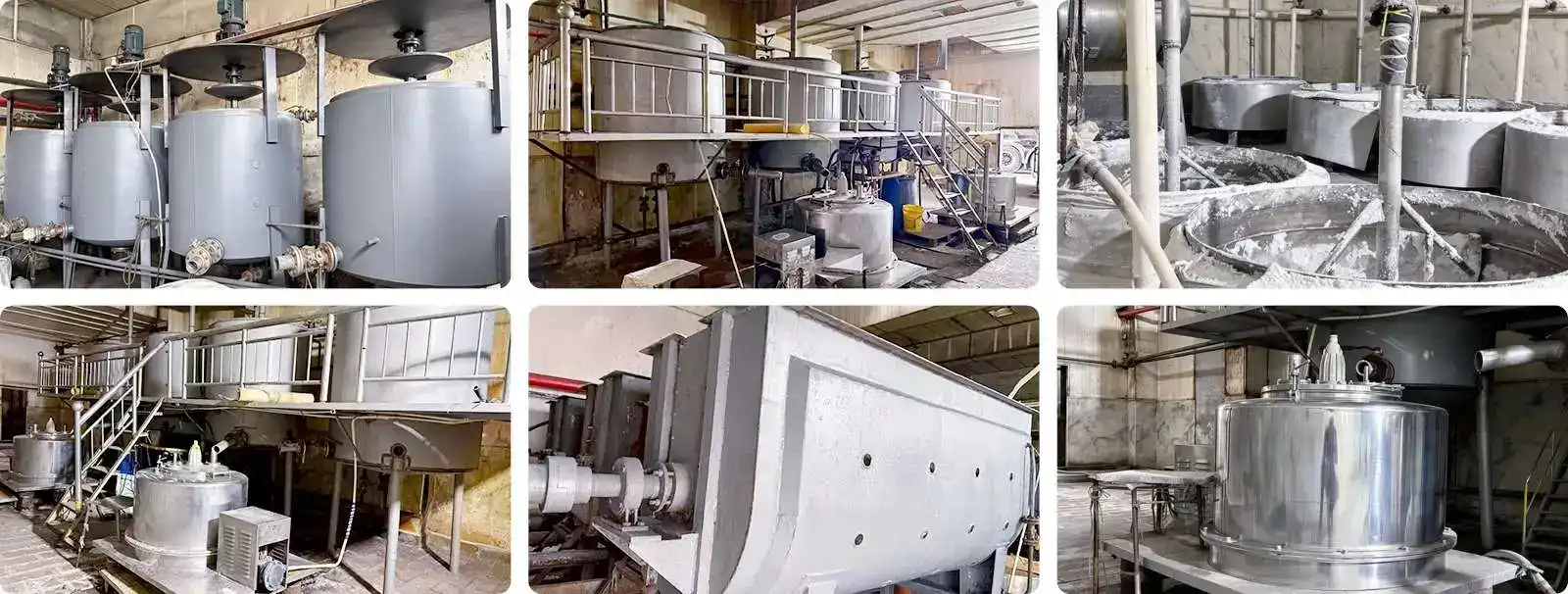
Check the company's technical support, its ability to make things, its quality control systems, and how consistent its batches are. You should also look at how it packages its goods and how much experience it has exporting. An area of 27,000 m² and 60 employees make up Shanxi Zhaoyi Chemical, which opened in 1988. Our goal is to make 150,000 tons of acetate every year, and we have full ISO 9001 and ISO 14001 certifications. A certificate of analysis, a safety data sheet, and a technical data sheet are sent with every export order. If you want to ship from Lianyungang, Qingdao, or Shanghai, you can use FOB or CIF terms. Things are made in 5–7 business days, but we keep extras on hand to speed up the process.
Total Cost and Common Mistakes
It's not enough to just compare prices per liter; you should also look at how much it costs to own everything. What affects the final number are things like storage, labor, equipment, maintenance to check for corrosion, runway closures, and following the rules. When there is only one rate that works for all situations, when dilution is not controlled, when rainwater or wash water gets into tanks, or when the teams that work on operations, safety, the environment, and procurement don't work well together, those are the times when mistakes are most likely to happen. Every mistake either wastes things or doesn't take care of the pavement enough. Most of them stop when there is a written procedure and training before the season.
A Four-Stage Implementation Plan
In the first step, areas for treatment, weather limits, friction needs, and legal limits are set. The second step is a controlled trial that takes place in normal weather with rain. In the third stage, the pressure, spray width, nozzles, engine speed, and staff training are all changed. The fourth step is to keep an eye on the use of chemicals, the amount of friction, road closures, labor, equipment maintenance, response times, and accidents that happen during the season. You should check the numbers again every year and only grow when the trial data proves it. This sequence shows the people in charge of maintenance to the people in charge of the airport why they chose the purchases they did.
Conclusion
The snow melting liquid potassium acetate(CAS NO.: 127-08-2), which is liquid and doesn't contain chlorine, can be used by airport crews to treat the pavement before it freezes. What makes it useful is that it lowers the freezing point, works quickly, and doesn't contain much chloride. These properties are supported by product specifications, including a reported freezing point of -35°C and a carbon steel corrosion rate of ≤0.03 g/m²·h under the specified test conditions. The results still depend on how hot the pavement is, how much material is used, when it is put down, and how it is mechanically removed. You should look at total cost, corrosion, and compliance to help you decide. It costs more per unit than sodium chloride, calcium chloride, and magnesium chloride. Why you should adopt: sound storage, batch documentation, a controlled field trial, and deployment in stages.
FAQ
Is liquid potassium acetate suitable for runways?
If the directions, test results, and local laws allow it, it can be used on the pavement of an airport runway. In our writing, we talk about SAE AMS 1435E and GB/T 25356-2024. There is a special way that your airport confirms approval.
Why does freezing point depend on concentration?
The freezing point is set by how much potassium acetate is mixed with water. It gets warmer for the fluid when it rains or when you wash it.
Can I dilute the product?
Everything is ready to go. Please don't make it less strict unless our tech team tells you to in writing.
How does it compare with sodium chloride?
If the temperature drops below about -9°C (15°F), road salt will not work. It works when you touch the liquid, but it costs more per unit.
How is it packaged?
We have 1,000-liter IBC tanks and flexitanks. Keep them in a warehouse that is cool, dry, and well-ventilated, away from heat, water, and things that could be dangerous.
Request Snow Melting Liquid Potassium Acetate Specifications and a Bulk Quote from SHANXI ZHAOYI CHEMICAL
Are you getting ready for winter? Snow melting liquid potassium acetate(CAS NO.: 127-08-2) has been produced by SHANXI ZHAOYI CHEMICAL since 1989. They have products that are certified by ISO 9001 and ISO 14001 and come with COA, SDS, and TDS documents. The products are packed in IBCs and flexitanks, and the production lead time is 5–7 working days. Get in touch with sxzy@sxzhaoyi.com with your treatment area, temperature range, and annual volume. You can also visit sxzhaoyi.com to learn more. We'll get back to you in two hours.
References
1. Transportation Research Board, NCHRP Report 577: Guidelines for the Selection of Snow and Ice Control Materials to Mitigate Environmental Impacts, 2007
2. Transportation Research Board, NCHRP Report 526: Snow and Ice Control: Guidelines for Materials and Methods, 2004
3. Federal Aviation Administration, Advisory Circular 150/5200-30D: Airport Field Condition Assessments and Winter Operations Safety, 2014
4. Colorado Department of Transportation, Evaluation of Selected Deicers Based on a Review of the Literature (Fischel), 2001
5. The Open Civil Engineering Journal, Deicer Impacts on Pavement Materials: Introduction and Recent Developments (Shi et al.), 2009
6. Environment Canada, Code of Practice for the Environmental Management of Road Salts, 2004

USER EVALUATE
Here is the customer's evaluation of us