



How to Select a Reliable Snow Melting Liquid Potassium Acetate Supplier for Winter Operations?
First, think about what your site needs in terms of snow melting liquid potassium acetate(CAS NO.: 127-08-2). Then, check each candidate on four things: verified product data, a batch-specific Certificate of Analysis, steady production and shipping capacity, and quick technical support. Compare prices for the same amount and delivery terms. Before you place a seasonal order, ask for a sample and do a small test in the field. During the coldest weeks, a supplier that passes these tests will keep your pavement, your schedule, and your budget safe. This guide explains each step clearly so that your team can make a choice with peace of mind.
Define Your Snow and Ice Control Requirements First
Match the Product to Your Surfaces and Temperatures
Different types of surfaces need different kinds of deicers, like airport runways, bridge decks, parking garages, and city streets. First, make a list of the types of surfaces you have, the coldest temperatures you expect for the pavement, and how you plan to treat them—either by de-icing after ice forms or by anti-icing before a storm. Because the chemical works at the surface, the temperature of the pavement is more important than the temperature of the air. Keep in mind that the freezing point is a laboratory measurement, while actual deicing performance depends on field conditions. Get melting rate information from each supplier for the temperature range you want. The freezing point of our snow melting liquid, potassium acetate, is at or below -35°C, and at -25°C, it melts at least 85% of the snow in one hour.
Set Volume, Storage, and Delivery Targets
Next, figure out how much work you have during the busy season and during the biggest storm. It depends on your site whether 1000 L IBC tanks or flexitanks will work. You should look at the tank's capacity, the type of pump, and the point where it can be unloaded. Adding a buffer will allow for quick refills during long cold spells. We list 1000 L IBC tanks and flexitanks as packaging, as well as 200 L plastic drums for the 50% solution. It takes 5 to 7 working days to make something, and we keep extras on hand to speed up the process. Write these down in a brief so that all of the bids are for the same scope and you can compare like with like.
Confirm Concentration and Ready-to-Use Status
Concentration affects the freezing point, the density, and the cost per treated area. Have each bidder write down what concentration they offer. At approximately 50 wt% concentration, a potassium acetate solution has a reported eutectic temperature close to -60°C. Solutions that are weaker or stronger behave differently. Our product information says that the CH₃COOK content is between 50 and 60% in a clear, colorless liquid. It is recommended that the reference density for a 50% solution be 1.28 g/cm³ at 20°C and that the viscosity be 15 cP or less at 25°C so that it can be pumped or sprayed. Ask if the product comes already mixed or if it needs to be diluted first. You don't have to mix it on-site because ours comes ready to use.
Check Product Quality and Technical Documentation
Compare the Specifications That Matter
Being yourself comes first. Its CAS number is 127-08-2, and its chemical formula is CH₃COOK. Its molar mass is approximately 98.14 g/mol. Now look at the impurity limits one line at a time. Chloride levels must be 0.01% or less, Ferrum (Fe) levels must be 0.002% or less, arsenic levels must be 0.0004% or less, sulfate levels must be 0.05% or less, and lead levels must be 0.01% or less. Low chloride is important for structures made of metal and reinforced concrete. Ask for the pH of both the pure product and the diluted solution separately, as they are not the same. Also, make sure that the freezing point given matches the concentration you want to purchase.
Request the Right Documents
Before you talk about price, ask for three papers. Each one tells us something different.
- Technical Data Sheet (TDS): This sheet lists concentration, density, pH, freezing point, and recommended application rates. Compare it with the quotation line by line, and ask which test methods produced the freezing point and melting rate figures. Any number without a method deserves a follow-up question.
- Safety Data Sheet (SDS): The SDS covers hazards, first aid, spill response, personal protection, and storage. Your safety officer should review it before the first delivery, and your spill plan should match it. We provide an SDS with exports, and the product is non-flammable. Compare the storage notes with your warehouse conditions.
- Certificate of Analysis (COA): The COA reports test results for a specific production batch. Check that the lot number matches your shipment, then compare each result with the TDS limits. A COA without a lot number tells you little about the product in your tank. We supply one with each batch.
These papers together explain what you're buying and how the seller makes sure it stays that way.
Look for Batch Traceability and Quality Systems
The factory behind the documents for snow melting liquid potassium acetate can only help if they are always the same. Find out what production quality systems are in place. ISO 9001 and ISO 14001 are both held by SHANXI ZHAOYI CHEMICAL, and we follow enterprise standard Q/140902ZYH004-2020. Our full-process monitoring includes testing for purity, corrosion rate, and environmental impact, and every batch is checked over before it is shipped. Ask any supplier how they can track a lot of things back to the raw materials, who signs off on a release, and what happens if a batch doesn't meet specs. This three-question answer tells you more than a brochure.
Compare Liquid Potassium Acetate with Other Deicing Options
Performance Against Chloride Products
People still often choose sodium chloride, calcium chloride, and magnesium chloride, and each has its place. The chloride ion makes the difference. The NCHRP Report 526 talks about this problem in its advice on how to control snow and ice. Chloride can get to the steel that holds concrete together and cause corrosion. Potassium acetate does not contain chloride as part of its chemical formula. As a liquid, it also starts to work as soon as it comes into contact with something, but solids need water to turn into brine first. Many crews mix solid salt with a liquid first to make it work better, but make sure with your supplier that the two will work together before you mix them, because the results depend on how each product is made.
Treat Environmental and Corrosion Claims as Claims Until Data Back Them
A seller might say that a product is good for the environment or infrastructure, but you should ask for proof. The carbon steel in our product data has a corrosion rate of 0.03 g/m²·h or less and a biodegradability of 95% or more. Ask for the test reports that match and the test methods that were used to make them. Also, keep in mind that as acetates biodegrade, microorganisms consume dissolved oxygen in the surrounding water. This means that runoff from small streams or ponds should be checked locally. The review by Fay and Shi talks about how chemicals used to melt snow and ice affect the environment. The last word on limits is your permits.
Calculate Total Cost per Treated Area
If you only compare prices, you might get the wrong idea. Liquids based on acetate cost more per unit volume than those based on chloride. Instead, add up the costs of concentration, freight, labor, equipment wear, how often you have to reapply, infrastructure repair, and compliance, and then divide by the area you treat. Over time, repair costs may go down if there is a product that protects bridge decks, reinforcing steel, and equipment on the airside. That saving could be different for each site, so test it first instead of assuming it. In grams per square meter, ask each bidder to explain how their product can be used. It says to use 25 to 50 g/m² for de-icing and 50 to 150 g/m² for anti-icing.
Screen Manufacturing Capacity, Logistics, and Technical Support
Confirm Who Actually Makes the Product
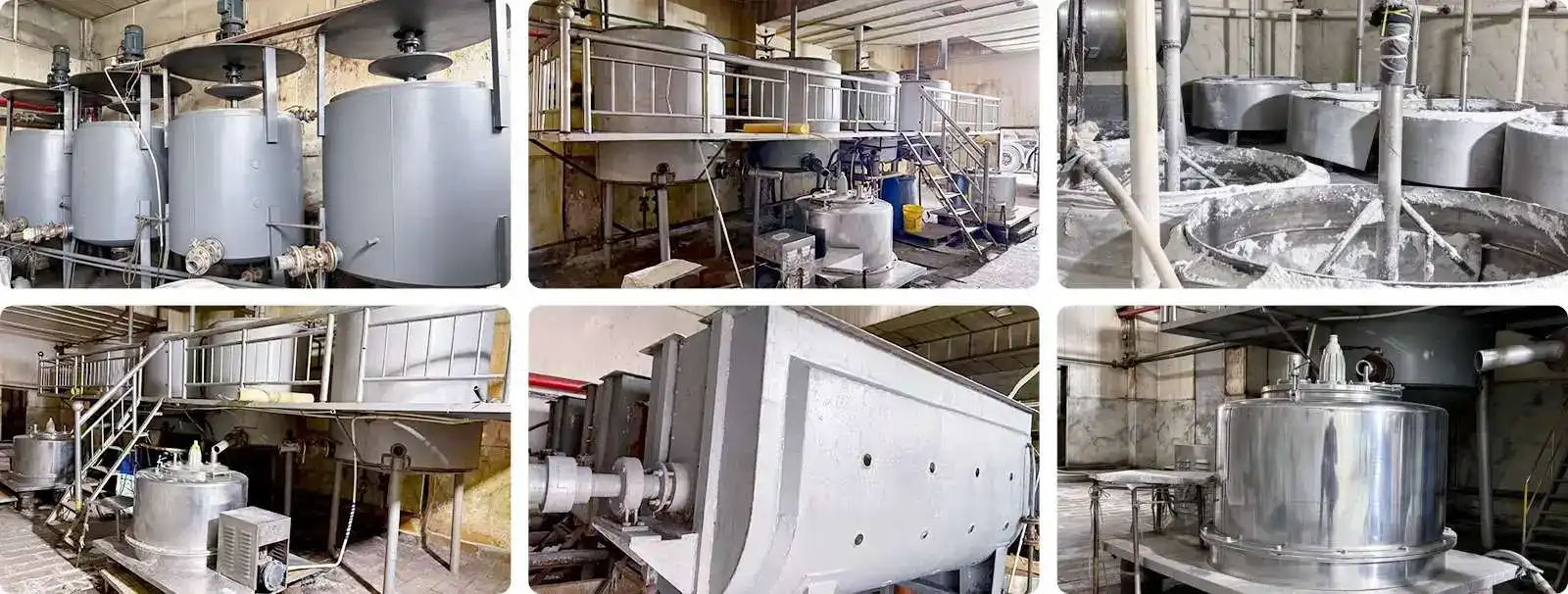
Find out if the person you're talking to is a manufacturer, a distributor, a stockist, or a broker. Also, find out who oversees production and quality. SHANXI ZHAOYI CHEMICAL has been making acetate salts since 1988. It has a 27,000 m² site and 60 employees. We can process 150,000 tons of acetate every year, which includes sodium acetate, potassium acetate, potassium formate, composite carbon sources, and snow melting agents. But it doesn't talk about a single product. If you ask any supplier about seasonal inventory, the minimum order quantity, production schedules, and backup plans for when demand is high, then check the written lead time against what they said.
Check Export Terms and Shipping Capability
Read over the trade terms for snow melting liquid potassium acetate(CAS NO.: 127-08-2) early on if you buy from China. We accept both FOB and CIF, and our loading ports are in Lianyungang, Qingdao, and Shanghai. We also work with shipping companies around the world to set delivery and freight schedules. The commercial invoice, packing list, bill of lading, Certificate of Origin, Certificate of Quality, COA, SDS, and TDS are all in the export file. You should ask the supplier what HS code they use because a potassium acetate solution and a prepared de-icing fluid can have different codes. Before you place your first order, check with your customs broker to make sure of the classification, and make sure that the unloading equipment you have fits the type of container.
Assess Application Guidance and Safety Support
Handling is just as important as chemistry when it comes to performance. A good supplier talks about spray equipment, how much to use, when to use it, and how to store it. Our team helps people figure out how to use our products and tests samples. If you have a question, our technical staff will answer it within two hours, day or night. For storage, keep the liquid in a warehouse that is dry, well-ventilated, and away from heat and moisture. Be careful when handling the containers and keep them away from dangerous things. If you have an automated system, like Fixed Automated Spray Technology on bridge decks, ask the supplier to look over your nozzle and pump sizes. Advice shouldn't just be one dose; it should depend on how deep the snow is, how much traffic there is, and how hot the pavement is.
Validate, Score, and Approve Your Supplier
Test a Batch-Linked Sample and Run a Field Trial
Proof, not sales claims, should be used to approve something. Ask for a sample that is linked to a real production batch. Then, look at the color, concentration, density, pH, freezing point, condition of the packaging, and make sure that the paperwork matches the label on the container. Next, do a controlled test on a single road, ramp, or apron. Using your current deicer as a guide, compare its melting response, coverage, frequency of reapplication, equipment behavior, corrosion observations, labor hours, and cost per treated area. Write up a short report of the results. Please ask the supplier for references from airports, highway contractors, or distributors, if they are willing to give them. We give you free tests and ongoing advice based on how you use our services.
Build a Weighted Scorecard and Track Red Flags
They are fair and easy to defend when there is a scorecard. List the groups: communication, manufacturing capacity, product quality, documentation, supply stability, application support, safety information, logistics, commercial value, and manufacturing capacity. Use them to help you decide what to do. An airport might care most about how well it works on pavement and having an emergency supply, while a distributor might care most about paperwork and packaging. Clear red flags should be raised if the SDS is missing, the composition isn't clear, there is no batch tracking, the company makes environmental claims without data, or they refuse to provide samples. The supplier that wins should not just have the lowest quote, but also the best value after risk.
Follow a Staged Procurement Process
Lastly, do each step in the right order: look over the documents, test samples, do a lab check if needed, do a field trial, send out a pilot shipment, and approve the contract. When you ask for a quote, you should include the concentration, volume, destination, packaging, conditions of use, documents needed, delivery date, and Incoterms. When you compare quotes, make sure that everything is the same, such as net weight, freight, insurance, duties, lead time, and payment terms. After signing, keep track of how well deliveries are made, how well batches match, how much damage is done to packages, complaints, and lead times for each season. These records make the next renewal a lot easier and let you know right away if the quality starts to drop.
Conclusion
Evidence and fit are the most important factors to consider when selecting a supplier of snow melting liquid potassium acetate(CAS NO.: 127-08-2). First, set your surfaces, temperatures, volumes, and storage space. Then, use equal terms to compare concentration, impurity limits, and freezing point. How consistent a product is can be seen in things like the TDS, SDS, and batch COA, as well as in quality systems and traceability. Corrosion and environmental claims need test results, and the total cost per treated area is a more accurate way to see the whole picture than the unit price. Things like the ability to make things, the terms of export, and technical support all affect delivery during cold spells. Use of samples, field tests, a weighted scorecard, and a staged buying process can help you make a decision that you can stand by.
FAQ
What documents should I request before ordering?
Ask for the TDS, SDS, and a COA that is linked to your batch. In order to export, you should also get a commercial invoice, a packing list, a bill of lading, a Certificate of Origin, and a Certificate of Quality.
Does the freezing point equal the lowest working temperature?
The freezing point is a value found in a lab for a certain concentration, not in real life. Ask for melting-rate data at your temperatures because working performance depends on the temperature of the pavement, the amount of rain or snow, the rate of application, and the conditions of the site.
Can I mix it with other deicers?
It is common to pre-wet solid salt with a liquid, but compatibility varies from formulation to formulation. Before you blend, please talk to our technical team.
Which packaging is available?
We list 1000 L IBC tanks and flexitanks, as well as 200 L plastic drums for the 50% solution. Pick the format that works with the equipment you have for unloading.
What should I include in a quote request?
Tell us about your use, concentration, volume, destination, packaging, delivery date, and Incoterms.
Request a Quote for Snow Melting Liquid Potassium Acetate from SHANXI ZHAOYI CHEMICAL
Send your application, the concentration you need, the estimated volume, where you want it sent, how you'd like it packaged, and when you need it delivered to sxzy@sxzhaoyi.com. The TDS, SDS, lead time, and Incoterms will be sent back by SHANXI ZHAOYI CHEMICAL. We provide support for sample testing and field trials as a supplier of snow melting liquid potassium acetate and an acetate manufacturer with a 150,000 tons annual acetate capacity. For more information, go to sxzhaoyi.com.
References
1. NCHRP Report 526: Snow and Ice Control: Guidelines for Materials and Methods, Transportation Research Board, 2004
2. NCHRP Report 577: Guidelines for the Selection of Snow and Ice Control Materials to Mitigate Environmental Impacts, Transportation Research Board, 2007
3. Environmental Impacts of Chemicals for Snow and Ice Control: State of the Knowledge, Water, Air, & Soil Pollution (Fay and Shi), 2012
4. Evaluation of Alternative Anti-icing and Deicing Compounds Using Sodium Chloride and Magnesium Chloride as Baseline Deicers, Colorado Department of Transportation (Shi et al.), 2009
5. Advisory Circular 150/5200-30D: Airport Field Condition Assessments and Winter Operations Safety, Federal Aviation Administration, 2014
6. Code of Practice for the Environmental Management of Road Salts, Environment Canada, 2004

USER EVALUATE
Here is the customer's evaluation of us