



What Should Airports Check Before Ordering Solid Potassium Acetate Deicing Materials?
Before they order Airport Runway Solid Potassium Acetate(CAS NO.: 127-08-2), airports should make sure of seven things. Questions they want to know include: Does the product de-ice well? Are the instructions clear? Is it safe for both planes and people on the ground? Is all the safety and compliance paperwork complete? Are the packaging and storage options right for their site? And is the supplier able to deliver on time? The price per treated area and the price per metric ton should also be looked at. You should also test it on a small spot before getting a lot of it. Get your safety, engineering, and purchasing teams to agree to buy a solid potassium acetate deicer in the middle of winter with this guide. It will help you with each step.
Match the Product to Your Deicing Scenario and Specification
Confirm Whether Solid Potassium Acetate Fits Your Deicing Scenario
Start with your own words, not a catalogue of goods. How cold does it get in the winter? How often does it snow, freeze rain, frost, and turn into black ice? What kind of road do you have? First, keep deicing and anti-icing separate. Taking away ice breaks up ice that has already formed. Before it snows, anti-icing is used to treat the surface. Follow FAA Advisory Circular 150/5200-30D to make sure airport activities are safe this winter. Part 139 says that airports must also have a plan for what to do when it snows or ice.
Small, dense rocks can hold salt water below the ice. They will be less likely to move around in strong winds if you add liquids to them ahead of time. Next, look at how you use your app. Check to see if your spreaders can handle the material's size, amount of moisture, and flow without getting stuck or making a lot of dust. You should write down things like making it easy to store things, getting the runway back up and running quickly, and lowering the amount of chloride exposure. This way, each check that comes after this one will have a clear goal.
Review the Technical Specifications of Airport Runway Solid Potassium Acetate
A sheet tells you if two groups will act in the same way. Our Airport Runway Solid Potassium Acetate (CAS No. 127-08-2, chemical formula CH₃COOK, molar mass 98.14 g/mol) has these specifications.
| Parameter | Specification |
|---|---|
| Content (CH₃COOK) | ≥99.0% |
| Water insoluble | ≤0.05% |
| Chloride (Cl) | ≤0.2% |
| Ferrum (Fe) | ≤0.05% |
| pH (15% solution) | 9.0–10.5 |
| Bulk density | 0.8–0.9 g/cm³ |
The white crystalline potassium acetate granules dissolve readily in water. However, the chloride ion content must meet the specified limit. Please let us know if your airport has a tighter limit before you place your order. Get the most up-to-date technical data sheet and an analysis proof for the whole batch. If the product says it can be used in cold places, what temperatures were used to test it?
Evaluate Runway Deicing Performance Under Real Conditions
People don't change based on lab numbers. A 50% potassium acetate solution has a reported freezing point of approximately -59.4°C (-75°F), subject to verification against the product's technical data. That doesn't mean there will be dry granules there. Find out how well the solid product works by finding out things like how cold the pavement was, how thick the ice was, how quickly it was put on, and how long it stayed on the surface.
On the package, it says that the granules can melt up to 6 mm of ice and make pockets of brine that help ice sweepers do their job. Get in touch with us if you need performance test reports that are already made. When you put different goods through the same tests, you can see how quickly they melt, how well they break up ice, how well they keep from freezing again, how well they recover from friction, and how much dust they leave behind. Check out more than just what someone says they can melt if they say they can. Check out the size of the area that was fixed, the amount of material that was used, and how quickly the runway can be used again.
Verify Compatibility, Alternatives, and Compliance
Check Aircraft, Pavement, and Infrastructure Compatibility
An Airport Runway Solid Potassium Acetate de-icer can't just hit the ground. Check out how the tests for rust went on the magnesium, aluminium, cadmium plating, bolts, and airport lights housings made out. To be sure that something is "non-corrosive," you should get a test report. The rules for solid runway deicers used in labs are set by SAE AMS 1431. It's important to know which revision the supplier tested against.
A lot of people who work on planes and brakes are worried about carbon brake rust and alkali metal deicers, so talk to your airport renters first. Check out the changes it makes to the asphalt, concrete, joint sealants, and lines. A study published in the Journal of Transportation Engineering in 2002 backs up testing the effects of pavement on its own. In the environmental review, you should talk about plants, soil, surface water, runoff, and the need for oxygen. The NCHRP Report 577 tells us how to find out how the things we use to melt snow and ice hurt the environment.
Compare Solid Potassium Acetate with Alternative Airport Deicers
The candidates should write in their evaluation the following: the temperature range that works, the ability to melt ice, the rate of application, friction, rust data, compatibility with aeroplanes, environmental effect, storage needs, hardware fit, and supply. Potassium formate (HCOOK) and sodium acetate (CH₃COONa) are two alternative deicing chemicals that can be compared with potassium acetate. You should never move data from one to the other because they are all different.
Urea is interesting to the government because it gives off ammonia. Beginning in 2012, the EPA's airport deicing rule linked the use of urea to ammonia at some airports. Calcium chloride (CaCl₂) and other chloride-based deicers may seem less expensive per ton, but their potential corrosive effects on aircraft components and airport infrastructure should be evaluated. Sometimes potassium acetate is better than chloride in places where chloride can hurt things. It may also be easier to work with liquids. Don't just look at the quote's number. Find out how much each square metre costs to treat and how it impacts business as well.
Review Safety, Compliance, and Required Documentation
Before you sign, print out everything you need. You should ask for the SDS, the technical data sheet, the product specification, the batch certificate of analysis, how to name and package the product, how to store it, and how long it will last. Want to know how to ship things within the United States? Check the OSHA labels to learn about the risks, the DOT's transport status, the state's environmental permits, and the list of products that are allowed at your airport.
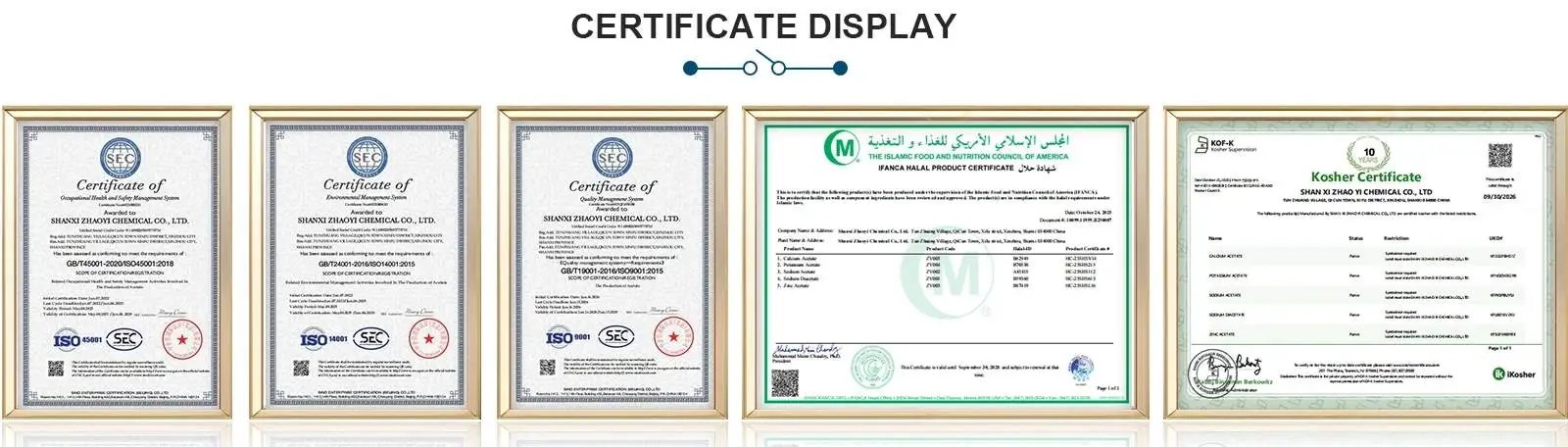
It is important to check how the supplier records the item in the GHS system and that the paperwork for bringing the item into the country is correct. The COA, SDS/MSDS, and TDS are the papers we send with everything we send abroad. The environmental and quality systems that we have in place are both certified by ISO 14001 and ISO 9001. Since you buy from us, please let us know what reports and permissions the airport needs. We can only say things if we have standards and papers to back them up. Internal reviews go more quickly when the paperwork stays the same, and groups can be tracked.
Plan Packaging, Cost, and Supplier Selection
Evaluate Packaging, Storage, and Airport Logistics
Look at logistics at the airport, storage, and packaging
Granules can get to where they need to go and spread better if they are kept and packed in a certain way. This is because potassium acetate that is solid can soak up water. Our bags weigh between 25 kg and 1,000 kg, or 55 lb to 2,205 lb. You should pick the style based on how much it will be used, the tools you'll need, and the room in the building.
Do not put the items in a warehouse that is wet or hot. Instead, put them somewhere dry with good airflow. Keep harmful things away from it. Move the stock around, close the bags, and keep track of the batches. Don't stack more than four pallets high. After being properly sealed, our food can be kept for up to two years. For sales to other countries, go over how to load crates, terms like FOB and CIF, the different ports that can be used, and the paperwork that needs to be filled out for customs. It takes 5–7 business days to make after we get your order. The places where we load are either Lianyungang, Qingdao, or Shanghai.
Calculate the Total Cost of the Airport Runway Deicer
It's not always true that the cheapest quote is also the cheapest season price. To make your model, you can use things like the price per metric ton, the rate of application, the treated area, the labour, the tools, the transport, the import charges, the storage, the cleanup, and the way to deal with waste. You can only compare the two types of road salt if you use them both the same way. If not, acetate-based goods cost more per ton than regular ones.
Make sure that each supplier of Airport Runway Solid Potassium Acetate writes down the grade, purity, quantity, Incoterms, delivery location, lead time, payment terms, paperwork, and how to make a claim. Then, run three different situations: a normal winter, a very bad winter, and an emergency surge. These steps can help your finance team make a good budget for the year, and your engineers find the best suppliers.
Assess the Manufacturer, Exporter, or Distributor
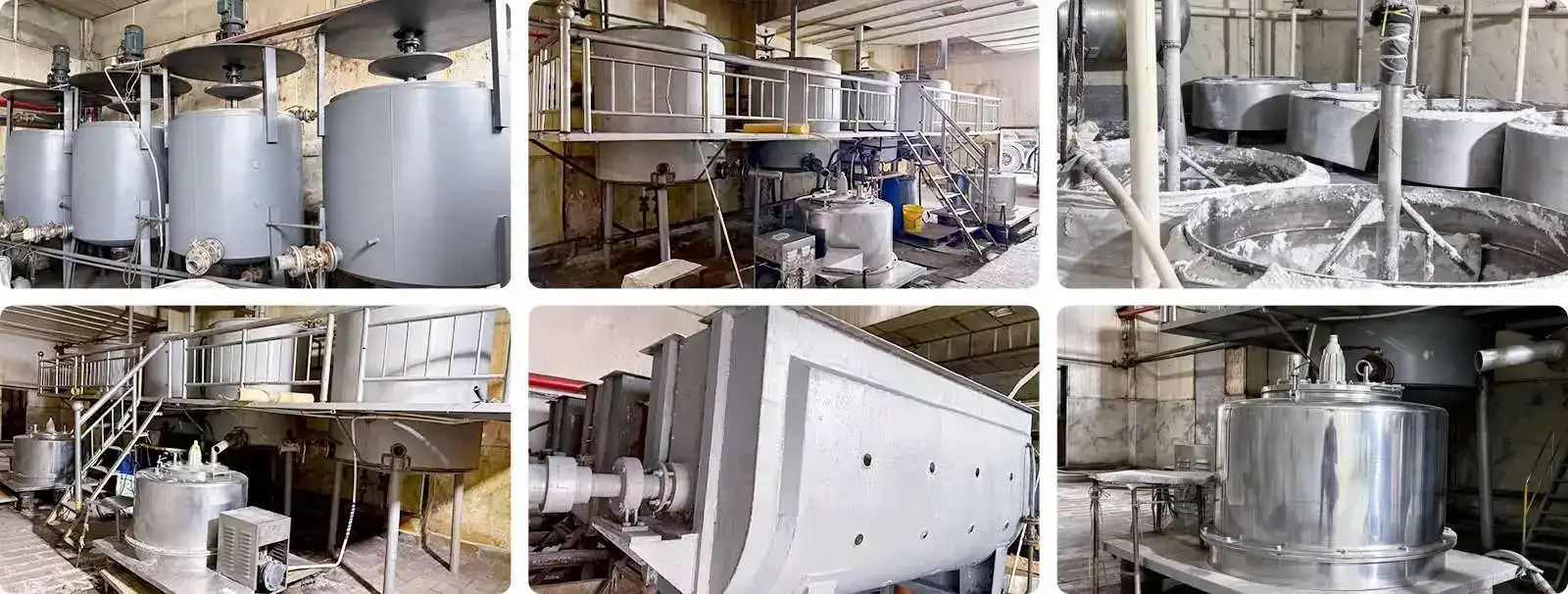
The company that makes ice melters is the only one you can trust. You should look for a solid source of raw materials, a capacity that can be shown, quality control records, and a plan for when to get the materials at different times of the year. This company has been around since 1988 and now has 60 workers. It takes up 27,000 m² of space. The 150,000 tons per year we can handle is for all of the acetate goods, not just one. We do it all the time since we ship to Asia, the Americas, and Europe.
If you need to make a claim, any supplier should be able to give you claim forms, samples, references, and technical help. There are problems if you can't find the SDS files, the specs aren't clear, the prices are too low, and you feel like you need to buy a lot before testing.
Test, Approve, and Secure Supply Before Winter
Run a Sample Test and Pre-Qualification Before Bulk Purchase
In the holiday season, it's safer to buy something expensive after making a test order. First, write down the steps for the trial. This should list the type of pavement, the temperature, the thickness of the snow or ice, how it was applied, how much was used, how long it was in contact with the surface, a similar product that can be used as a guide, and the pass/fail criteria. Write down how fast the ice melts, how it breaks up, how much is left behind, how the spreader works, how it is put away, and how long it takes for the runway to open up again.
The amount used per treated area, how evenly it spreads, and the fact that it doesn't leave behind any harmful residue could all be used as proof. Put in a managed first order when the trial is over. Check the batch against the COA as soon as it gets there, and keep the samples you save. That you can try it out first is great. That way, your team can see the granules, the boxes, and the paperwork before they place a big order.
Build a Practical Procurement Checklist
Everyone is on the same page when it comes to buying things, safety, operations, and engineering. This is because everyone uses the same lists. The test results for low temperatures, the composition, the particle size, the moisture, the rate of application, the compatibility, and the test evidence are all inside this. The SDS, TDS, COA, labels, shipping details, and environmental papers are all covered by the compliance clearance.
As part of the business review process, the wait time, the minimum order amount, the number of items, the fixed cost, the guarantee, and the claims terms are all looked at. The supplier's capacity, references, experience with shipping, technical help, and ability to provide samples are all checked to make sure they are a good one. Putting the signed checklist in the buy file will help the team next season understand why you allowed the item. You can then do the same steps again if the suppliers or other details change.
Plan Backup Supply Before Peak Winter Demand
It doesn't matter how well the approval work is done if the shipment is late. Ocean freight can take longer to get to you during the winter when ports are busy and stormy, so place your order early in the season. Figure out what to do if a ship is late and set dates for when things should arrive.
There are backup plans for logistics, safety stock to make sure orders are filled quickly, backup plans for raw materials, and a technical support team that gets back to you within two hours in the description of our product. Don't forget to save extra for times when bad weather is likely to happen, and plan ahead to see who can make an emergency reorder. Let the supplier know what you want to do as soon as possible so that they can work with your schedule for production and shipping.
Conclusion
Strong Airport Runway Solid Potassium Acetate(CAS NO.: 127-08-2) is always the best choice for an airport runway because it can be proven. Before giving their OK, readers should make sure the product works well where they live, read the test data and specs, check to see if it's safe for planes and roads, think about other options, and get the SDS, TDS, and COA. The way the granules are packed, stored, and dried changes how they work in the winter. The price per metric ton is not as clear when you look at the total cost per treated area. It is best for the supply chain to have clear wait times, records of quality control, and suppliers who can meet demand. A clear sample test is done on weak goods to see if they meet the standards before they get a big order. These checks are less likely to go wrong when they are done as a single written list. This also makes sure that when it rains, things don't change on the runway.
FAQ
Can solid potassium acetate be used on runways, taxiways, and aprons?
It can be used on paved areas as long as performance data, aircraft compatibility, pavement effects, and local rules are all checked. We describe the runway, taxiway, and apron in terms of what they can be used for. Check your airline's rules and the list of things that are allowed before you place your order.
Which documents should I request before ordering?
Ask for the SDS, technical data sheet, batch COA, and relevant performance test reports to verify the product's composition, dissolution behavior, and ice-melting performance. The COA, SDS/MSDS, and TDS are the things we send with export orders.
Does a melting point figure predict field performance?
It's not true. The reported melting point of solid potassium acetate is approximately 292°C. This is different from the freezing point of a potassium acetate solution or the melting point of ice. What happens in the field depends on how cold the road is, how thick the ice is, how quickly it is put on, and how long it stays there. Our -59.4°C number is for a 50% solution if you want to know how to test the solid grade.
How should I store solid potassium acetate?
The best place to store sealed bags is in a warehouse that is dry and has good airflow. Keep them away from things that could harm them, heat, and water. Once the bags are open, close them again because the granules soak up water.
Request a Solid Potassium Acetate Runway Deicer Quotation
Making plans for your next order this winter? For over 30 years, SHANXI ZHAOYI CHEMICAL has been professionally making acetate. They sell Airport Runway Solid Potassium Acetate(CAS NO.: 127-08-2). Every year, they can make up to 150,000 tons of acetate and pack it in either 25 kg bags or 1,000 kg ton-bags. Send the address of your airport, the temperature range, the amount of demand each year, and the due date for delivery to sxzy@sxzhaoyi.com. We'll get back to you with more information, samples, and a price quote. Visit sxzhaoyi.com to learn more.
References
1. FAA Advisory Circular 150/5200-30D, Airport Field Condition Assessments and Winter Operations Safety (2014)
2. NCHRP Report 577, Guidelines for the Selection of Snow and Ice Control Materials to Mitigate Environmental Impacts (2007)
3. ACRP Report 14, Deicing Planning Guidelines and Practices for Stormwater Management Systems (2009)
4. U.S. Environmental Protection Agency, Effluent Limitations Guidelines and New Source Performance Standards for the Airport Deicing Category, Federal Register (2012)
5. Fay, L. and Shi, X., Environmental Impacts of Chemicals for Snow and Ice Control: State of the Knowledge, Water, Air, & Soil Pollution (2012)
6. Hassan, Y. et al., Effects of Runway Deicers on Pavement Materials and Mixes: Comparison with Road Salt, Journal of Transportation Engineering (2002)

USER EVALUATE
Here is the customer's evaluation of us