



Application of Carbon Sources in Wastewater Treatment Stations in Low-Temperature Regions
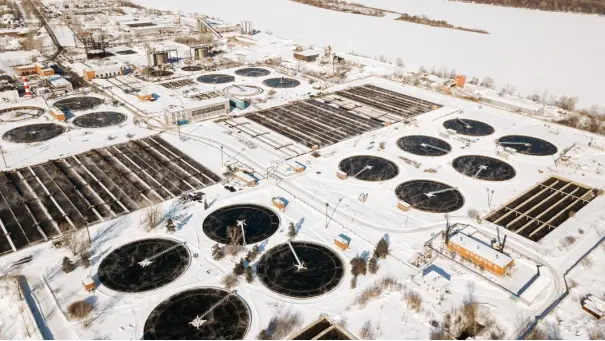
During winter, when the water temperature decreases, the activity of denitrifying bacteria decreases, which leads to a decrease in the rate of consumption of the carbon source. Crystallisation, increased viscosity or blockage may also occur in storage tanks and pipes. In the choice of carbon source in cold locations, the performance of nitrogen removal, the freezing point of the product, the need for solution preparation, thermal insulation measures, and the stability of the dosing system should be considered.
1. Liquid Sodium Acetate (Industrial Grade, 20% or 25%)
Primary use: To augment available carbon sources for denitrification systems running at low temperatures, hence maintaining microbial activity and nitrogen removal capability throughout winter, and providing a degree of pH buffering for the system.
Product Features: It is a liquid product, no need to dissolve on the spot, and may be immediately fed into the dosing system. Compared with solid carbon source which needs to prepare solution, it has less operating steps in winter. It is not flammable and explosive, which makes storage, shipping and handling more easy.
Use recommendation: First calculations may be performed on the basis of a carbon/nitrogen (C/N) ratio of at least 4.5:1, with a typical reference concentration range of 35 to 60 mg/L. The decision to raise the dose in severe low temperature periods should be based on changes in water temperature, nitrate nitrogen and effluent total nitrogen concentrations, and not on modifications based on a preset ratio.
Storage tanks and pipes still need thermal insulation or heat tracing when the temperature falls below the crystallisation temperature of the substance. Excessive dosage will raise the COD in the effluent.
2. Sodium Acetate Trihydrate (Industrial Grade, 58%–60%)
Primary Application: Suitable for routine carbon supplementation at small- to medium-scale low-temperature wastewater treatment plants; can be used for intermittent solution preparation and dosing.
Product Features: The product comes in a solid form, which makes it easily accessible, transportable and storable. However, the effectiveness in winter is highly dependent on the water temperature used to prepare the solution, the agitation conditions and the thermal insulation measures taken.
Use recommendations: Dissolve in water at 15-25°C to make a 20-30% aqueous solution and ensure complete dissolution before dosing to the denitrification step. The produced solution should not be kept for a long time in low temperature environment.
Note: Incomplete dissolving may cause pipe blockage. At low temperatures the rate of dissolution is reduced. Store the solid substance in a sealed, dry place to avoid caking and moisture absorption.
3. Anhydrous Sodium Acetate (Industrial Grade, 98%–99%)
Main application: It may be used in the times of huge insufficiency of carbon source or abrupt change of influent load. It can be used as an emergency carbon source with high concentration.
Product Features: High active ingredient concentration, lesser dose necessary for the same effective carbon requirement. The product is low in contaminants. As a solid it is often less hygroscopic than sodium acetate trihydrate.
Suggested use: Can be made as a 10-15% aqueous solution using warm water for dosage or used in conjunction with liquid sodium acetate. The concentration of the solution and the temperature of the water should be set according to the circumstances of the equipment on site.
Precautions: Heat is generated during dissolution, watch temperature fluctuations and condensation on the tank during winter. High concentration solutions may crystallise at very low temperatures.
4. Low-temperature composite carbon source
Main application: Wastewater treatment plants with lengthy periods of winter operation, low ambient temperatures and large variation in nitrogen removal load.
Product Features: Low temperature formulations generally pay attention to the freezing point, viscosity and sustained carbon supply capacity. The stability at -20°C and the degree of improvement in denitrification rates should be evaluated on the basis of particular product testing and on-site trial findings.
Usage guidelines Most liquid composite carbon sources may be fed directly to the process. A starting value of 30–50 mg/L is advised with dynamic modification depending on water temperature, influent total nitrogen levels, and effluent data.
Note: Effective carbon content and low temperature stability varies widely across formulations; test data should be studied and small scale experiments performed prior to purchase. Storage containers should be maintained firmly closed to avoid contamination with pollutants or bacteria.
Project Application Case Studies
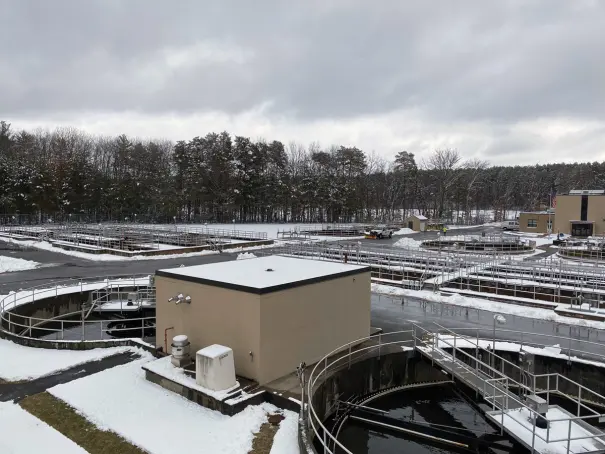
A wastewater treatment facility with a treatment capacity of 5,000 m3/d in a cold locale had problems in winter when the water temperature routinely dipped below 6°C, while external temperatures reached around -22°C. The influent carbon to nitrogen (C/N) ratio was about 3.2:1; however, the storage, transport and dosing of the initial methanol carbon source was disturbed in winter, resulting to large variations in effluent total nitrogen (TN) levels. Switching to a low temperature composite carbon source (initial dose of 40 mg/L, then titrated based on effluent data) brought about operational benefits. The project records show that the crystallization-induced blockage of the dosing system was resolved, the denitrification efficiency was improved by 42% and the effluent TN was maintained below 10 mg/L with 18% reduction in winter running expenses over the original scheme. These statistics are representative of the unique water quality, climate and process circumstances of this location.

USER EVALUATE
Here is the customer's evaluation of us