



When Should Airports Use Snow Melting Solid Potassium Acetate?
As soon as it gets below -7°C, normal chloride-based deicers stop working, so airports should use Snow Melting Solid Potassium Acetate (CAS No.: 127-08-2). This non-chloride deicer works at temperatures as low as -35°C, which makes it very important during big winter storms. The best way to protect aircraft structures, runway pavements, and metal fixtures from corrosion damage is to use this. This organic runway deicer works best at airports that are close to waterways that are important to wildlife or that have to follow strict rules about how much waste they can release into the environment. Its acetate ion breaks down naturally without hurting the ecosystems around the airport.
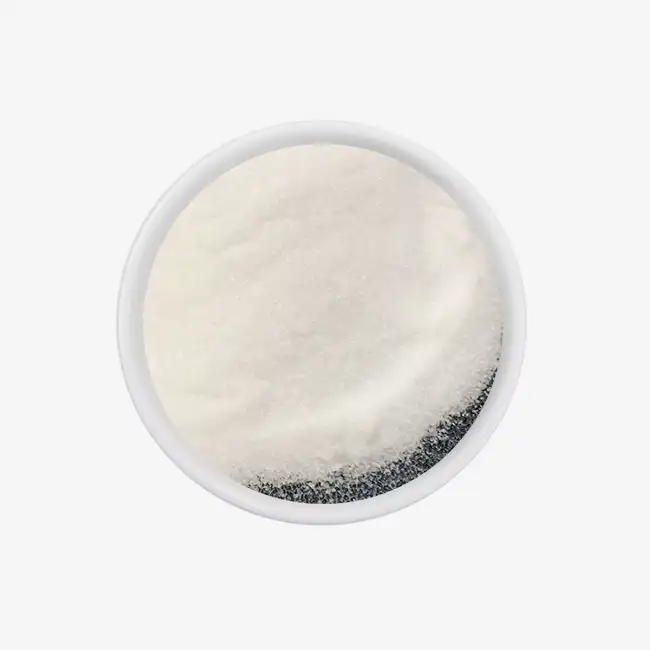
Understanding Solid Potassium Acetate as a Snow Melting Agent
What Makes Potassium Acetate Different From Conventional Deicers?
Snow Melting Solid Potassium Acetate is made up of molecules that weigh 98.14 grams each. Its chemical formula is CH⊃COOK. The CAS number for it is 127-08-2. An exothermic reaction makes it break down quickly in water, acid, and alcohol. This reaction cuts through ice bonds almost right away. Sodium chloride eats away at concrete and steel rebar, but Snow Melting Solid Potassium Acetate doesn't do that. Bugs in the soil eat the acetate ion and turn it into water and carbon dioxide. That makes the area safer for grass, water systems, and bodies of water nearby [1].
More and more, airports that follow FAA winter operations guidelines and local environmental standards need deicers that work quickly and don't hurt the environment. The SAE International standard AMS 1435 says that airport pavement deicers must have very low corrosion rates on carbon brakes and aluminium alloys. This is a requirement that chloride-based products can't always meet [2]. Snow Melting Solid Potassium Acetate meets these needs, which is why it is being used more and more in big U.S. airports.
When Is Solid Potassium Acetate the Optimal Choice for Airport Snow and Ice Control?
When it comes to winter airport care, timing and situation are very important. While not every storm needs the same chemical reaction, there are times when it is clear that a high-performance deicer that doesn't contain chloride is needed.
For the most serious operating situations, Snow Melting Solid Potassium Acetate is the clear winner:
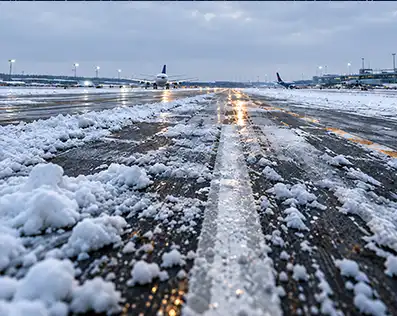
- Extreme cold events (below -7°C / 20°F): Below this temperature, rock salt doesn't do much. Snow Melting Solid Potassium Acetate keeps melting ice quickly down to -35°C, so runways and aprons stay clear even when Arctic air comes in, which happens a lot at airports in the northern U.S. from November to March.
- Corrosion-sensitive zones: Chloride can damage aircraft landing gear, avionics panels, aluminium airframe parts, and composite materials. Snow Melting Solid Potassium Acetate meets the standards for aerospace metal compatibility, which protects multimillion-dollar aeroplane investments and keeps ground workers safe.
- Environmentally restricted airfields: airports that are close to lakes, rivers, or protected wildlife areas must follow strict rules about how much stormwater can flow through them. Snow Melting Solid Potassium Acetate creates much less biological oxygen demand (BOD) in waste than glycol-based options because the acetate ion breaks down easily [3].
- High-traffic runway and taxiway maintenance: ice must be removed quickly between flights. The granular form that doesn't stick together makes it easy to use a motorised spreader, which cuts down on treatment time and flight delays.
All of these situations show how things really work at hundreds of airports in the U.S. every winter. Using the right deicer on them is not a matter of choice; it is required by law and for safety reasons.
Comparing Solid Potassium Acetate With Other Ice Melting Solutions
A lot of the time, purchasing managers compare Snow Melting Solid Potassium Acetate to three other options: calcium chloride, sodium chloride (rock salt), and calcium magnesium acetate (CMA). There are good things about both, but the comparison makes the trade-offs clear.
Sodium chloride is easy to find and doesn't cost much, but it breaks down steel structures and is useless below -7°C. Calcium chloride works at cooler temperatures (about -25°C), but it still adds chloride ions that hurt concrete through cycles of flaking and scaling. CMA is better for surfaces, but it only works in a smaller temperature range and takes water more slowly, which slows it down [4].
Snow Melting Solid Potassium Acetate works better than all three when airports need speed, low-temperature effectiveness, rust protection, and environmental compliance all at the same time. Its chloride content of ≤0.2%, iron content of ≤0.05%, and purity level of ≥99.0% (CH₃COOK content) make sure that it works the same way every time it is used. Even though Snow Melting Solid Potassium Acetate costs more per unit than chloride salts, it is usually better in the long run because it means fewer repairs to roads and structures and fewer fines from the government [5].
Procurement and Logistics for Airports: Ensuring Reliable Supply
Sourcing Standards and Certification Requirements
A steady supply is just as important as the quality of the goods. The people who buy things for airports need sellers who are certified in ISO 9001 (Quality Management), ISO 14001 (Environmental Management), and ISO 45001 (Occupational Health and Safety). They may also need suppliers who are certified as KOSHER and HALAL if they need to. This proof shows that the making process is organized and that each batch of Snow Melting Solid Potassium Acetate can be found.
Packaging, Storage, and Handling Protocols
Melting Snow and Solid Potassium One way to describe acetate is that it quickly takes in water from the air. Caking can happen if you don't store things properly. This can stop motorized spreaders from working and make application accuracy less reliable. Products must be stored in sealed 25 kg plastic weave bags or 1,000 kg ton-bags in a dry, well-ventilated area away from heat, moisture, and things that don't work well with them. Procurement teams should check each package for moisture levels that meet the standards (ideally below 1.0%) and request certificates of analysis (COA) and material safety data sheets (MSDS).
Supply Chain Reliability and Lead Times
The weather in the winter is hard to guess. As a general rule, airlines need suppliers who have a lot of extra stock and lead times of five to seven business days. With flexible shipping terms like FOB, CIF, and DAP, procurement managers can schedule deliveries of Snow Melting Solid Potassium Acetate around seasonal stocking needs. This makes it less likely that they will run out of supplies in the middle of winter.
Case Studies and Operational Outcomes
Many airports in North America have seen measured gains after switching from chloride-based to Snow Melting Solid Potassium Acetate runway deicers. According to research published by the Airport Cooperative Research Program, airports that switched to non-chloride deicers cut down on corrosion-related repair costs by a large amount over five years, and they also met local stormwater release standards [6]. When the pavement at several sites was inspected, it was found that areas treated with sodium chloride had much less concrete scaling and rebar erosion than control areas. These results show that switching to Snow Melting Solid Potassium Acetate for primary runway treatment is both safe and smart from a financial point of view.
Conclusion
Snow Melting Solid Potassium Acetate(CAS NO.: 127-08-2) isn't a product that works for every situation, but it is the right tool for certain high-stakes situations that airports often have to deal with. Snow Melting Solid Potassium Acetate is the best solution when temperatures drop below the range where chloride salts work, when aeroplanes and infrastructure need cleaning that doesn't cause corrosion, and when environmental compliance is a must. It works quickly, doesn't react with many chemicals, and breaks down naturally, making it the best non-chloride deicer for managing airport winter operations in the US.
FAQ
Is potassium acetate safe for airport personnel and surrounding wildlife?
Yes. Snow Melting Solid Potassium Acetate is not thought to be harmful when handled normally. The acetate ion breaks down naturally into carbon dioxide and water. Compared to chloride salts, it doesn't pose as much of a threat to soil, plants, and marine life.
How does its cost compare to rock salt?
It costs more per unit of Snow Melting Solid Potassium Acetate than rock salt. Lifecycle cost estimates, which include repairs to the sidewalk, upkeep on structures, and environmental compliance, often show that acetate-based deicers are a good investment over a number of years.
Can it be blended with other deicing agents?
Snow Melting Solid Potassium Acetate usually works well with liquid acetate solutions and some pre-wetting agents. Mixing chloride-based products is not a good idea because it adds the rust risks that the chloride-based product is meant to get rid of.
What temperature range does it cover?
It works quickly and effectively down to -35°C (-31°F) in the real world, and its theoretical eutectic point is -60°C. This is much higher than what rock salt or CMA can do.
What purity level should procurement teams require?
Set a minimum purity level of at least 98% CH₃COOK. Shanxi Zhaoyi Chemical's product is≥99.0%, which is higher than this standard, while keeping the salt level at 0.20%.
Partner With SHANXI ZHAOYI CHEMICAL for Certified Snow Melting Solid Potassium Acetate Supply
Since 1988, SHANXI ZHAOYI CHEMICAL has been making high-quality acetate goods. They can make up to 150,000 tonnes of them every year and are certified by ISO, KOSHER, and HALAL. As a reputable company that makes Snow Melting Solid Potassium Acetate(CAS NO.: 127-08-2), we provide airports and infrastructure owners all over the U.S. with ≥99.0% pure product, flexible packaging in 25 kg bags or 1,000 kg ton-bags, and quick shipping support. Get your sample or custom bulk quote right now. Visit sxzhaoyi.com or contact us directly at sxzy@sxzhaoyi.com.
References
1. Fischel, M. (2001). Evaluation of Selected Deicers Based on a Review of the Literature. Colorado Department of Transportation. https://www.codot.gov/programs/research/pdfs/2001/deicer.pdf
2. SAE International. (2012). AMS 1435: Fluid, Generic, Deicing/Anti-Icing Runways and Taxiways. SAE International. https://www.sae.org/standards/content/ams1435/
3. Federal Aviation Administration. (2021). Airport Winter Operations: Snow and Ice Control. FAA Advisory Circular AC 150/5200-30D. https://www.faa.gov/documentLibrary/media/Advisory_Circular/150-5200-30D.pdf
4. Transportation Research Board. (2007). Handbook of Test Methods for Evaluating Chemical Deicers. NCHRP Report 577. https://onlinepubs.trb.org/onlinepubs/nchrp/nchrp_rpt_577.pdf
5. Airport Cooperative Research Program. (2010). Deicing Planning Guidelines and Practices for Stormwater Management Systems. ACRP Report 14. https://nap.nationalacademies.org/catalog/13429/deicing-planning-guidelines-and-practices-for-stormwater-management-systems
6. Airport Cooperative Research Program. (2014). Understanding Airfield Pavement Deterioration from Deicing Chemicals. ACRP Report 106. https://nap.nationalacademies.org/catalog/22248/understanding-airfield-pavement-deterioration-from-deicing-chemicals

USER EVALUATE
Here is the customer's evaluation of us
YOU MAY LIKE
 VIEW MOREMunicipal Road Snow Melting Agent
 VIEW MOREFeed Preservative Sodium Diacetate
 VIEW MOREFeed Fresh-Keeping Sodium Diacetate
 VIEW MOREOrganic Agricultural Solid Potassium Formate
 VIEW MOREFur Processing Solid Sodium Formate
 VIEW MOREFabric Fixing Solid Sodium Formate
 VIEW MOREPharmaceutical Sodium Acetate Anhydrous
 VIEW MOREAntibiotic Sodium Acetate Anhydrous