



Solid Potassium Acetate for Road Maintenance: A Bulk Buying Guide
If you manage road maintenance, airport operations, or municipal infrastructure in the U.S., you already know how critical the right deicing agent is every winter. Snow Melting Solid Potassium Acetate(CAS NO.: 127-08-2) has become the go-to choice for procurement teams who need performance without paying the price in infrastructure damage. This guide walks you through everything—from chemical properties and competitive advantages to bulk sourcing, application methods, and supplier selection—so you can make a confident, well-informed purchasing decision.
Understanding Solid Potassium Acetate for Snow Melting
Chemical and Physical Properties
Solid potassium acetate (CH₃COOK) is a white crystalline solid with a molar mass of approximately 98.14 g/mol. It's simple to break down in water, acid, and alcohol. When it comes into contact with snow or ice, it almost instantly changes into a brine that makes it less likely to freeze. Because it has a potassium acetate (CH₃COOK) content of 99.0%, it can provide consistent deicing performance when used under suitable conditions, including at low temperatures. It is one of the acetate deicers that can handle low temperatures the best because its eutectic point can drop to -60°C.
How It Interacts with Ice?
Granules of potassium acetate soak up water from the air when they hit an icy surface, making a brine solution there. This salty liquid makes water less likely to freeze, which separates the ice from the road. It's exothermic, which means it gives off heat and melts faster without any help from outside sources. This feature that turns it on quickly is very helpful for highway contractors and airport ground crews who are working quickly during a storm.
Environmental and Safety Profile
Potassium acetate (CH₃COOK) differs from sodium chloride (NaCl) and calcium chloride (CaCl₂) because its acetate component can undergo biodegradation under suitable environmental conditions. It is easy for bacteria in the dirt to break down the acetate ion into carbon dioxide and water. Since it doesn't contain any chloride compounds, it doesn't make water saltier or cause electrolytic rust, which is what breaks down things like steel, bridge cables, and car undercarriages. That's a big reason why cities and towns that deal with stormwater flow near protected rivers should think about this.
Advantages of Potassium Acetate Compared to Other Deicing Agents
Performance Across Temperature Ranges
Rock salt stops working around -7°C (20°F). Even though calcium chloride doesn't work as well, it can still rust. Potassium acetate works well and quickly in the field, even when it's as cold as -22°F (-30°C). If it works at all, it can work in temperatures as low as -60°C. For airport managers and highway departments in cold northern states, this range is a must-have.
Infrastructure Protection
Deicers that are based on chlorine break down concrete, rusty rebar, and composite materials that are used in airplanes. A study published in 2017 in the journal Construction and Building Materials proved that adding chloride to reinforced concrete makes buildings fall apart faster over time. Snow Melting Solid Potassium Acetate is not chemically broken down by potassium acetate, and it does not hurt the concrete paste when it freezes and thaws. Deicers made from acetate have been used to make old bridges, parking decks, and airport grounds last longer. When they plan their purchase, this makes up for the higher cost per unit.
Cost-Benefit Reality for Bulk Buyers
If you want to buy a lot of deicing products, these are the main costs that matter:
- Reduced reapplication frequency: Potassium acetate's longer residual activity means crews apply it less often per storm, lowering labor costs.
- Lower infrastructure repair bills: Eliminating chloride-driven corrosion can save municipalities hundreds of thousands of dollars annually in bridge and road repairs.
- Regulatory compliance savings: In states with strict chloride discharge limits, using a non-chloride deicer avoids potential fines and monitoring costs.
- Extended equipment life: Spreader trucks, aircraft, and structural steel all last longer when they are not exposed to corrosive chloride brines.
If you live in a state with strict chloride release limits, using a deicer that doesn't contain chloride can help you avoid fines and tracking costs.
Bulk Procurement Guide: Sourcing Solid Potassium Acetate
What to Check Before You Buy?
If you want to buy a lot of acetate deicers, you should look for more than just the lowest price. Quality that is the same across all shipments is a must for business planning. Before you agree to work with a supplier, make sure of the following: a Certificate of Analysis (COA) from a third party that verifies the quality and lists the target moisture content (<1.0%) and target water-insoluble content (<0.05%). It's not a good sign for business-to-business ties if the source can't give you these papers when you ask for them.
Packaging and Storage Requirements
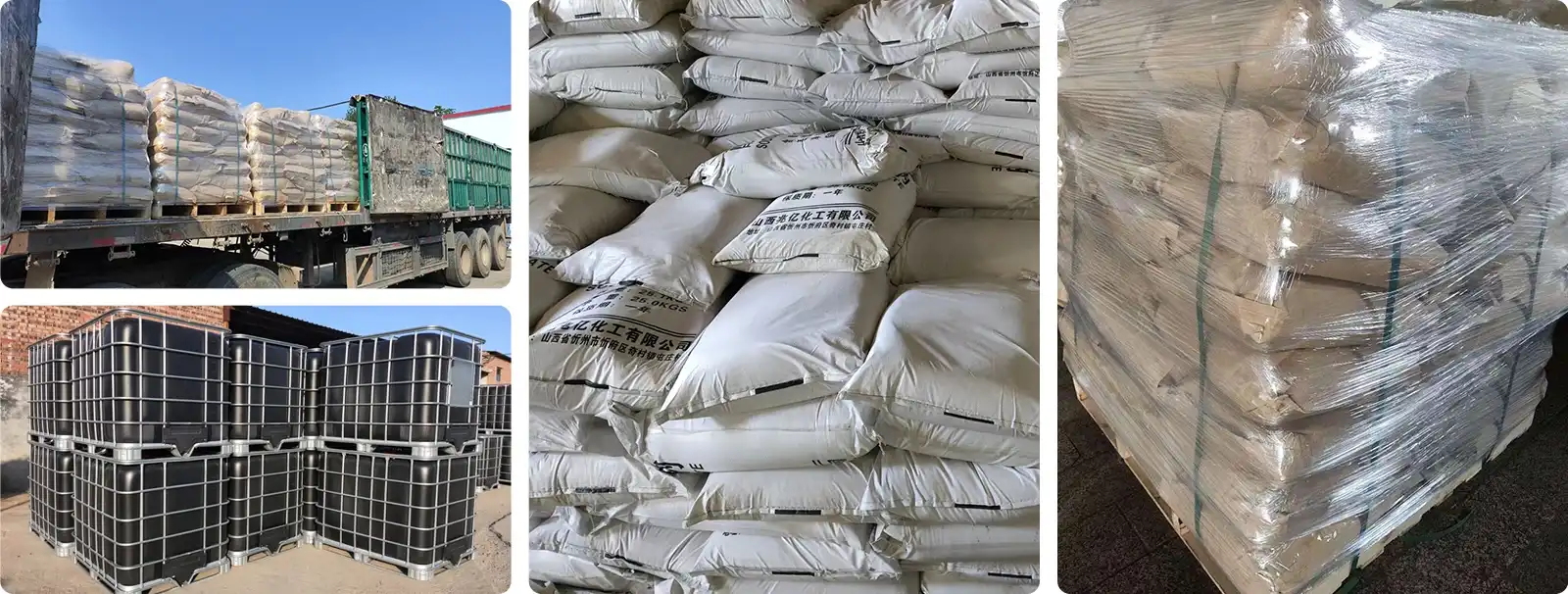
There is a lot of water in the air that potassium acetate can quickly take in. Pellets get clumped together when they are stored incorrectly, which clogs up motorized spreaders and makes application less accurate. For smaller businesses, standard packing options include 25 kg knitted plastic bags. For big contracts with cities or airports, standard packing options include 1,000 kg ton-bags. When it's being shipped, the item must be kept in a dry, well-ventilated building away from heat sources and away from things that won't work with it. It doesn't matter what size the package is.
Evaluating Suppliers for Long-Term Partnerships
A reliable company that sells Snow Melting Solid Potassium Acetate (CAS N.: 127-08-2) should do more than just sell the product; they should also make sure that the supply chain is stable. A major factory system can make at least 50,000 tons of goods every year. Other important signs are the lead time (5–7 business days is normal for ready-stock items) and the shipping terms (FOB, CIF, and DAP). Ask for references from people you've already worked with at the airport or in the city, and be clear about how often you've been on time during the busiest winter months.
Application Methods and Best Practices for Effective Road Maintenance
Spreading Techniques and Equipment
When solid potassium acetate is used, it works best when it is spread out evenly using a machine that has been calibrated. To keep the roads in good shape, the granules work well with regular salt spreaders that have contact surfaces made of polymer or stainless steel so that they don't react with them. On airport aprons and other sensitive areas, the material isn't spread too thinly because of precision spreaders with rate controls that can be changed. When roads and runways are treated before a storm, the total amount of water that needs to be used for each storm is less than when they are treated after the fact.
Recommended Dosage and Environmental Monitoring
The right amount to use depends on the surface's temperature and state, but 15–40 grams per square meter is a good general rule. You lose product and make more waste when you use too much. There may be product building in the drainage paths after the storm. If you see any, close the plants. Normal application rates don't have much of an impact on the environment because acetate breaks down on its own. On the other hand, writing down program numbers in a maintenance log helps with compliance records and, over time, finds ways to lower usage.
Handling and Transport Safety
Workers who handle fine crystalline dust from potassium acetate should wear normal PPE like gloves and eye protection. This is not because the dust itself is very dangerous, but because it can hurt nasal membranes. When bags are being moved, they need to stay closed so water doesn't get inside and damage them. Things that are poisonous or oxidizing should never be mixed in with the product. Early stock doesn't get too wet before it's used because of FIFO (first in, first out) storage.
Conclusion
Snow Melting Solid Potassium Acetate(CAS NO.: 127-08-2) is the only deicer that can really compete with chloride-based ones when it comes to low temperatures, chemicals that don't break down, and being good for the environment. Acetate-based deicers are being bought by more and more bulk procurement teams that are in charge of roads, runways, bridges, or industrial facilities. These teams use information about how long infrastructure lasts and how well it meets legal requirements. Next to choosing the right product, it's important to find a service with real certifications, regular quality checks, and a track record of being able to handle transportation. Get ideas from this guide the next time your team looks at winter maintenance chemicals for the next season.
FAQ
Is potassium acetate safer for the environment than rock salt?
Yes. Rock salt (sodium chloride) raises soil and water salinity, harms vegetation, and corrodes infrastructure. Potassium acetate is chloride-free and biodegradable. Soil microbes break the acetate ion down into CO₂ and water, leaving no persistent environmental residue.
What is the shelf life, and how should I store it?
When stored correctly in sealed bags inside a dry, ventilated warehouse, potassium acetate maintains its quality for 2 years. Exposure to moisture causes clumping and reduces spreader performance. Always keep bags off the ground on pallets and away from exterior walls.
How does it perform in extreme cold below -20°C?
Potassium acetate remains active down to approximately -30°C under field conditions, with a theoretical eutectic point of -60°C. This makes it a practical choice for northern U.S. states and Canadian border regions where rock salt is functionally ineffective.
Will it damage airport runways or bridge concrete?
No. It does not chemically attack cured concrete or cause the physical expansion damage associated with chloride salts. It also meets material compatibility requirements for aircraft avionics, composite structures, and carbon brakes, making it the standard choice for airport ground operations.
Partner with SHANXI ZHAOYI CHEMICAL for Bulk Supply
It has been making acetate goods in a 27,000 m² factory since 1988. Each year, the factory can make 150,000 tons of them. There is no doubt that our Snow Melting Solid Potassium Acetate is at least 99.0% pure. It has also been certified as KOSHER, HALAL, and ISO 9001 and ISO 14001 compatible. We are a reputable company that makes Snow Melting Solid Potassium Acetate. For large orders, we offer low prices, lead times of 5–7 days, and a variety of shipping options. Email us at sxzy@sxzhaoyi.com or visit sxzhaoyi.com right away to get a sample or quote.
References
1. Transportation Research Board. Snow and Ice Control: Materials and Methods. National Academies Press, 2014.
2. Levelton Consultants Ltd. Guidelines for the Selection of Snow and Ice Control Materials to Mitigate Environmental Impacts. Salt Institute / Transportation Association of Canada, 2008.
3. Shi, X., Veneziano, D., Xie, N., & Gong, J. "Use of chloride-based ice control products for sustainable winter road maintenance." Cold Regions Science and Technology, 2013.
4. Fischel, M. Evaluation of Selected Deicers Based on a Review of the Literature. Colorado Department of Transportation, 2001.
5. Blomqvist, G., & Gustafsson, M. "Airborne spreading of deicing salt." Science of the Total Environment, 2004.
6. Koefod, S., & McEwen, C. "Comparing Non-Chloride Deicing Agents for Airport Runway Applications." Journal of Transportation Engineering, ASCE, 2019.

USER EVALUATE
Here is the customer's evaluation of us