



Snow Melting Liquid Potassium Acetate for Airport Pavement Maintenance
Airport pavement maintenance during winter demands more than routine salt application. Snow melting liquid potassium acetate(CAS NO.: 127-08-2) is a colorless, slightly sour liquid deicer engineered for high-stakes surfaces like runways and taxiways. With a freezing point suppression down to -35°C and a snow melting rate exceeding 85% within one hour at -25°C, this non-chloride solution protects pavement, aircraft components, and surrounding ecosystems simultaneously — making it the preferred choice for airport operators across North America.
Understanding Liquid Potassium Acetate for Snow Melting
Teams that buy things need to know what they're getting before they buy a deicing product. This is what makes liquid potassium acetate unique: its chemical properties.
Chemical Composition and Physical Properties
Potassium acetate is a 50–60% water solution with a chemical weight of 98.14 g/mol. It doesn't have any color and has a slightly sour smell. Because it is between 1.25 and 1.29 times its own weight at 20°C, it can move quickly through ice and ground.
Low-Temperature Performance
What is the eutectic point of potassium acetate solution? It is -60°C, but in real life, it works best at -35°C. If you want solid deicers to work, you need water and traffic. But this liquid form works right away when it touches water. Airport ground teams need to be able to act quickly during winter storms because each minute that a runway is stopped costs money.
Safety, Storage, and Handling
The item should be kept in a warehouse that is dry, well-ventilated, and away from heat and moisture. It should also be handled carefully so that the containers don't get damaged. Keep it away from things that won't work with it. Tanks made of polyethylene and stainless steel are good containers because they keep things from drying out and getting dirty over time.
Advantages of Liquid Potassium Acetate over Traditional Deicing Solutions
Chloride-based deicers, such as sodium chloride, magnesium chloride, and calcium chloride, are found in deicers. They damage metal in airplanes, rust through concrete rebar, and pollute nearby rivers. With potassium acetate liquid, you can solve all of those issues right away.
Here are the main efficiency gains that experts and buyers need to know about: The carbon steel corrosion rate should be evaluated against the applicable AMS 1435 requirements using the specified test method and units. This is the aviation industry's gold standard for how well runway deicers work with airplane metals and materials.
- Corrosion rate of ≤0.03 g/m²·h on carbon steel, meeting or exceeding Aerospace Material Specification AMS 1435, the aviation industry's gold standard for runway deicer compatibility with aircraft metals and composites.
- Biodegradability of ≥95%, with biochemical oxygen demand (BOD) and chemical oxygen demand (COD) assessed through appropriate testing to evaluate potential impacts on stormwater quality.
- Zero Foreign Object Debris (FOD) generation because the product is liquid-only, eliminating the grit and residue that solid deicers leave on runways — a direct flight safety benefit.
- pH buffered at 7.5–9.2, which passivates metal surfaces rather than attacking them, reducing long-term wear on spraying equipment and pavement reinforcement.
Because the product is only liquid, there is no Foreign Object Debris (FOD) production. This means that snow melting liquid potassium acetate doesn't leave behind the grit and film that solid deicers do, which makes flying safer. – pH adjusted between 7.5 and 9.2; this keeps metal surfaces from getting damaged instead of damaging them. This makes spraying gear and sidewalk repair tools last longer.
Selecting the Best Liquid Potassium Acetate Product for Industrial Snow Melting
Things that are made from potassium acetate are not all the same. Industrial-grade goods that are safe are different from those that don't meet standards because they have the right concentration, impurity levels, and supplier approval.
Key Quality Parameters to Verify
Ask suppliers for batch test records that show the following: CH₃COOK content ≥50–60%, Ferrum(Fe) ≤0.002%, Arsenic (As) ≤0.0004%, Lead (Pb) ≤0.01%, and Chloride ≤0.01%. If the percentage changes, the slope of the freezing point curve stays the same. The freezing point goes up if the concentration is too low, and the product doesn't work at critical temperatures.
Certifications That Matter
There are three types of certificates you should look for in suppliers: ISO 9001 for quality management, ISO 14001 for environmental management, and ISO 45001 for worker safety. With KOSHER and HALAL approvals, it is possible to keep a close eye on the whole production process. Aviation standards must be met by AMS 1435 compliance testing, which looks at effects on materials on the runway's surface as well as sandwich corrosion and total immersion corrosion.
Supplier Reliability and Support
There should be no wait times and technical support 24 hours a day, seven days a week from a good company that sells liquid potassium acetate for melting snow. They should also be able to increase supply for big airport orders. If you want to be sure of the concentration at the time of delivery, make sure the supplier can show proof of tests for absorption and density.
Procurement and Logistics: How to Buy and Store Liquid Potassium Acetate?
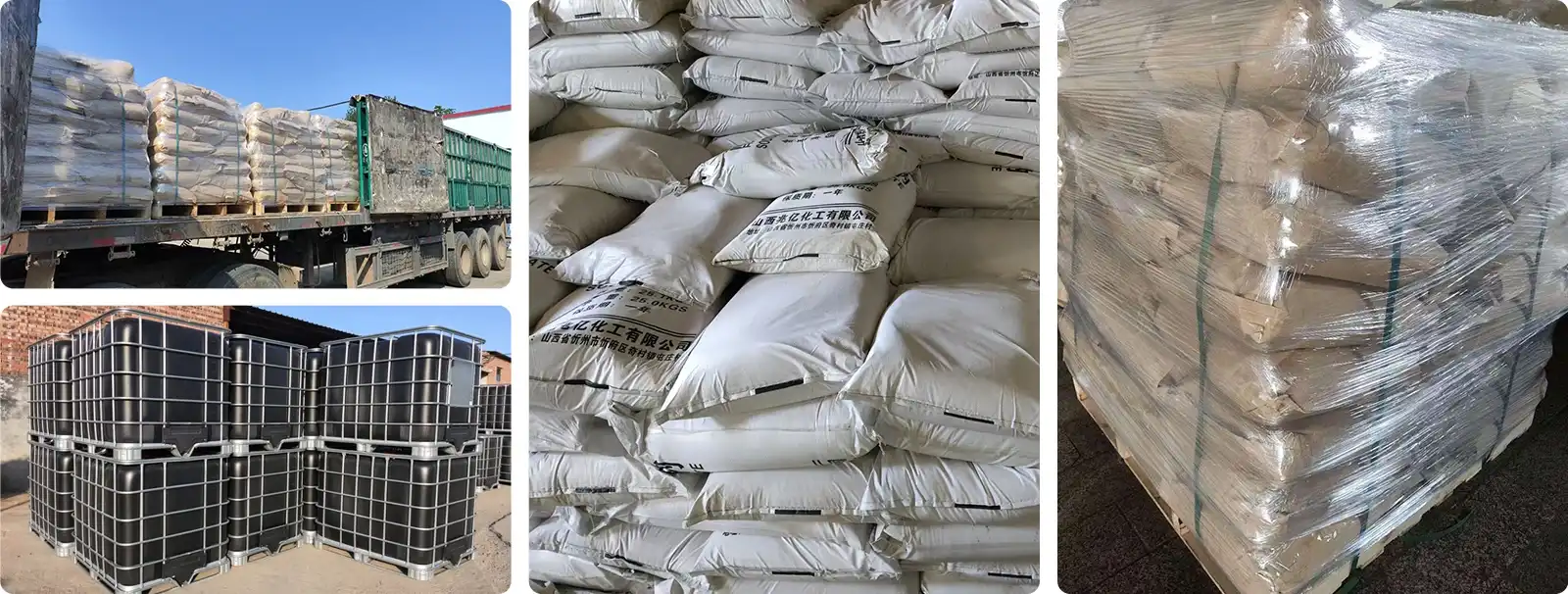
Bulk procurement for airport operations requires clear logistics planning. SHANXI ZHAOYI CHEMICAL ships in 1000L IBC tanks and Flexibags, both of which integrate efficiently with on-site storage systems and spray truck loading operations.
Packaging and Volume Planning
IBC tanks are suited for airports with direct spray truck connections and sufficient covered storage space. Flexibags offer a cost-effective bulk transport option for high-volume seasonal contracts. Production lead times run 5–7 working days, and safety stock management by the supplier helps prevent supply gaps during peak winter demand.
Storage Best Practices
Store containers in a dry, ventilated facility away from heat sources and moisture. Keep the snow melting liquid potassium acetate(CAS NO.: 127-08-2) separated from incompatible chemical substances at all times. Sealed polyethylene or stainless steel tanks extend shelf life without settling or separation, making forward-stocking practical for airports in northern climates.
Spill Response and Disposal
Because potassium acetate is biodegradable, minor spills pose limited environmental risk. However, large volume spills near drainage systems should be contained per local NPDES guidelines, as high concentrations still carry an oxygen demand load. Maintain spill kits and disposal records to stay compliant with airport environmental audits.
Case Studies and Verification of Liquid Potassium Acetate in Airport Pavement Maintenance
Acetate is a good choice for deicing runways because it works in the real world. Many major airports in North America and Europe have switched from glycol or chloride products to liquid potassium acetate in the last few years. They say that it makes the pavement last longer and cuts down on the number of accidents that happen when planes are being fixed.
Operational Efficiency Gains
Field reports from airports with automated Fixed Automated Spray Technology (FAST) systems show that 20–30% less deicer is needed for each event when liquid potassium acetate is used instead of solid salt. This is because spray needles spread the liquid evenly across the surface as soon as it hits it.
Pavement and Infrastructure Protection
The United States spends about $8–10 billion a year on bridge repairs because of chloride-caused rebar rust. Using non-chloride deicers at airports slows down the wear and tear on concrete and joint seals. This makes fixing the surface take longer and cost less.
Environmental and Regulatory Compliance
Potassium acetate (CH₃COOK) can undergo biodegradation under suitable environmental conditions, which is relevant to airports managing water discharge permits under the Clean Water Act, Section 402. Because it breaks down naturally in at least 95% of cases, airports can follow the rules for their National Pollutant Discharge Elimination System (NPDES) permits. This keeps them from getting big fines when the environment is checked often.
Conclusion
Snow melting liquid potassium acetate(CAS NO.: 127-08-2) is a technically sound, environmentally responsible deicing solution for airport pavement maintenance. Its immediate action at extreme temperatures, low corrosion profile, and high biodegradability address the three biggest pain points airport operators face: safety, infrastructure longevity, and environmental compliance. For procurement teams evaluating their winter maintenance program, the data consistently supports acetate-based deicers as the more cost-effective long-term choice. Choosing a certified, experienced manufacturer with reliable bulk supply capacity is the practical next step.
FAQ
Does liquid potassium acetate work better than road salt at low temperatures?
Yes. Road salt (sodium chloride) loses effectiveness below -9°C (15°F), while liquid potassium acetate remains effective down to -35°C in standard formulation and to -60°C at eutectic concentration. As a ready-to-use liquid, it acts immediately on contact without requiring traffic or moisture to dissolve.
Is this product safe for concrete airport pavements?
Potassium acetate is considered concrete-safe. Unlike chlorides, which penetrate concrete and corrode internal steel rebar — leading to cracking and spalling — potassium acetate does not chemically attack cement paste or rebar.
How long can I store liquid potassium acetate?
If stored in sealed polyethylene or stainless steel containers in a dry, ventilated area away from heat, the product maintains stability without settling. Proper sealing prevents evaporation and maintains concentration accuracy.
Why does this product cost more than chloride deicers?
Production requires acetic acid and potassium hydroxide, which carry higher raw material costs than mined brine. However, when you account for the elimination of corrosion repair costs on aircraft, runways, and structures, the total cost per winter season is typically lower.
Is potassium acetate liquid compatible with FAST spray systems?
Yes. Its low viscosity at sub-zero temperatures ensures it flows freely through automated nozzle systems without clogging, making it well-suited for FAST installations on bridge decks and airport taxiways.
Partner with SHANXI ZHAOYI CHEMICAL for Reliable Airport Deicing Supply
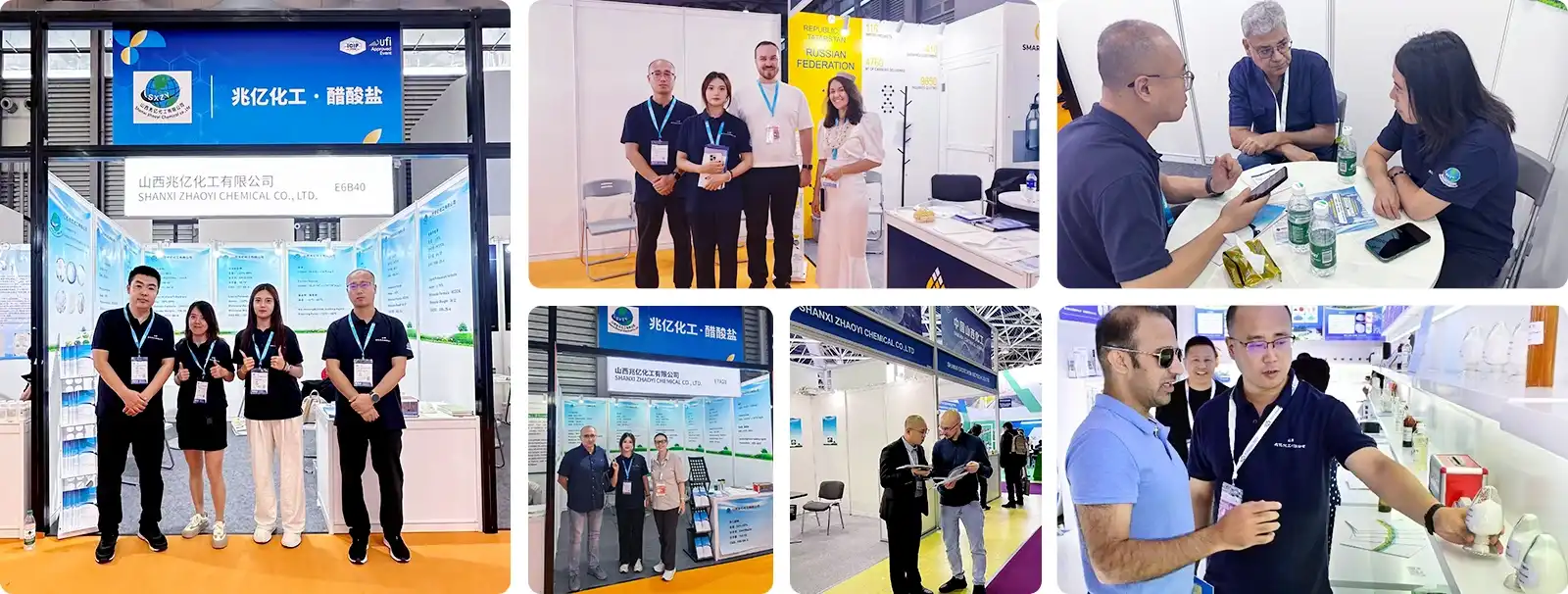
Since 1988, SHANXI ZHAOYI CHEMICAL has been making products from acetate. Each year, they can make 150,000 tons of these products. The way our snow melting liquid potassium acetate melts snow meets the requirements of AMS 1435. It comes in IBC tanks or Flexibags and takes 5–7 days to get there. We are a trustworthy business that makes liquid potassium acetate for getting rid of snow. Our ISO, KOSHER, and HALAL certifications prove it. We also help airports get lots of things at once. Right now, you can ask for a product sample or technical advice by emailing sxzy@sxzhaoyi.com or visiting sxzhaoyi.com.
References
1. Federal Highway Administration (FHWA). Corrosion Cost and Preventive Strategies in the United States. 2002.
2. SAE International. AMS 1435: Fluid, Generic, Deicing/Anti-Icing Runways and Taxiways. 2004 (revised).
3. U.S. Environmental Protection Agency. NPDES Permit Writers' Manual. 2010.
4. Transportation Research Board. Airport Pavement Design and Evaluation: FAA Advisory Circular 150/5370-10. National Academies Press, 2016.
5. Shi, X., Veneziano, D., Xie, N., & Gong, J. Use of Chloride-Based Ice Control Products for Winter Road Maintenance: A Balance Between Safety and Environmental Impacts. Cold Regions Science and Technology, 2013.
6. Fischel, M. Evaluation of Selected Deicers Based on a Review of the Literature. Colorado Department of Transportation Research Branch, 2001.

USER EVALUATE
Here is the customer's evaluation of us