



Is Snow Melting Solid Potassium Acetate Better for Long-Term Storage?
It is better to store Snow Melting Solid Potassium Acetate (CAS No. 127-08-2, CH₀COOK) for a long time, but only if it is used the right way. Crystalline and white, it is ≥99.0% pure, and when conditions are right, it is very chemically stable. Since it doesn't have salt in it and breaks down on its own, it doesn't mix with other things or damage packing over time. The biggest problem is that it soaks up water. If it's not kept in dry, well-ventilated warehouses in cases that can't let water in, performance can suffer. It stores reliably for a long time if it's taken care of well.
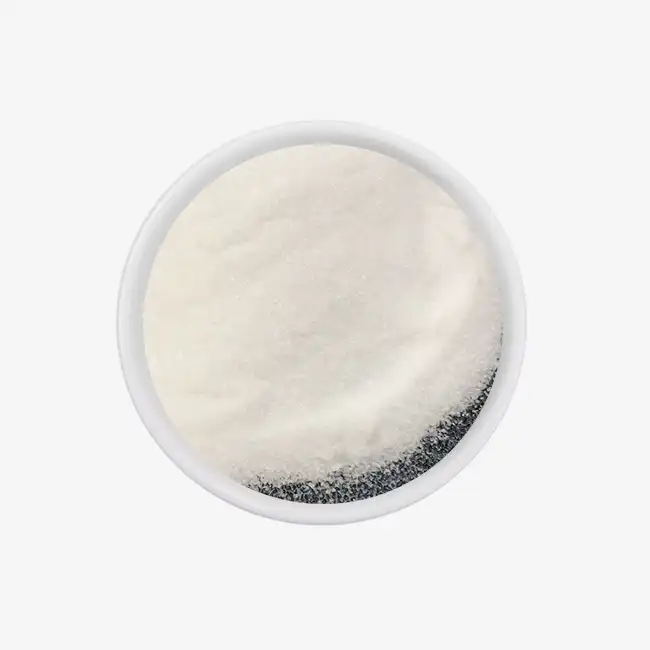
Understanding Solid Potassium Acetate as a Snow Melting Agent
What Makes It Work at the Molecular Level?
Ionic dissociation makes it less likely for water to freeze when snow melts solid. CH₃COOK gives off potassium (K⁺) and acetate (CH₃COO⁻) ions that mix with the water on top. And it can get as cold as -35°C because these ions break up hydrogen bonds. It is thought that the eutectic point is around -60°C. This is much better than rock salt after about -7°C (20°F).
Acetate ions are easily broken down by microbes in the soil into carbon dioxide and water, which does not leave any chemical waste behind. Other deicers, such as sodium chloride, calcium chloride, or magnesium chloride, are not as good as this. For example, it can be used in airport grounds, bridge decks with visible rebar, and places that have to follow EPA rules for how rainwater should drain because it breaks down on its own.
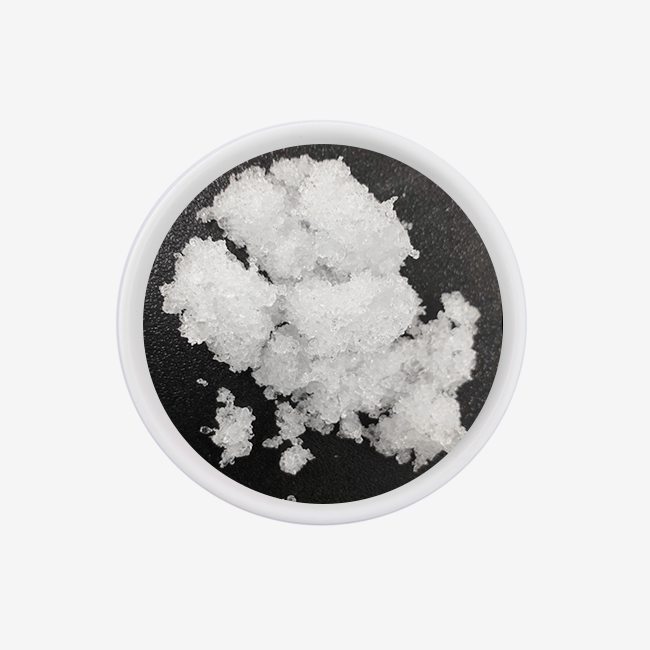
These are white granules that break down quickly in alcohol, acid, and water. They quickly turn into brine when these things touch them. This almost makes it possible to move quickly on ice, which is very helpful when safety windows are really small.
Potassium Acetate Storage: Why Long-Term Stability Matters?
The Hygroscopicity Challenge Every Buyer Needs to Know
Snow Melting Solid Potassium Acetate soaks up a lot of water. The water it takes in from the air can make grains cake, clump, and finally turn into a slurry. For this reason, motorized spreaders are not useful, and it is harder to tell what is pure. Acetate salt breaks down in different ways, and researchers who studied it say that if it is more than 1.0% wet, it is harder for it to move and concentrate its active ingredients.
This isn't a feature that rules someone out. It is not too hard to handle. The only things that make the difference between a stockpile that works well in March after 18 months of storage are how well it was packed and how well the warehouse was run. When goods are made, suppliers who keep the moisture level below 1% and pack them in sealed, double-lined bags give buyers a big advantage.
The chemical stability itself is not what's important. As long as it is stored at room temperature, Snow Melting Solid Potassium Acetate does not oxidise, combine with its package, or break down thermally. When properly packed and stored, it has a shelf life that lasts much longer than a normal winter purchase cycle.
Comparing Solid Potassium Acetate with Other Deicers for Long-Term Storage
When procurement teams look at bulk deicing inventory, how stable it is in storage is just as important as how well it melts. Comparing Snow Melting Solid Potassium Acetate to the most common alternatives, we can say the following:
- Rock salt (sodium chloride): Rock salt, or sodium chloride, is cheap and easy to find, but it is very bad for metal and reinforced concrete structures. It gets cakey when it's humid, and it stops working below -7°C. When things are stored for a long time in wet places, rigid masses form, which makes them harder to handle.
- Calcium chloride: Calcium chloride works down to about -29°C, but it absorbs a lot of water—more than Snow Melting Solid Potassium Acetate. It pulls water so hard that stock that wasn't kept properly melts. It also speeds up the rusting of steel and aluminium, which makes it harder to store things near metal tools.
- Magnesium chloride: Calcium chloride works better and causes less rust than magnesium chloride, but it still adds to the amount of chloride in the soil and water. It's not very stable when stored, and it tends to clump together in wet places.
- Urea: This chemical is mostly used at airports because it doesn't rust, but it adds a lot of biochemical oxygen demand (BOD) to runoff and doesn't work well below -10°C. Storage is pretty stable, but the costs of following environmental rules cancel out the saves.
In this comparison, Snow Melting Solid Potassium Acetate stands out because it works well at low temperatures, doesn't react with other chemicals, is safe for the environment, and doesn't need to be stored for a long time. When infrastructure security and regulatory compliance are taken into account, its overall cost of ownership over a storage time is competitive for buyers keeping strategic winter stockpiles.
Procurement Considerations for Solid Potassium Acetate Snow Melt
Certifications and Quality Standards That Protect Your Supply Chain
Where you get acetate-based deicers has real effects on other products that use them. Less than 98% purity lowers freezing point decline in a measurable way. When the chloride content is too high (above 0.2%), the corrosion risk that Snow Melting Solid Potassium Acetate(CAS NO.: 127-08-2) is supposed to get rid of comes back. For environmentally friendly uses, trace amounts of heavy metals like lead, mercury, and arsenic must be below EPA-set PPM levels.
Suppliers you can trust have ISO 9001 certification for quality management, ISO 14001 certification for environmental management, and, if necessary, ISO 45001 certification for workplace safety. KOSHER and HALAL certifications give buyers even more confidence when they are buying from facilities that are close to food or drugs.
When buying in bulk, you usually have to choose between 25 kg woven plastic bags for controlled distribution and 1,000 kg ton-bags for large-scale storage. Both choices should have inner liners that keep out wetness. Buyers should ask for a Certificate of Analysis (COA) that says each batch is pure (≥99.0% CH₃COOK), has no water insolubles (≤0.05%), no salt (≤0.2%), and no iron (≤0.05%).
Planning ahead of time is important. Manufacturers with a good reputation and enough safety stock usually have a production cycle of 5–7 business days. However, orders placed before October can avoid the supply compression that affects availability in November and December.

Best Practices for Using and Storing Solid Potassium Acetate
Warehouse and Handling Protocols That Preserve Product Quality
Snow Melting Solid Potassium Acetate needs to be stored according to a practical set of rules in order to keep working properly. Proper performance here directly saves the investment in the purchase and makes sure that the product works as planned when winter comes.
A warehouse that is dry, well-ventilated, and controlled so that the relative humidity stays below 60% should be used for storage. To keep wetness from moving away, pallets should be raised off of concrete floors. Extreme temperatures are not as important as controlling humidity, but it is best to store things away from direct heat sources.
- Packaging integrity: When you get each bag or ton-bag, look for tears, holes, or seams that aren't holding together well. Any broken packaging should be resealed right away with materials that keep wetness out. Bags that have been partially used need to be fully sealed again between uses.
- Separation from incompatibles: Keeping Snow Melting Solid Potassium Acetate away from strong acids, oxidising agents, and any other harmful or toxic substances is important. This is needed for safety reasons and to make sure the quality of the product, since contamination can change the pH and make it less effective.
- Stock rotation discipline: Use first-in, first-out (FIFO) inventory management to rotate your stock. Even if the goods are kept properly, rotating them can help make sure that older stock is used up before newer supplies arrive. Check stored batches every three months for signs of caking or moisture getting in.
Collectively, these steps increase the useful shelf life of stored goods and stop the problems that old deicing agents cause during high demand in the winter.
Conclusion
It's better to store Snow Melting Solid Potassium Acetate (CAS NO.: 127-08-2) for a long time than most chloride-based options. It's not that it doesn't break down; it's that the way it breaks down can be planned for and controlled. The biggest risk is hygroscopicity, which can be controlled by storing the goods dry and with good air flow. It is useful for buying teams that keep deicing products kept for more than one season because it is chemically stable, doesn't dissolve, and stays clean in the right circumstances. People who buy this product will get what they need when they need it the most if they spend money on good sources and well-organized warehouse processes.
FAQ
Does potassium acetate deicer expire?
As long as you keep Snow Melting Solid Potassium Acetate in the right way, it won't go bad. If you pack it up and keep it in a dry, well-ventilated place with humidity below 60%, it stays ≥99.0% clean for many seasons. Things mostly break down when they soak up water, not when chemicals break down. With regular inspections and FIFO stock movement, performance can be kept up forever.
Can solid potassium acetate be stored outdoors?
Not at all. Since Snow Melting Solid Potassium Acetate soaks up a lot of water, leaving it outside, even under a blanket, will cause the humidity to rise, which will cause it to harden and melt. To keep the quality of your things and keep them moving, you need to store them inside in climate-controlled storage.
How does it affect concrete and metal infrastructure during storage and use?
Snow Melting Solid Potassium Acetate doesn't mess with the chemicals in concrete paste like chloride salts do, and it also doesn't cause rebar to rust. Aircraft material suitability norms say that it doesn't eat away at structural steel or metal alloys too much. It's safe to store near metal tools and great for use in critical structures because of this.
What purity level should I require from my supplier?
The industry standard for effective freezing point depression is an assay of at least 98%. The product from SHANXI ZHAOYI CHEMICAL gets ≥99.0%, which is a performance gap above the minimum that can be measured.
Partner with SHANXI ZHAOYI CHEMICAL for Reliable Supply
Since 1988, SHANXI ZHAOYI CHEMICAL has been making acetate-series goods. They can make up to 150,000 tonnes of them every year and are certified by ISO, KOSHER, and HALAL. We are a reliable provider of Snow Melting Solid Potassium Acetate, and we offer ≥99.0% pure product in 25 kg bags and 1,000 kg ton-bags. Lead times are 5–7 days, and we can offer FOB, CIF, and DAP terms. To get a COA, sample, or bulk quote, email our team at sxzy@sxzhaoyi.com or visit sxzhaoyi.com.
References
1. Federal Highway Administration (FHWA). Manual of Practice for an Effective Anti-Icing Program. U.S. Department of Transportation, 1996. Available at: https://www.fhwa.dot.gov/publications/research/safety/96202/
2. Ramakrishna, D.M., & Viraraghavan, T. "Environmental Impact of Chemical Deicers — A Review." Water, Air, and Soil Pollution, 2005, 166(1–4), 49–63. Available at: https://link.springer.com/article/10.1007/s11270-005-8265-9
3. SAE International. AMS 1435: Fluid, Generic, Deicing/Anti-Icing Runways and Taxiways. SAE International, 2004 (revised). Available at: https://www.sae.org/standards/content/ams1435/
4. U.S. Environmental Protection Agency (EPA). Effluent Guidelines: Airport Deicing. EPA Office of Water, 2012. Available at: https://www.epa.gov/eg/airport-deicing-effluent-guidelines
5. Transportation Research Board (TRB). NCHRP Report 577: Guidelines for the Selection of Snow and Ice Control Materials to Mitigate Environmental Impacts. National Academies Press, 2007. Available at: https://nap.nationalacademies.org/catalog/14038/
6. Shi, X., Akin, M., Pan, T., Fay, L., Liu, Y., & Yang, Z. "Deicer Impacts on Pavement Materials: Introduction and Recent Developments." Open Civil Engineering Journal, 2009, 3, 16–27. Available at: https://benthamopen.com/ABSTRACT/TOCIEJ-3-16

USER EVALUATE
Here is the customer's evaluation of us
YOU MAY LIKE
 VIEW MOREFertilizer Solid Potassium Acetate
 VIEW MORE75% Liquid Potassium Formate
 VIEW MOREFresh-Keeping Sodium Acetate Trihydrate
 VIEW MOREFeed Fresh-Keeping Sodium Diacetate
 VIEW MOREAntibiotic Solid Potassium Acetate
 VIEW MOREDeicing Solid Potassium Acetate
 VIEW MORESewage Liquid Sodium Acetate
 VIEW MORESewage Sodium Acetate Trihydrate