



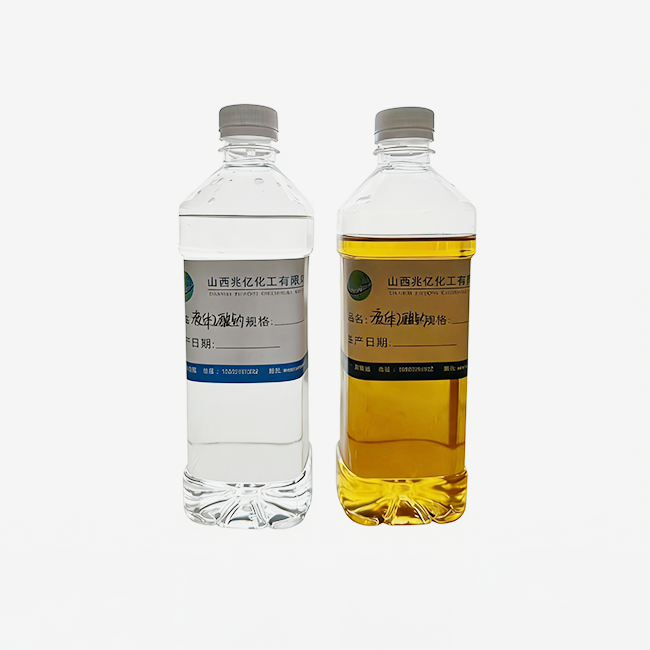
Sewage Liquid Sodium Acetate
Character: Clear near water-white liquid
Usage: It is mainly used for municipal sewage treatment
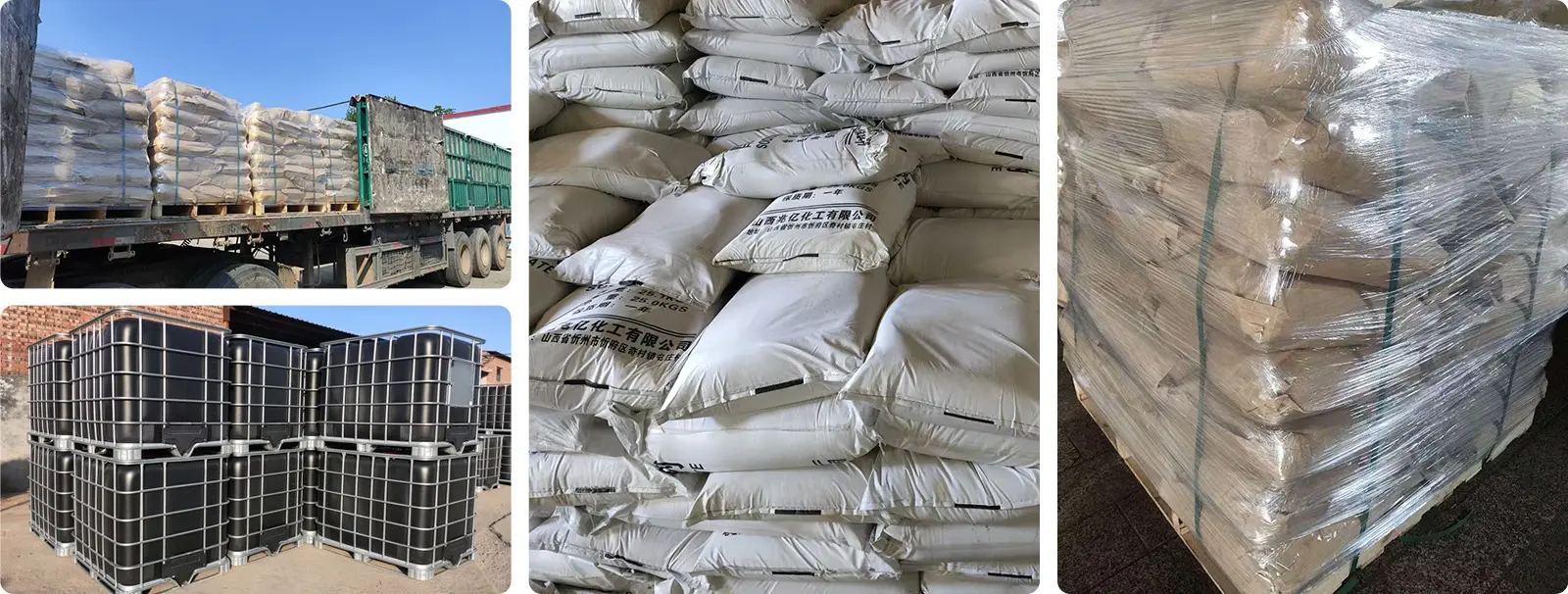
Package: 1000L IBC tank or Flexibag.
Storage: It should be stored in a dry and ventilative warehouse, kept away from heat and moisture during transportation, unloaded with care so as to avoid damage. Furthermore, it must be stored separately from poisonous substances.
- Product Description
Sewage Liquid Sodium Acetate for Municipal Wastewater Treatment — High-Efficiency External Carbon Source Solution
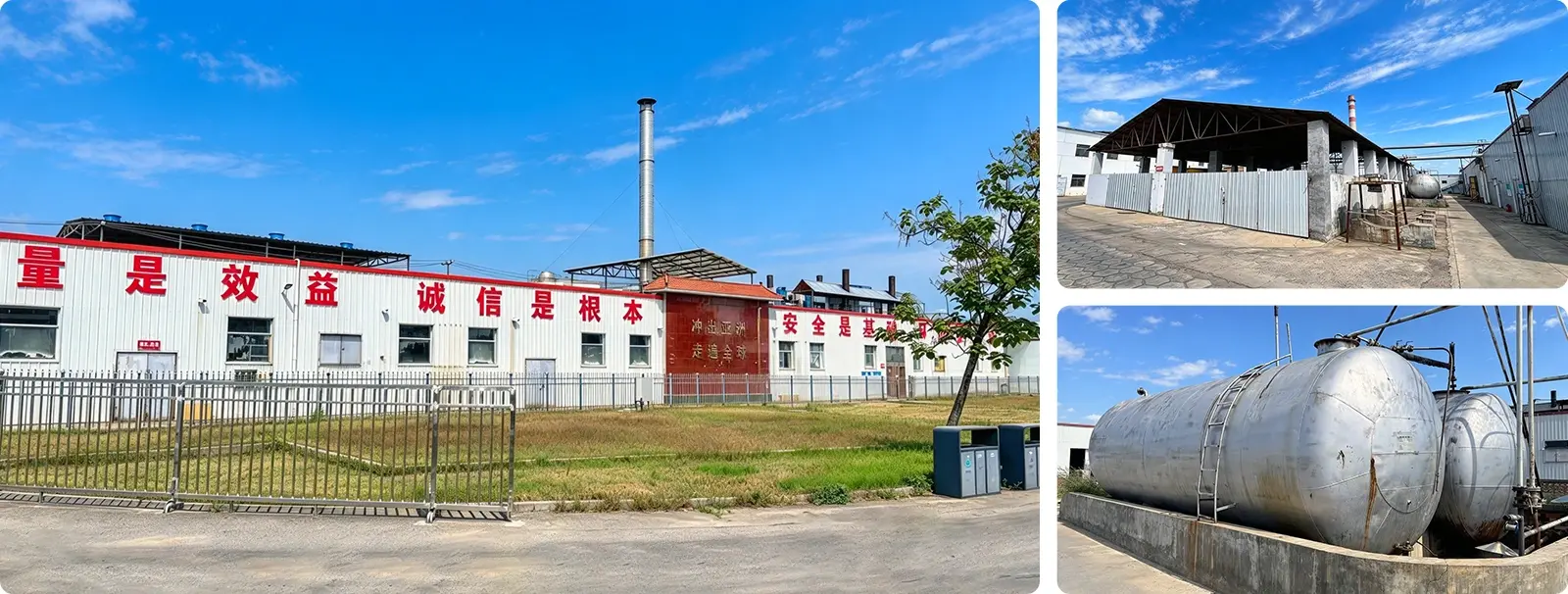
Sewage Liquid Sodium Acetate from Shanxi Zhaoyi Chemical Co., Ltd. is a high-purity, 20% concentration external carbon source engineered for municipal and industrial wastewater treatment. It is a clear, water-white liquid. Chloride up to 0.03% max., pH 7.0 to 9.5. With a 27.000 m2 plant that can make 150.000 tonnes of acetate every year and more than 30 years of experience making it, we can guarantee consistent quality on a large scale. Because the ready-to-use version stays liquid at -5°C and works with controlled dose systems, it can be used all year long in all kinds of weather.
Technical Specifications
Parameter | Specification |
Product Name | 20% Liquid Sodium Acetate |
Appearance | Clear near water-white liquid |
Content (CH₃COONa) | ≥20% |
pH Value | 7.0 - 9.5 |
COD Equivalent | ~160,000 - 180,000 mg/L |
Freezing Point | Below -5°C (formulated for cold climates) |
Density | 1.08 - 1.12 g/cm³ |
Primary Application | Municipal sewage treatment denitrification |
Biodegradability | Readily biodegradable (BOD₅/COD > 0.4) |
What Is Liquid Sodium Acetate and Why Does Wastewater Treatment Need It?
One problem that many city wastewater treatment plants (WWTPs) have is that the influent does not have enough organic carbon to allow biological nitrogen removal to work well. If the C/N ratio is too low, bacteria that break down nitrates (NO3-N) won't be able to turn them all into nitrogen gas (N2), and the total nitrogen (TN) in the waste will be too high to be released.
This problem can be solved right away with sodium acetate external carbon source liquid. It goes right into the bacterial Krebs cycle because it is a small-molecule organic acid salt. There is no breakdown lag or adjustment time. This makes it much more flexible than glucose or methanol when the input loads change.
It is not considered dangerous like methanol. There is no need for explosion-proof storage, which makes building compliance easier and lowers practical risk.
Key Product Advantages
liquid formulation that is ready to use.There is no mixing or dissolving. The product goes straight into your dosing pump, which cuts down on the amount of work that needs to be done and the chance of making a mistake.
Excellent performance at low temperatures.The mixture stays fluid at temperatures as low as -5°C. This is helpful for WWTPs that work during cold winters, when complicated carbon sources like glucose or fermentation liquids may stop working naturally.
Strict control of impurities.The amount of chloride is kept at ≤0.03%, which protects biological processes and the health of the sludge over time.
High rate of microbial utilisation.Because sodium acetate has small molecules, bacteria can take it directly into their cells with little energy use. This leads to consistent denitrification behaviour and a fixed BOD₅ equal from batch to batch.
How well the process works.In BNR (Biological Nutrient Removal) processes, post-anoxic zones, and tertiary deep-bed denitrification filters, the product can be used. It doesn't make fibrous sludge grow up, which is known to happen with carbon sources that are based on glucose.
Application Scenarios for Liquid Sodium Acetate Denitrification
WWTPs in cities are being upgraded from Class I-B to Class I-A.In situations where stricter discharge rules call for lower TN discharges, anoxic zones usually don't have enough carbon supply. Liquid sodium acetate denitrification is a controlled top-up that lets you follow the rules without having to do a lot of civil engineering.
Tertiary deep-bed denitrification filters. Hydraulic retention times in tertiary filters are short. The fast reaction kinetics of sodium acetate solution sewage treatment applications make it the preferred choice here — nitrogen polishing happens efficiently even within tight contact windows.
Cold climate winter operations. Below 12°C complex carbons are hydrolyzed biologically more slower. Sodium acetate is bio-accessible at all temperatures and helps plants from northern latitudes to stay TN compliant in cold temperatures.
Industrial effluent with different C/N ratios. The wastewater from the industries manufacturing food, pharmaceuticals and chemicals is generally of varying organic load. The reliable and measurable COD contribution of this product simplifies process adjustment.
Sewage Liquid Sodium Acetate vs Other Products
Feature | Sewage Liquid Sodium Acetate | Methanol | Glucose | Sludge Fermentation Liquid |
Reaction Speed | Immediate uptake | Requires acclimation (7-14 days) | Moderate | Slow hydrolysis needed |
Safety Classification | Non-hazardous | Flammable, explosion risk | Non-hazardous | Variable composition |
Storage Requirements | Standard tanks | Explosion-proof facilities | Standard | Large volume required |
Sludge Settling Impact | Improves floc formation | Neutral | Causes filamentous bulking | Variable quality |
Cold Weather Performance | Remains effective <12°C | Performance declines | Biological lag increases | Often freezes |
COD Precision | Predictable, consistent | Accurate | Variable batches | Unstable COD values |
Dosing Calculation | Simple stoichiometric ratios | Complex safety margins | Requires testing | Constant monitoring |
Cost per kg COD | Moderate | Low | Low | Very low but unreliable |
Dosage Calculation Reference
For a 20% concentration solution, the recommended dosage formula is:
V = (4 − C_BOD5/C_N) × C_N × Q / (0.52 × 20%)
Where:
- C_BOD5 = influent BOD₅ concentration (mg/L)
- C_N = influent TN concentration (mg/L)
- Q = daily treatment volume (m³/d)
Example: A plant treating 80,000 m³/day with influent TN of 60 mg/L and BOD₅ of 200 mg/L:
V = (4 − 3.33) × 60 × 80,000 / (0.52 × 20%) ≈ 3,162 m³/day
The correct amount of Sewage Liquid Sodium Acetate should be measured using real-time data on the quality of the water coming in. For your specific process setup, our technical team can help you find the best dosage.
Quality Control and Supply Reliability
Before it is released, every production batch is checked for concentration, pH, and chloride content. Each shipment comes with paperwork, such as a COA and an MSDS.
Our 150,000-ton annual capacity and maintained safety stock mean standard orders can ship within 24 hours of confirmation. Lead time for production orders is approximately 5–7 working days. Liquid product filling is available on an expedited basis.
We support IBC tote and Flexibag delivery formats, with established freight forwarding partnerships for both domestic and international shipments.
Certifications & Compliance
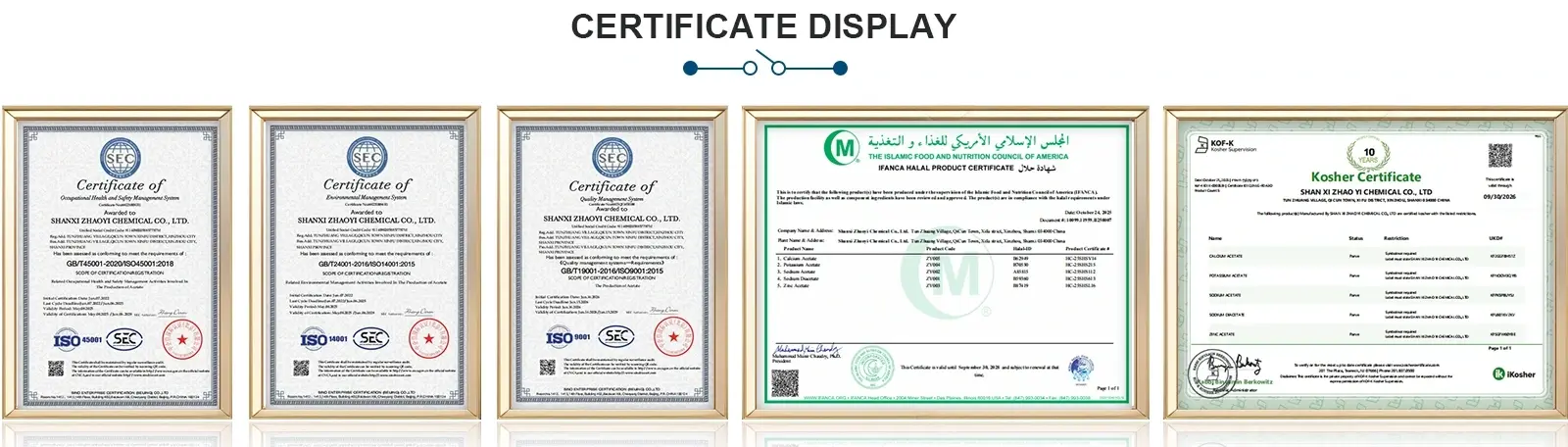
Shanxi Zhaoyi Chemical Co., Ltd. operates under internationally recognized management system standards, supporting your supply chain due diligence and audit requirements.
Certification | Scope |
ISO 9001 | Quality Management System |
ISO 14001 | Environmental Management System |
ISO 45001 | Occupational Health & Safety |
Kosher Certification | Applicable product grades |
Halal Certification | Applicable food-grade products |
On-site factory audits by domestic and international customers are welcomed and supported. We can provide multilingual compliance documents including MSDS, COA, and conformity certificates.
FAQ
Q: What concentration of liquid sodium acetate is most suitable for sewage treatment?
A:In most local situations, a 20% dose is enough. Handling safety, pump compatibility, and COD delivery efficiency are all taken into account. Higher concentrations (25–30%) are available for plants that can't store as much nitrogen or have higher nitrogen loads.
Q: How is sodium acetate different from methanol as an outside source of carbon?
A: Methanol needs time to get used to germs and is dangerous because it can catch fire or poison people, so it needs to be stored in a way that keeps it from exploding. Sodium acetate is non-hazardous, bioavailable right away, and safe to handle. This is why most WWTP operators who care about safety and compliance choose it.
Q: Will this product make sludge get too thick?
A: No. Unlike glucose-based carbon sources, sodium acetate encourages stable growth of bacteria that form flocs instead of filamentous organisms. Over time, this makes it easier for the sludge to settle and the secondary clarifier work better.
Q: Can it be used in places where it's cold in the winter?
A: Yes. The product stays liquid at temperatures as low as -5°C and is still fully bioavailable. In high-latitude areas where winter denitrification is a constant operational challenge, this makes sodium acetate solution sewage treatment applications reliable all year long.
Q: What kinds of paperwork are there to make sure that customs and procurement rules are followed?
A: We offer COAs, MSDSs, packing lists, and safety papers in multiple languages. You can get ISO 9001, ISO 14001, and ISO 45001 certificates if you ask for them. We also back workplace checks that are started by customers.
Q: What is the minimum order quantity and lead time?
A: Orders of standard stock can be delivered within 24 hours. Orders for production usually take 5–7 working days. Different types of packaging have different minimum order quantities. Please contact us to talk about your specific needs.
Our Exhibitions
Contact Us
Ready to optimize your denitrification process with Sewage Liquid Sodium Acetate? Contact our technical team today for product samples, dosage recommendations, or a customized supply proposal.
📧 sxzy@sxzhaoyi.com | 24/7 technical support available

USER EVALUATE
Here is the customer's evaluation of us