



How Does Deicing Liquid Potassium Acetate Help Maintain Airport Pavement Safety?
Deicing liquid potassium acetate(CAS NO.: 127-08-2) helps keep airport pavement safe by lowering the temperature at which surface water freezes, making it more difficult for ice to stick to it. Things don't freeze when it's used before a storm. If you use it after the ice has formed, it will break the bond. To clean the surface, ploughs and brushes can do this. Then, friction can return more quickly. It can be sprayed right away and freezes at -59.4°C (-75°F). Chelamine is not present in it. Still, what happens depends on how hot the road is, how much rain there is, and how quickly the mix is spread. I'll explain how airport teams can get it, test it, and use it next.
What Is Potassium Acetate Deicing Liquid and How Does It Work?
Composition and Technical Specifications
It has a CAS number of 127-08-2 and a molar mass of approximately 98.14 g/mol. It is clear and doesn't have any colour to it. It has a sour taste and is 50% strong (49–50% w/w). Our product doesn't catch fire and has a density of 1.28 g/cm³ at 20°C and a viscosity of 15 cP or less at 25°C. Ferrum(Fe) and small amounts of arsenic (0.0004%), sulphate (0.05%), lead (0.01%), and chloride (0.01%) are allowed. The pH of the product should be reported together with the test concentration and measurement conditions. For each batch, it's important to look at the Certificate of Analysis because the chemicals and amounts in each batch are different.
How Does Freezing Point Depression Work?
There is less chance that water will freeze when potassium acetate is added to it. The name for this is freezing point depression. The specified 50% potassium acetate solution has a reported freezing point of -59.4°C (-75°F), subject to verification under the applicable test conditions. This freezing point represents a specified test result rather than a guaranteed operating temperature under all field conditions. In winter, snow and ice make the liquid on the top less thick, which makes it freeze at higher temperatures. This means that the useful range is smaller. It is MH/T 6095-2013 that tells us how to check if deicing and anti-icing fluids will freeze. If you ask, we can share test documentation.
Anti-Icing and Deicing Uses
Staff at the airport use it in two ways. If you spray it on before it freezes or snows, the ice won't stick to the road. We think it should be 25 to 50 g/m². You treat at a rate of 50 to 150 g/m² after the ice has formed to de-ice. This makes the bond less strong so that it can be broken by hand. It's also possible to wet the solid deicers first, which will make them work better. But you should first talk to a group of experts. Crews don't have to mix the solution with water on the job site because it's already done. This takes away one way that metres can go wrong.
How Potassium Acetate Supports Airport Pavement Safety?
Restoring Friction on Runways, Taxiways, and Aprons
Planes can stop and turn more easily when they land, take off, and taxi because the tires and pavement rub against each other. That can't happen because of ice and packed snow, and black ice is hard to see. See FAA Advisory Circular 150/5200-30D for information on chemical treatment. This circular talks about checking the condition of airport fields to make sure they are safe for winter operations. We tell people who want to apply that trucks should spray before storms to make a wall that keeps water from freezing. This keeps the road from getting icy, which helps keep the friction low so planes can fly. De-icers that are based on potassium acetate make ice less thick, which lets snow ploughs and snow sweepers remove more snow and ice.
Where Airports Can Apply It?
Airports need to take care of more than just the tracks. Over the years, the gates, access roads, bridges, and parking decks have also frozen over. Our fluid can be used on a bridge deck, a curb, a city street, and a ferryway. The information we have about the product also says that it can be used on bridge decks with Fixed Automated Spray Technology (FAST) systems. The age of the sidewalk, the joint sealer, the drains, and the amount of traffic are some of the things that make each surface unique. Before fixing the main sidewalk, crews can do a test patch on a low-risk area like a service road to see how the surface feels when the ice melts. The service provider's expert team can tell you if it will work on any surface.
Chemical Treatment Works With Mechanical Methods
One part of a winter plan is an ice melter using deicing liquid potassium acetate. Still, you should till the ground, brush it, look for damage, measure the friction, and do it all over again if things change. The film on the road gets less thick when it rains a lot. It gets less sharp as it cools down. The film also gets worn out by the road. You can ask for another pass for any of these. Write down the time, place, rate, and weather for each treatment so that supervisors can look at them side by side and decide what needs to be changed. When the season is over, your team can look at the treatment log and see proof of how well the product worked.
Potassium Acetate Versus Conventional Airport Deicing Options
Compared With Chloride Deicers
You can get calcium chloride and sodium chloride for less money per unit, but NCHRP Report 577 talks about how chloride-based deicers can damage concrete and rust the steel that holds it together. According to GB/T 23851-2017, our product is an acetate-based deicer that does not rely on chloride salts. As per that rule, carbon steel can't rust faster than 0.18 mm/a and concrete can't break down faster than 0.30 kg/m². We know that our goods have over 90% less rust than deicers that use chloride. Make sure you have the corrosion test report for your batch before you sign it. The cost over the whole life cycle should be used to make the decision, since the unit price is higher than for salt goods.
Compared With Glycol-Based Aircraft Fluids
Fluids made from propylene glycol are used to get rid of snow and ice on ships and cars. Do not use sidewalk salts or paving goods instead of them. Do not spray paving goods on planes either. Aerosol fluids have to follow different rules than road fluids. You should treat them as two separate programmes because potassium acetate liquid is meant to be used on runways, taxiways, and aprons. They come in two different types: one is for runways and is based on SAE AMS 1435E, and the other is for airport pavement and is based on GB/T 25356-2024. Find out from your flight group if your airport needs any permits.
Liquid Versus Solid Products
Liquids can be spread out evenly and precisely with spray equipment that has been calibrated. Plus, it stays put better on a dry sidewalk than loose flakes, which can blow or bounce off. It works right away. Plus, we have solid potassium acetate that tests at ≥98%. Because this grade soaks up water, it needs to be kept in a dry, closed container. You should never move data from one solid grade to another liquid grade because each grade has its own rules. Check to see if the shape of the item fits the spray gun, the storage space you have, and the treatment goals you have.
Application, Storage, and Environmental Considerations
Planning Application Rates
Know what you want to do by looking at the surface: stop the frost, break up the ice that is stuck together, or make the friction come back. Note how cold the road is, what the weather will be like, how thick the ice is, how well it drains, and how many cars you think will be on it. Needed amount = treatment area × goal application rate. This will help you make a plan. To treat 10,000 m² at 50 g/m², you would need 500 kg of solution, which is about 390 L at 1.28 g/cm³ density. Just follow these steps to get the spray gun and tips ready to use. Make sure you know about the risk of refreeze, ice release, friction, and liquid that is left over after spraying. Also, remember to keep an eye on the GPS and app.
Storage, Packaging, and Handling
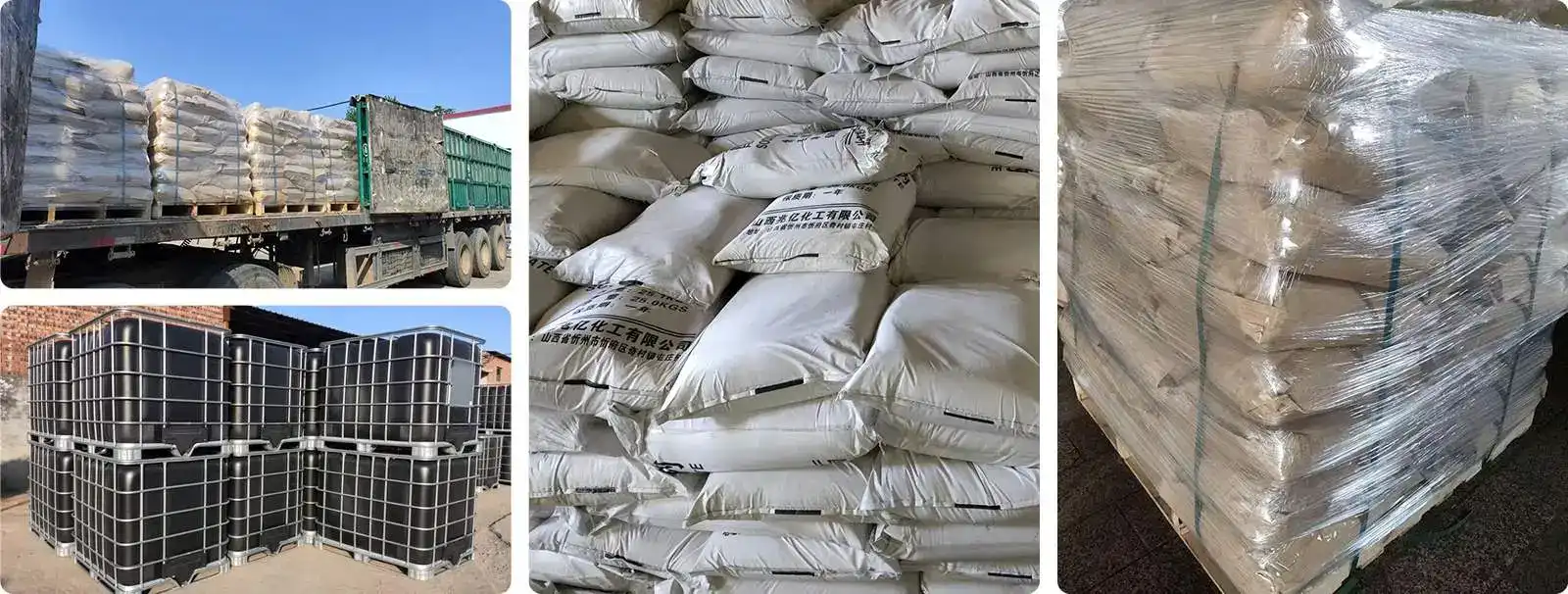
We also have deicing liquid potassium acetate, 1000 L IBC tanks, 200 L plastic drums, flexitanks for shipping containers, and bulk trucks. The boxes we make can also be made just for you. Keep it in a warehouse that stays dry and has good airflow. Keep it away from direct sunlight, heat, and water. Keep harmful things away from it. The things we learned show that HDPE and stainless steel can both be used to make containers. Don't touch things that won't go together. Watch out that the packaging doesn't get broken as you unload. Prepare for the first arrival by reading the SDS. It tells you what safety gear to wear, how to handle a spill, and how to move the stuff.
Environmental and Infrastructure Considerations
It's simple to break down the solution since its BOD₅ value is less than 0.25 kg O₂/kg and its COD value is less than 0.36 kg O₂/kg. Things still need air to break down, so the stream flow, how sensitive the water is, and the amount of waste all help things move. The ACRP's Report 14 talks about how to deal with rainwater to clear airports of snow and ice. Fay and Shi (2012) look into how chemicals used to melt snow and ice affect the environment. Don't believe anyone who says a deicer is safe. You should instead ask for up-to-date proof of the environment. Also, make sure it works with gravel, concrete, reinforced steel, tanks, pumps, valves, lights for landings, and other things. Tests on old pavement and drains that are easy to damage should be done in a controlled field or lab setting.
Evaluating Performance, Total Cost, and Suppliers
Measuring Performance in the Field
You should think about how long it takes to melt the ice, how long it takes for the surface to heal from friction, how often you need to use it, what temperatures it works in, and how long the equipment is out of commission. Our 50% solution freezes at -59.4°C, but how helpful the range is on the ground depends on how much rain has stopped, so we shouldn't say for sure what the field temperature will be until we get test results. If you ask, we can show you a report on a test they did to melt the ice. Figure out how to keep track of the results of a controlled study that takes place in an area that usually gets snow in the winter. Then, try it out and see how it works against the product you already use.
Looking at Total Cost
You might be wrong if you only look at the unit price. To compare prices, you need to know how much it costs to move, store, use, change, take care of, keep facilities in good shape, and get rid of things. One square metre can tell you how much it costs to treat. Because of salt and rust, the price of steel, reinforcement bars, lights, and equipment for supporting the ground goes up. Those costs might be less if the liquid didn't have chloride in it. The amount you save will change based on where you live. Use your own winter records to make the model.
Selecting a Supplier
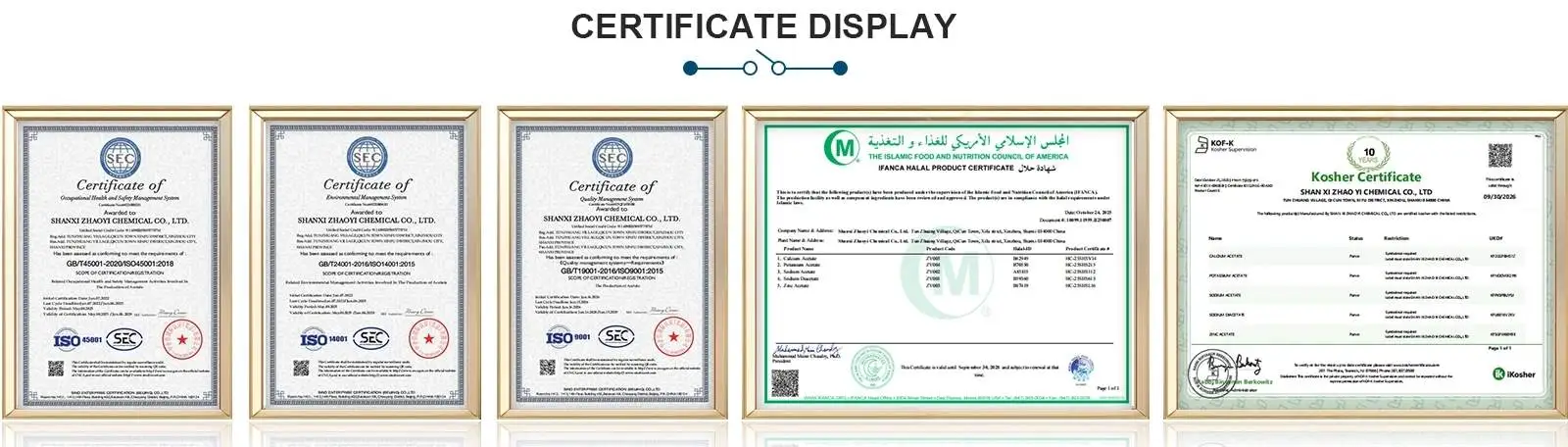
Pick a service provider who can show you how to keep track of all their paperwork, each batch, and how much money they can make. It's been around since 1988 and has 27,000 m² of space. There are 60 people working there, and it meets both ISO 9001 and ISO 14001 standards. Every year, our company can make 150,000 tons of acetate. Everything we make is in compliance with these standards. We have COA, SDS, and TDS forms that you can get from us. We also offer FOB and CIF terms, and Shanghai, Lianyungang, and Qingdao are where you can load your goods. As our product sheet shows, most things are made in 5–7 business days. It's important for each seller to let you know about their minimum order quantity (MOQ), seasonal stock, shipping time to your site, and free samples.
Deciding Whether It Fits Your Airport
This is a good way for airports to protect steel buildings, runway lights, reinforced concrete, and ground-support equipment without putting chloride chemicals in safe places to spread them. You might need to use a different product or mix if the temperature of the ground drops below the formulation's working range, if flight needs are met, if runoff limits are strict, or if the tools you have don't work with liquids. Safety, keeping the pavement safe, annual volume, maintenance, environmental duties, supply stability, and delivered cost are all things that should be looked at in total during the winter.
Conclusion
Deicing liquid potassium acetate(CAS NO.: 127-08-2) lowers the freezing point of surface water, reducing the possibility of ice formation. In real life, what happens depends on how much is used, how cold the ground is, and whether it is used at 25–50 g/m² for anti-icing and 50–150 g/m² for deicing. Not having chloride in it means it doesn't cause corrosion like chloride products do. It lasts longer, though, and costs more per unit. You still need to test for friction, use aircraft fluids, and plough. Weather changes depend on how much water flows off and how much air is needed. To make the right choice, you need to know about corrosion, have the right paperwork, do tests on-site, and understand the supply terms.
FAQ
Can I spray this product on aircraft?
No, the rules for road deicers and plane fluids are not the same. The liquid should only be used on roads, taxiways, grounds, runways, or taxiways. Make sure you follow the rules set by the airport.
What is the lowest freezing point?
It's cold enough to freeze at -59.4°C (-75°F). You can get our report on the deicing test to find out. How much you water it and the weather will decide.
How much should I apply?
It needs to be 25–50 g/m² to melt ice and 50–150 g/m² to keep it from forming. Prepare your tools and make any changes they need to work with the site.
Which documents come with an order?
For every batch, we give you an SDS, a TDS, and a Certificate of Analysis. You send the business invoice, packing list, bill of lading, and certificate of origin with the item when you send it abroad.
How should I store it?
Store it in HDPE or stainless steel boxes in a dry place with good airflow, away from water and heat. Keep it away from things that could hurt it.
Do you offer samples?
The technical team at our company helps with testing samples and giving advice on how to use them. Let's talk about your site.
Request Deicing Liquid Potassium Acetate From SHANXI ZHAOYI CHEMICAL
Are you making plans for next winter? Since its founding in 1988, SHANXI ZHAOYI CHEMICAL has been selling deicing liquid potassium acetate(CAS NO.: 127-08-2) in IBC tanks and flexitanks. As a company that makes deicing liquid potassium acetate and is certified by both ISO 9001 and ISO 14001, we offer FOB and CIF terms, as well as COA, SDS, and TDS documents. To get samples and a quote, email sxzy@sxzhaoyi.com with your treatment area, temperature range, and annual volume. You can also visit sxzhaoyi.com.
References
1. Federal Aviation Administration, Advisory Circular 150/5200-30D: Airport Field Condition Assessments and Winter Operations Safety, 2014
2. Transportation Research Board, NCHRP Report 577: Guidelines for the Selection of Snow and Ice Control Materials to Mitigate Environmental Impacts, 2007
3. Transportation Research Board, ACRP Report 14: Deicing Planning Guidelines and Practices for Stormwater Management Systems, 2009
4. Fay, L. and Shi, X., Environmental Impacts of Chemicals for Snow and Ice Control: State of the Knowledge, Water, Air, & Soil Pollution, 2012
5. Fischel, M., Evaluation of Selected Deicers Based on a Review of the Literature, Colorado Department of Transportation, 2001
6. Transportation Research Board, Special Report 235: Highway Deicing: Comparing Salt and Calcium Magnesium Acetate, 1991

USER EVALUATE
Here is the customer's evaluation of us