



How Can Snow Melting Liquid Potassium Acetate Improve Winter Site Operations?
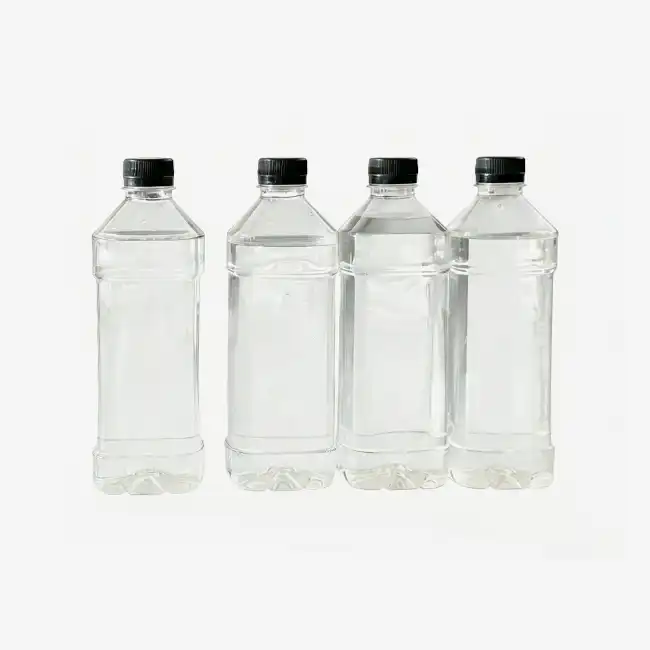
When working on a site in the winter, you have to do more than just clear the snow off the roads. When it gets below freezing, the safety of workers, the stability of the structure, the environment, and the ability to keep running all depend on it. These problems are directly addressed by Snow Melting Liquid Potassium Acetate (CAS NO. 127-08-2). Because it is a compostable, non-chloride liquid de-icing agent that can lower the freezing point to -35°C and melt snow at a rate of over 85% in one hour at -25°C, it works well in places where chloride-based goods usually fail. This compound gives city governments, airport operators, highway builders, and managers of industrial facilities across the US a reliable, science-based way to make winter upkeep safer and cheaper.

Understanding Liquid Potassium Acetate in Snow Melting Applications
Chemical Identity and Core Properties
K+ acetate is written as CH₀COOK (CAS No. 127-08-2) when it is a liquid, and its molecular weight is 98.14 g/mol. The liquid is clear and has no colour. It tastes a little sour. When mixed at 50–60% w/w and kept at 20°C, its specific gravity is between 1.25 and 1.29. The acidic range of 7.5 to 9.2 on the pH scale keeps metal surfaces from getting damaged instead of hurting them. The chemical urea raises the amounts of ammonia and biological oxygen demand (BOD) in rivers and is bad for sea life. Liquid potassium acetate, on the other hand, breaks down very quickly, at a rate of 95%.
How Does It Melt Ice More Effectively Than Conventional Agents?
The process is simple: when snow melts, liquid potassium acetate lowers the freezing point of water through colligative depression. Before it forms, the ice can't stick to the ground, and any ties that are there are broken quickly. It doesn't need the endothermic breakdown lag that solid de-icers do because it is already a liquid. Snow melting liquid potassium acetate functions well below -30°C, whereas sodium chloride, which is used as road salt, ceases to function at around -9°C. Most business areas, airport runways, and bridge decks no longer use chloride-based deicing fluid because it doesn't work as well when it's cold.
Evaluation of Liquid Potassium Acetate Versus Alternative Deicing Solutions
To find the best liquid de-icing agent, you should think about how well it works, how it will affect the road, and how much it will cost in the long run. Here is a list of the main reasons why liquid potassium acetate for melting snow is better than other products in a number of situations:
- Liquid potassium acetate that melts snow is better than road salt because it can work in temperatures as low as -35°C. Road salt, on the other hand, can only melt snow in temperatures as low as -9°C. This makes it the best choice for winter events in the northern US and for building things at high elevations, where temperatures often get too high for salt to handle.
- This stuff stops rusting. Its corrosion rate on carbon steel is 0.03 g/m²·h, which is less than or the same as what Aerospace Material Specification (AMS) 1435 says it should be. Steel that is buried in concrete can also be broken down with bleach. The building cracks and falls apart, and it takes a lot to fix over time.
- Since it doesn't have any heavy metals above 0.01% (lead) or 0.0004% (arsenic), it breaks down about 95% of the time. In the US, many cities and towns must follow strict NPDES rules. This one does too.
- Fixed Automated Spray Technology (FAST) systems on bridge decks and overpasses work well with this ready-to-use liquid. It doesn't need to be mixed first, and it won't block the valves.
In the end, the cost of ownership goes down because of these pros. It costs more per litre than rock salt, but not having to fix rust issues on bridges, parking lots, and flight parts during the winter usually makes up for it. It took less time for planes to need repairs after airport officials switched from glycol-based treatments to acetate solutions for the runway.
Procurement Guide for Liquid Potassium Acetate
To get snow melting liquid potassium acetate that you can trust, you need to pay attention to quality certification, logistics, and the credibility of the supplier. Several characteristics should be looked at very carefully during the buying process:
- Concentration verification: Make sure the CH₃COOK level is between 50 and 60%. Deviation has a direct effect on the freezing point curve. A reduced batch raises the working temperature and lowers its performance in the field.
- Impurity thresholds: Chloride levels must be less than 0.01%, sulfate levels must be less than 0.05%, and iron levels must be less than 0.002%. These limits keep spray nozzles, storage tanks, and the surfaces of infrastructure safe from chemical damage that happens later.
- Certification credentials: ISO 9001, ISO 14001, and ISO 45001 certifications show that a manufacturer consistently meets standards for safety, quality, and environmental responsibility at work. These are all things that US government procurement officers usually look for.
- Packaging and logistics: 1000L IBC tanks and flexibags are standard supply formats. IBC tanks are good for storing at the base level and directly pump-loading into spray trucks. Flexibags, on the other hand, are a cheap way to ship large amounts of goods by ocean for yearly contracts.
- Lead time and supply continuity: A production lead time of 5–7 working days and the ability to keep safety stock on hand make sure that maintenance crews don't run out of materials during the winter.
When discussing yearly supply contracts, procurement teams should ask for certificates of analysis (COA) that are specific to each batch and corrosion test results from a third party. These papers do two things: they show that AMS 1435 rules have been followed for internal quality checks and to get approvals from the airport authority.

Implementing Liquid Potassium Acetate to Optimize Winter Site Operations
Application Methods and Equipment Compatibility
Standard liquid de-icing spray trucks and automatic FAST systems can use snow melting liquid potassium acetate without any problems. Its low viscosity at temperatures below zero lets the nozzle run steadily without burning the supply line. For anti-icing, which means putting down the product before it starts to snow or rain, the amount used varies from 20 to 40 gallons per lane mile, depending on the temperature of the pavement and the type of rain or snow that is expected. Pre-treating surfaces stops ice from sticking to them and lowers the amount of water that needs to be used compared to reactive deicing after ice has formed.
Coordination with Winter Maintenance Teams
For a liquid-forward repair plan to work, procurement, operations, and field workers must all be on the same page. Setting temperature limits for the pavement based on weather forecasts is helpful for site managers. Usually, 32°F (0°C) is the right temperature for activating pre-treatments. Adding snow melting liquid potassium acetate to winter plans, along with mechanical snow removal, cuts down on chemical use because plows can remove most of the snow while the liquid agent takes care of any remaining bonding. Tracking the number of applications per storm event and comparing that number to reports of infrastructure inspections over one or two seasons gives you the information you need to figure out the return on investment (ROI) and show that you should keep buying the product.
Conclusion
Snow melting liquid potassium acetate(CAS NO.: 127-08-2) is a better and more eco-friendly option to chloride- and glycol-based de-icing agents that can be used on roads, airports, bridges, and industrial buildings. It can work in temperatures as low as -35°C, has a corrosion rate of less than 0.03 g/m²·h, and breaks down in about 95% water. These features make it ideal for managing winter sites because they protect infrastructure, improve performance, and comply with regulations. If procurement professionals and site operations managers in the US want a reliable, scalable supply, the next step toward a safer and more cost-effective winter is to work with a certified manufacturer whose quality control systems have been proven to work.
FAQ
Is liquid potassium acetate safe for concrete parking structures?
Yes. Chlorides can get into concrete and oxidize steel rebar, which can cause cracks and spalling. Snow melting liquid potassium acetate, on the other hand, doesn't attack cement paste or corrode embedded reinforcement. Many people think it is safe to use on pavement to melt snow and ice.
How does it compare to sodium acetate for snow melting?
Snow melting liquid potassium acetate solutions are more flexible at very low temperatures and have a lower eutectic freezing point than sodium acetate solutions. Sodium acetate is often used as a solid or solution carbon source in the process of denitrifying wastewater. Potassium acetate, on the other hand, is better at melting ice off of important infrastructure when it's cold.
What are the storage requirements?
Seal polyethylene or stainless steel containers and store them in a dry, well-ventilated warehouse away from heat and water. Keep away from substances that don't mix. If you store the product correctly, it will keep its concentration and pH stable and not settle or break down.
Is it flammable or classified as a hazardous material for shipping?
Snow melting liquid potassium acetate solution is not flammable and is not classified as a hazardous material by the US Department of Transportation (DOT). This makes it easier to ship in large quantities.
Partner with SHANXI ZHAOYI CHEMICAL for Your Winter De-icing Supply
With a yearly production capacity of 150,000 tons, SHANXI ZHAOYI CHEMICAL has been in business since 1988 and is a reliable maker of snow melting liquid potassium acetate(CAS NO.: 127-08-2). They have ISO 9001, ISO 14001, ISO 45001, KOSHER, and HALAL certifications to back them up. Our expert team answers questions within two hours, and we can help you buy in bulk with flexible IBC and flexibag packing. Get in touch with our experts right away to get a custom quote and samples of our products. To get full technical documentation and safety data sheets, email us at sxzy@sxzhaoyi.com or go to sxzhaoyi.com.
References
1. Transportation Research Record: Journal of the Transportation Research Board, 2019.
2. Cold Regions Science and Technology — Elsevier, 2021.
3. Journal of Materials in Civil Engineering — ASCE, 2020.
4. SAE International Journal of Aerospace, 2018.
5. Environmental Science & Technology — ACS Publications, 2022.
6. Public Works Magazine, 2023.

USER EVALUATE
Here is the customer's evaluation of us
YOU MAY LIKE
 VIEW MOREFresh-Keeping Sodium Acetate Trihydrate
 VIEW MOREPreservative Sodium Diacetate
 VIEW MOREFeed-Grade Sodium Diacetate
 VIEW MOREAgricultural Solid Potassium Formate
 VIEW MOREFabric Fixing Solid Sodium Formate
 VIEW MORESnow Melting Liquid Potassium Acetate
 VIEW MOREFood-Grade Sodium Acetate Anhydrous
 VIEW MORETextile Sodium Acetate Trihydrate