



Sodium Acetate Trihydrate powder
CAS NO.: 6131-90-4
Molecular Formula: CH₃COONa·3H₂O
Molecular Weight: 136.08 g/mol
Character: White crystalline powder with good water solubility. It is hygroscopic and may absorb or lose moisture depending on environmental conditions.
Usage: Used in buffer preparation, textile dyeing, chemical synthesis, pharmaceutical formulations, laboratory applications, food processing where permitted, and wastewater pH adjustment.
Package: 25 kg moisture-resistant paper bag or plastic woven bag with an inner polyethylene liner.
Storage: Keep tightly sealed in a dry and cool place. Minimize exposure to humid air after opening.
- Product Description
High-Purity Sodium Acetate Trihydrate Powder for Industrial & Laboratory Applications | Reliable Buffer Solution
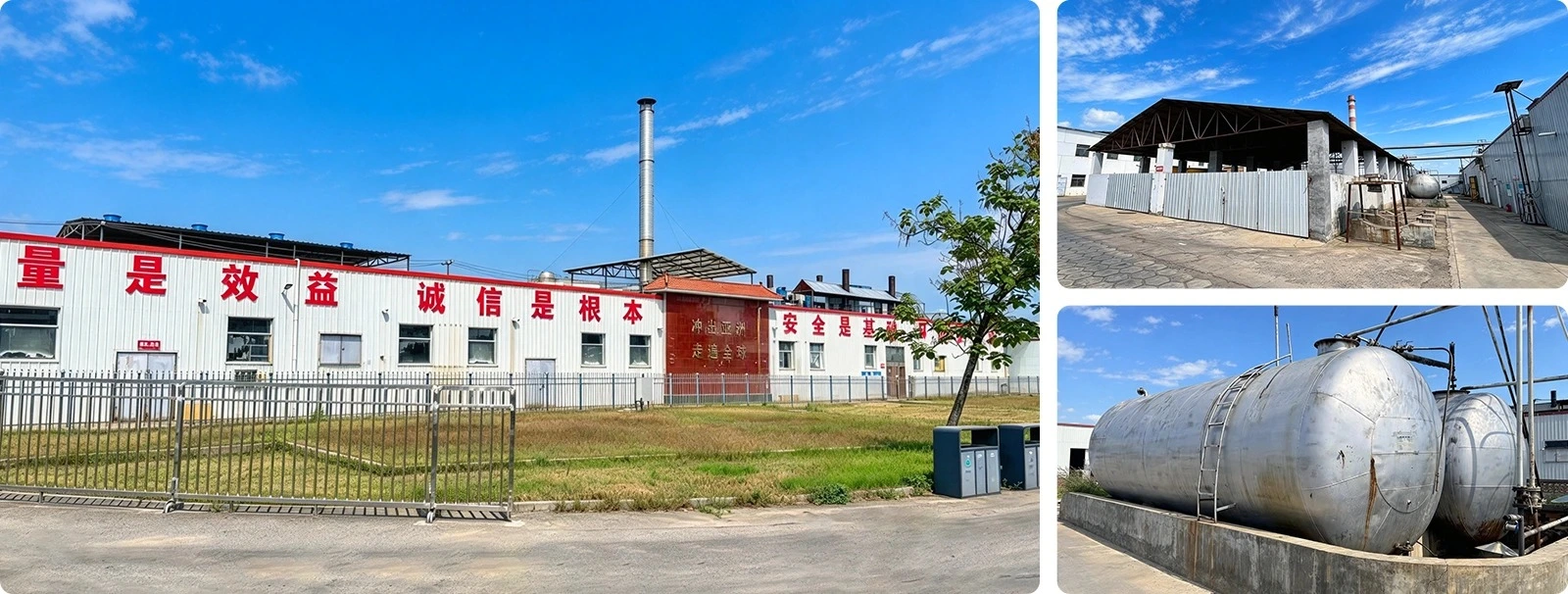
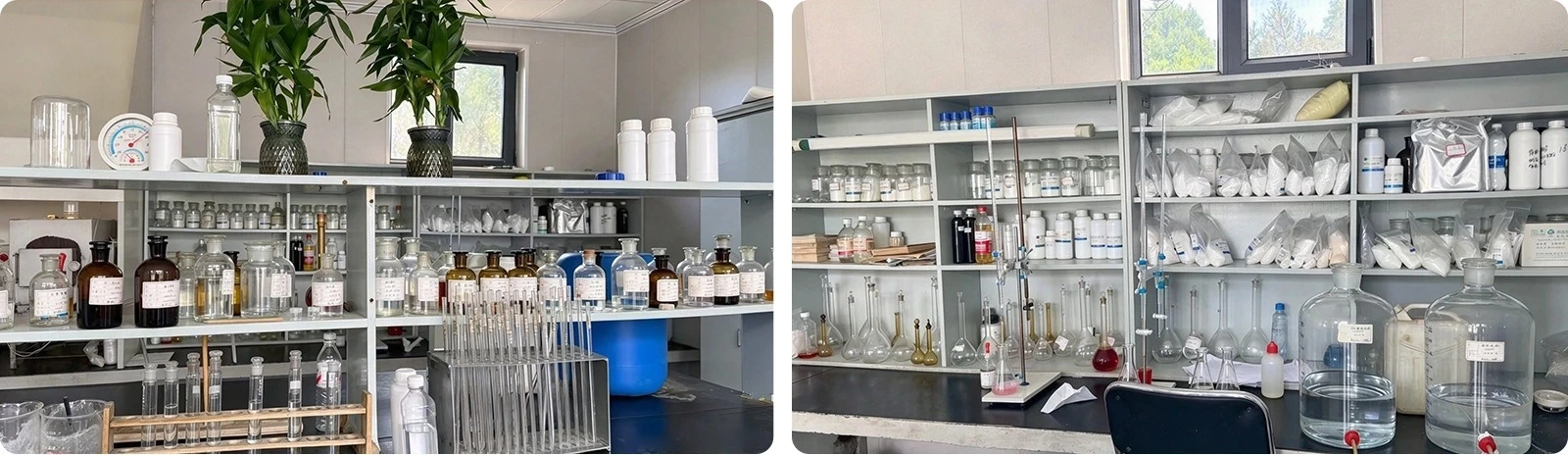
The Sodium Acetate Trihydrate Powder from Shanxi Zhaoyi Chemical Co., Ltd. comes at high purity. Acetate work has kept us busy for more than 35 years. Industrial grade and pharmaceutical grade material both leave our site. Each lot we ship gets checked against strict quality rules. Moisture in this white crystalline powder sits between 38–41%. Assay purity lands at 99.0–101.0%. Dissolving goes fast at 20°C, at 123g/100ml. Lab buffer prep and pH adjustment on plant floors both fit that. ISO, KOSHER, and HALAL certificates back our goods. A plant of 27,000 ㎡, built to GMP standards, turns out the material. Yearly volume reaches 150,000 tons. Buyers around the world put our material to work in pharmaceutical synthesis and textile finishing. Wastewater treatment is another outlet. Quality holds steady from one batch to the next.
Key Features & Benefits
Consistency & Purity
Lead and arsenic are the heavy metal markers we watch. Both stay tightly capped at 2 ppm. Assay rate holds at 99% or above across the powder. In delicate chemical reactions, it blocks catalytic degradation and impurity interference. Pharmaceutical-grade demands get met too. Testing covers every batch. That keeps formulation surprises out of your production, and out of your experiments. Performance stays steady and predictable.
Better Buffering Efficiency
In water, the pH range stretches wide, from 4.5 to 9.5. Its stable crystal structure holds pH where you need it. Once it dissolves, a steady acetate buffer system forms. Sudden pH shifts during chemical synthesis and biological work don't knock it off course. Acid-base balance stays under your control and can be measured. Production runs and experiments then give steady results.
Quick Dissolution Rate
Our trihydrate powder works at room temperature. Heat is not needed. It breaks down quicker than anhydrous sodium acetate, and full dissolving takes only a few minutes. Labs gain from this, and industrial plants do as well. Output goes up, batching and mixing cycles get far shorter, and the energy bill for the company drops.
Hygroscopic Consistency
The normal trihydrate molecular structure holds its place here, with three water molecules bonded to it. Loss on drying never leaves a tightly controlled range of 39–40.5%. Inside a typical warehouse, moisture is hard for it to take in or give off. Weighing therefore stays accurate, and formulation ratios hold steady. A longer shelf life is what you end up with.

Technical Specifications
Parameter | Specification | Test Method |
|---|---|---|
Chemical Formula | CH₃COONa·3H₂O | |
CAS Number | 6131-90-4 | |
Molecular Weight | 136.08 g/mol | Calculated |
Assay (Dry Basis) | 99.0–101.0% | Titration |
Loss on Drying | 38.0–41.0% | Gravimetric (105°C) |
pH (1:20 Solution) | 7.5–9.5 | Potentiometric |
Water Solubility | 123g/100ml (20°C) | Dissolution Test |
Heavy Metals (Pb) | < 2 mg/kg | ICP-MS |
Arsenic (As) | < 3 mg/kg | AAS |
Appearance | White Crystalline Powder | Visual |
Melting Point | 58°C (dissolves in own water) | DSC |
How It Works
Once this product dissolves, acetate ions break free. This is a standard weak acid conjugate base. Inside acidic solutions, those ions soak up surplus hydrogen ions, so pH settles fast and precisely. Combine it with acetic acid, and a reversible buffer system forms. Acid-base shifts get balanced as they happen, and pH drift from outside factors is resisted.
This buffer system runs on the Henderson-Hasselbalch equilibrium principle. Acid-base conditions hold steady for a long stretch of time. Labs use it as a main material for titration analysis, and makers use it to prepare liquid drug formulations. Sodium ions stay stable as spectator ions. They take no part in chemical reactions. The regulation effect, then, stays clean and free of pollution.
Once it dissolves, the three bound water molecules exit the crystal lattice at a steady pace. A mild endothermic reaction comes with it, plus a slight cooling effect. No thermal interference reaches heat-sensitive reactions from it. Chemical and biological experiments that need high precision get accurate, steady reaction conditions.
Applications
Production of Pharmaceuticals
For the manufacture of antibiotics and the creation of injectable solutions, it served as a professional buffering agent. Its ultra-low endotoxin level (less than 2.5 EU/g) meets the strict purity requirements for parenteral medication in full. Sterile pharmaceutical formulations therefore stay stable and safe.
In textile finishing and dyeing, the Textile and Dyeing Sector
acts as a pH regulator and a dye mordant. It fully prevents uneven coloring and color differences. The dye bath stays stable. Dye attaches to fiber surfaces and binds there evenly. Color fastness and finished product uniformity improve by a wide margin.
Research in the Lab
It forms a main part of standard acetate buffer solutions. Molecular biology and biochemistry studies use those solutions. Very pure indicators produce experimental data that is reliable and exact. Impurities cause problems in protein crystallization and enzyme activity detection, so removing them is what makes that possible.
Treating Wastewater
Sewage treatment plants use it as a very good biodegradable carbon source for biological denitrification. That helps companies meet environmental discharge limits every time. Heterotrophic bacteria get the nutrients they need from it. Nitrate breakdown and removal speed up as a result.
Food Preparation
In food, it works as a safe acidity regulator. It also follows the E262(i) additive rules. Shelf life stretches by itself. So no artificial preservatives are needed. A strange metallic smell in drinks gets covered up. When it is present, Bacillus cannot reproduce in baked goods.
Sodium Acetate Trihydrate Powder vs Other Products
Feature | Sodium Acetate Trihydrate | Sodium Acetate Anhydrous | Potassium Acetate | Sodium Citrate |
|---|---|---|---|---|
Water Content | 39-40% (stable hydrate) | 0% (hygroscopic) | Variable | 0-variable |
Dissolution Speed | Fast (2-3 min) | Moderate (5-7 min) | Fast | Moderate |
pH Range | 7.5-9.5 | 8.0-9.5 | 7.5-9.0 | 7.0-9.0 |
Cost Efficiency | High | Moderate | Lower | Moderate |
Buffer Capacity | Excellent (pKa 4.76) | Excellent | Good (pKa 4.76) | Excellent (multiple pKa) |
Thermal Stability | 58°C melting | Higher | Higher | Higher |
Heavy Metal Content | < 2 ppm Pb | Varies | Varies | < 5 ppm Pb |
Certifications & Compliance
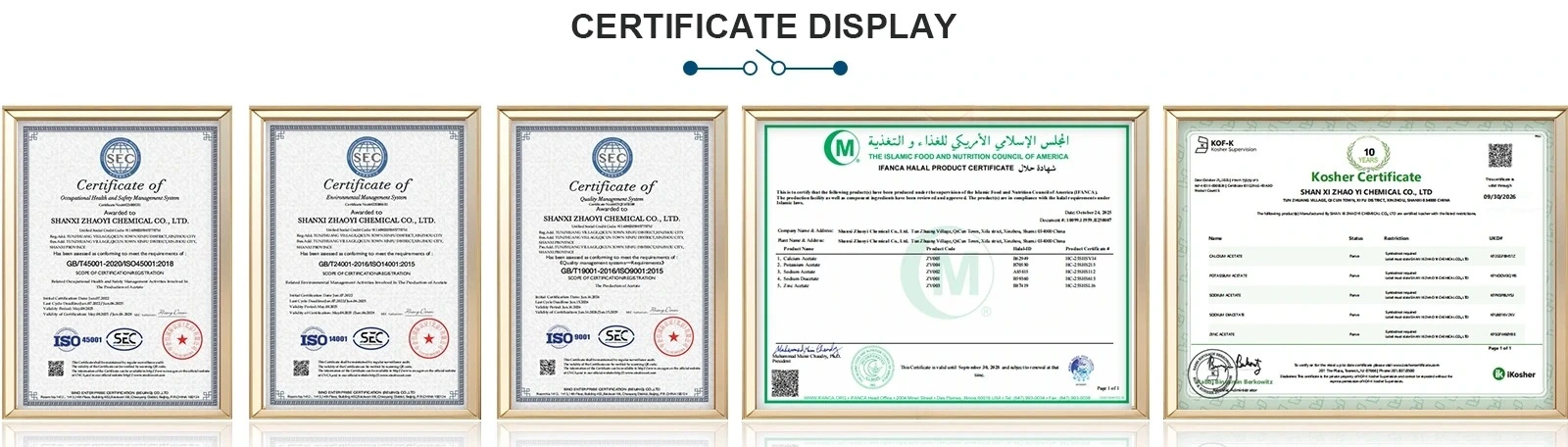
Our production base is certified to ISO 9001:2015 for quality management. Thanks to that, production control stays standard, and each step of the Sodium Acetate Trihydrate powder process can be traced. Valid KOSHER and HALAL certificates cover the products as well. Food and pharmaceutical companies in different regions worldwide can then file applications that meet the rules.
Every grade meets FCC and European Pharmacopoeia (Ph.Eur.) industry standards. No exceptions there. Each batch gets tested, and the testing includes ICP-MS heavy metal detection. LAL endotoxin testing is also run for our pharmaceutical grades. A complete CoA batch analysis report comes with every shipment. From raw materials through production, everything can be traced start to finish, which satisfies global regulatory requirements.

Packaging Options
Standard Industrial Pack
The bags hold 25kg each and are made of multi-layer moisture-proof paper with an inner PE liner. Heat sealing is what closes them. Outside humidity then stays out, so the product will not go bad. A standard pallet takes 40 bags, which adds up to one ton. Each pallet is shrink-wrapped too. Stacks stay safe and transport stays steady.
Pharmaceutical Grade
Clean-room packing calls for 25kg food-grade fiber drums. Each drum holds a double-layer polyethylene bag on the inside. Secondary contamination can't get through that way. The setup also lines up with the sterile production rules that pharmaceutical factories follow. Labs and small-batch formula testing can order our customized 10kg small packaging.
Bulk Shipment
We provide 500–1000kg ton super sacks with discharge spouts, perfectly matching automated feeding systems for large-scale industrial production. Container bulk shipment reduces unit procurement cost and brings higher cost performance for long-term bulk cooperative customers.
All packaging is marked with clear batch number, production date and standardized storage instructions. We support customized labeling services to meet private brand packaging and regional regulatory filing requirements.
Manufacturing Process
Raw materials are high-purity acetic acid and refined sodium hydroxide/carbonate. The two go through a neutralization reaction. Every reaction runs in constant-temperature regulated reactors. pH is watched in real time through the whole run. That way the reaction goes full and complete. Thermal decomposition never touches the raw materials.
Once the reaction ends, the solution moves into a gradient cooling crystallization tank. There, temperature and humidity stay under control. That is what produces even, fine trihydrate crystal particles. Leftover mother liquor is then taken out by centrifugal separation. The trihydrate crystal structure is never broken, so it stays fully complete.
The wet crystals then enter a fluidized bed dryer. Temperature inside holds steady at 50–60°C. With that kind of control, moisture stays at 39–40%, so the product never dries out too far. Moisture sensors take care of the rest. They fix the drying endpoint on their own, and batch results stay steady.
The last steps are milling and sieving. The result is a finished product with an even particle size of 60–120 mesh. Then magnets remove any tiny metal bits. Before warehousing or delivery, every batch goes through 14 strict quality checks. That's how it meets customer standards.
Why Choose Us
Three Decades of Acetate Expertise
We have focused on acetate product R&D and production since 1988, with in-depth accumulation in trihydrate structural stability and industrial application scenarios. Our professional technical team can accurately solve various formula and process problems for customers, providing professional customized solutions rather than single product supply.
Unmatched Production Scale
With a stable annual output of 150,000 tons, we maintain sufficient inventory reserves all year round. Large orders can be delivered within 7–10 working days, completely avoiding production shutdown losses caused by supplier stock shortage and delayed delivery, and ensuring stable customer supply chains.
Global Quality Recognition
Customers in more than 40 countries and regions buy our Sodium Acetate Trihydrate powder products. Europe, America and Asia are all part of that. Over 85% of them come back and order again. Steady quality and real help after the sale built that trust. Factories and labs all over the world stay with us.
Professional Application Support
Our senior chemist team provides one-stop technical support including buffer system design, pH parameter optimization and dosage guidance. We assist customers in improving product utilization rate and process stability for both laboratory research and large-scale industrial production.
Cost-Effective Pricing
As a direct manufacturer, we eliminate all intermediate markups. We provide flexible volume discount policies and diverse payment terms to help customers control procurement costs and achieve and cost-effective raw material matching.
FAQ
Q: At the core, how do sodium acetate trihydrate and anhydrous sodium acetate differ?
A: A1: Bound water sits at a steady 39–40% in sodium acetate trihydrate. Almost no moisture gets pulled from the air. Storage is simple, and dissolving happens fast. Anhydrous sodium acetate is a different story. Moisture is soaked up fast by this form, and it often cakes. That is why storage must be strictly moisture-proof. Most standard industrial and lab jobs run better on the trihydrate. It's easier to handle, and results stay steadier.
Q: Can you use this product in formulas for injectable drugs?
A: A2: Yes. Our pharma-grade product has very low endotoxin levels. They stay under 2.5 EU/g. Heavy metal purity is very high too. That means it meets the rules for making injectable drugs. Check the batch CoA report before you use it. Make sure it matches the rules in your area.
Q: How should you store packages once they are open?
A: A3: Keep the package sealed tight. A dry, cool spot works best. Temperature stays under 25°C, and humidity stays under 60%. Leave powder in damp air long enough and it can cake a little. In humid areas, put a desiccant in with whatever material is left. Storage life stretches out that way.
Q: How long can the product be kept before it goes off?
A: A4: An unopened original pack lasts 36 months in normal sealed, dry storage. To manage your stock, we suggest FIFO. That way the product performs the way it should.
Q: Can we get free samples to test?
A: A5: Yes. We provide 500g free samples for qualified enterprise and laboratory customers. All samples are attached with complete CoA test reports to support your formula testing and project evaluation.
Q: Can your team give professional technical support for formulations?
A: A6: Our application team is made up of professionals. They give technical guidance from start to finish. Buffer formula design is part of that. So is pH adjustment optimization. We also help fix problems in the production process. Lab research is one area we cover. Pharmaceutical production and sewage treatment projects are others.

Request a Quote
Send us the full details of what you need at sxzy@sxzhaoyi.com. and a Sodium Acetate Trihydrate powder solution made for your case.

USER EVALUATE
Here is the customer's evaluation of us