



Sodium-Acetate-Trihydrate-Granular
CAS NO.: 6131-90-4
Molecular Formula: CH₃COONa·3H₂O
Molecular Weight: 136.08 g/mol
Character: White or colorless free-flowing granules. The granular form offers convenient handling, reduced dust generation, and good dissolution in water.
Usage: Used in industrial batching, textile dyeing, food processing where permitted, pharmaceutical production, buffer preparation, heat-storage products, and wastewater treatment.
Package: 25 kg paper bag or plastic woven bag with an inner polyethylene liner, or customized bulk packaging.
Storage: Keep tightly sealed in a dry and well-ventilated place. Protect from humidity to prevent caking.
- Product Description
High-Purity Sodium-Acetate-Trihydrate-Granular for Industrial & Food Applications | Buffering & Preservation Solution
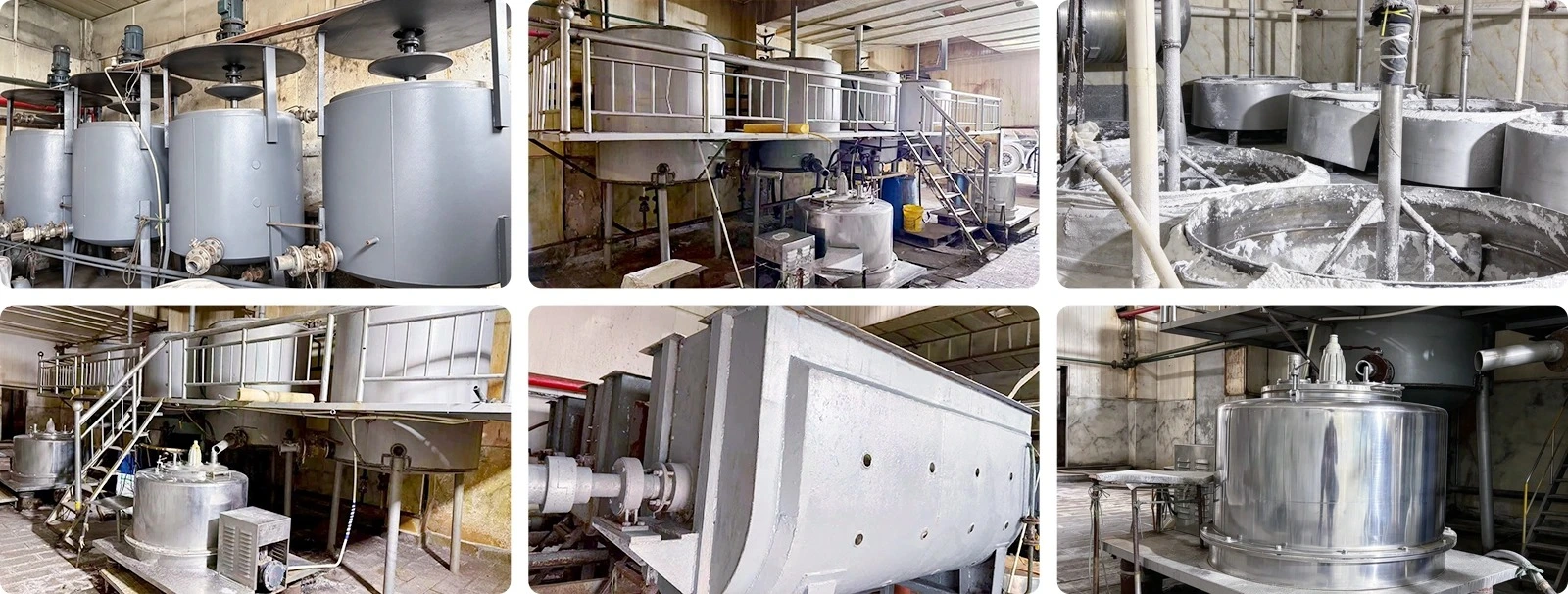
We produce Sodium-Acetate-Trihydrate-Granular (CAS 6131-90-4) at SHANXI ZHAOYI CHEMICAL CO., LTD. Industrial use and food processing both come with strict rules. This grade meets them. Our plant can turn out 150,000 tons a year. Acetate manufacturing has held our focus since 1988, which adds up to 36 years. Buyers around the world count on our products for steady performance. The granular sodium acetate trihydrate flows freely. Purity runs above 99.0%. Dust stays low, and it dissolves fast. Production happens in our 27,000 ㎡ facility, which carries ISO certification. pH correction, wastewater treatment, and thermal energy storage all depend on pH buffering that holds steady. Other uses get the same effect. Water content stays stable at 36.0–41.0%. Large volumes ship to Europe and America. Asia and other international markets buy from us too. It meets FCC certification criteria. KOSHER and HALAL approval apply as well.

Key Features & Benefits
Dust-Free Granular Structure: We rely on professional granulation molding technology. Dust that floats up while you feed or run the product gets cut down. Workers on site stay better protected. Dosing accuracy goes up as well. Automated batching and production systems work well with it.
Fast Dissolving: Granules of this type split apart in seconds. Put it next to standard crystalline grades and dissolution efficiency comes in 40% higher. Mixing time falls sharply. That fits fast batches in textile dyeing tanks. Buffer solution prep works well with it too.
Steady Trihydrate Form: The whole trihydrate molecular structure (CH₃COONa·3H₂O) does not break down. Efflorescence never shows up. Physical and chemical properties stay the same. Kept under normal storage, it holds up on the shelf for a long stretch.
Multi-Scenario Industry Compliance: Food-grade material follows the E262(i) standard, so it can be used for pH regulation and preservation in food. Industrial-grade material meets the professional indicators for oilfield exploitation, wastewater treatment and other industrial uses. That gives it a wide range of applications.
Effective Anti-Caking Property: Particle sizes sit in an even spread. The moisture-proof packaging we use adds one more layer of protection. Together, they stop the material from clumping. Blockages do not form in pneumatic conveying or screw feeding systems. Let the goods sit for months in storage, and the flow still holds up.
Technical Specifications
Parameter | Specification |
|---|---|
CAS Number | 6131-90-4 |
Molecular Formula | CH₃COONa·3H₂O |
Molecular Weight | 136.08 g/mol |
Appearance | White free-flowing granules |
Purity | ≥99.0% |
Water of Crystallization | 36.0–41.0% |
pH (1% solution, 25°C) | 8.0–9.5 |
Water Solubility (20°C) | 46.5 g/100mL |
Heavy Metals (as Pb) | <2 mg/kg (Food Grade) |
Melting Point | 58°C |
How It Works
Sodium-Acetate-Trihydrate-Granular acts as the main conjugate base part in acetic acid buffer systems. How much you add decides how strong the effect is. In water solutions it holds pH steady from 4.5–9.5. The granules dissolve, and the acetate ions then soak up the hydrogen ions left over. Sharp pH swings get blocked during chemical reactions, food fermentation, and other production steps. The system holds steady.
Sewage plants and wastewater treatment projects buy this product as an outside carbon source. Heterotrophic bacteria get all the electron donors they need. Denitrification then runs faster. Nitrate turns into nitrogen gas and leaves the water. Total nitrogen in the wastewater drops, so companies can stay inside their discharge limits.
When the job is heat storage or heating, this product changes phase at 58°C. As it melts, its crystal structure takes in latent heat. That heat comes back out at a steady rate once it crystallizes. Reusable heating pads rely on it. So do professional energy storage systems built for thermal management.
Applications
Wastewater Treatment: Easy to break down carbon sources are supplied for biological denitrification. The COD:N:P ratio in activated sludge systems also gets balanced. Alkalinity buffering in the water stays stable. So the treatment works better.
Textile Dyeing: When nylon and wool fibers go through acid dyeing, the pH value of the dyeing baths holds steady. Uneven dye uptake is stopped. Color difference problems stay away as well. Washing fastness of the dyed products improves a lot.
Pharmaceutical Manufacturing: Injection solutions and oral suspension formulas both use it as a buffering agent built for that role. Steady pH control is what these drug systems get. That way, active pharmaceutical ingredients (API) hold on to their activity and stay stable.
Heat Packs & Thermal Storage: The reversible phase transition crystallization principle at 58°C is what does the job here. Disposable chemical hand warmers work because of it. Reusable ones do too. So do industrial latent heat energy storage systems.
Food Processing: A food-grade acidity regulator is one of its roles. An auxiliary preservative is another. You add it to marinades, condiments and other products. It softens the sharp vinegar bite. Spoilage bacteria cannot reproduce as easily, so food lasts longer. Keep the amount within the dosage set by E262(i) standards.
Sodium-Acetate-Trihydrate-Granular vs Other Products
Feature | Our Granular Product | Anhydrous Sodium Acetate | Liquid Acetate Solutions |
|---|---|---|---|
Dust Generation | Minimal | High (fine powder) | None (liquid form) |
Storage Stability | Excellent (sealed) | Hygroscopic | Requires freezing prevention |
Dosing Accuracy | High (granular flow) | Moderate (static cling) | Volume-dependent |
Dissolution Speed | Rapid | Slower | Pre-dissolved |
Shipping Cost/Ton | Lower (higher density) | Comparable | Higher (water weight) |
Certifications & Compliance
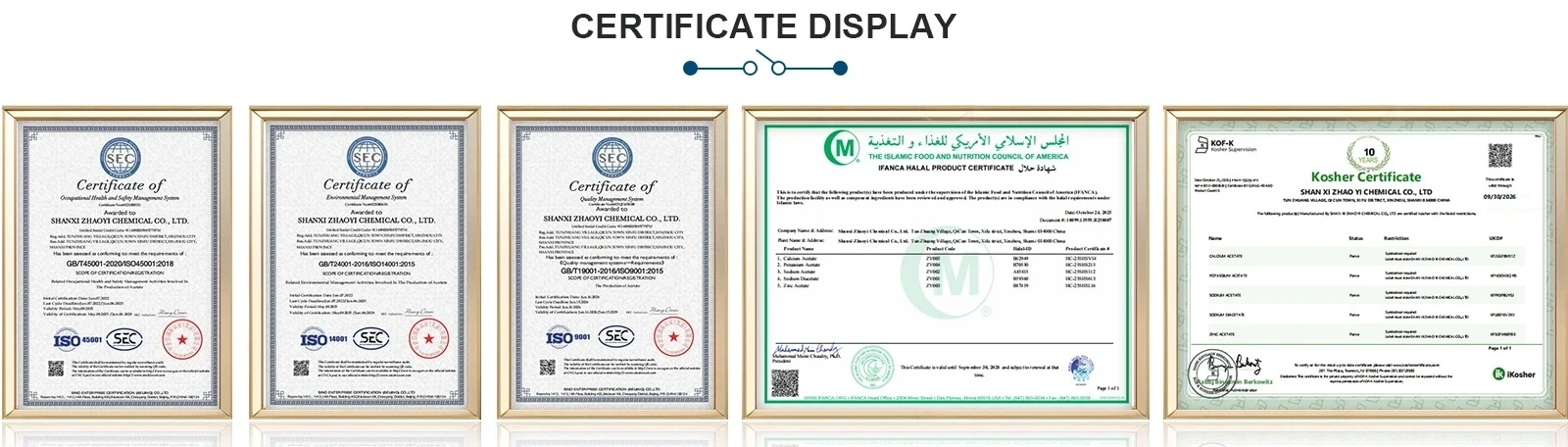
Quality System Certification: Our factory has passed the ISO 9001:2015 quality management system certification. Thanks to that, every step can be traced. Raw material purchasing is one part of it. Production counts as well, and so does the packaging of finished goods.
Food Safety Certification: Each food-grade item we ship comes with valid KOSHER and HALAL certificates. That way the diet rules and the market entry demands of many regions and faiths are covered.
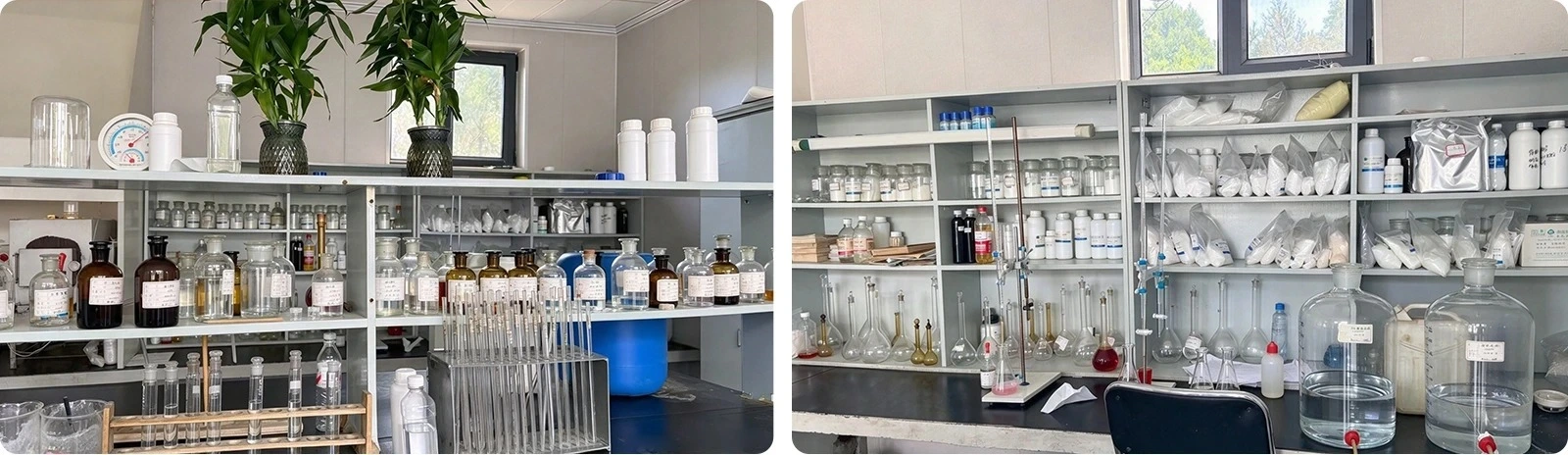
Quality Testing Compliance: Independent third-party bodies with authority test each batch. Their checks cover heavy metal markers, such as lead, arsenic and mercury. Our food-grade goods fully match FCC and E262(i) industry specs.
Packaging Options
Standard Packaging: Bags are 25kg multi-layer kraft paper, with a food-grade polyethylene liner inside. 40 bags go on each pallet. That works out to 1 ton. Routine bulk orders use this setup.
Industrial Bulk Packaging: 500kg UV-proof woven jumbo bags, each fitted with a discharge spout. Pneumatic unloading is easy with these. They suit large-scale industrial continuous production.
Customized Packaging: Take 10kg moisture-proof aluminum foil bags when a lab runs a small batch. For big industrial orders, pick 1200kg IBC ton barrels. Either way, the packaging request gets met.

Manufacturing Process
Our high-purity Sodium-Acetate-Trihydrate-Granular granular sodium acetate trihydrate is made with production technology that is mature and stable. Every step of the process is standardized and kept under tight control:
The raw materials come first. High-purity acetic acid and pharmaceutical-grade sodium hydroxide are used at the start. In reaction kettles held at a constant temperature, they go through a neutralization reaction. Plenty of time is allowed, so the reaction stays steady.
Next, the reaction solution passes through three-stage gradient crystallization. The cooling rates are kept under precise control. Standard trihydrate crystal structures take shape.
Through wet granulation and fluidized bed drying processes, uniform granular products with particle size of 0.5–2.0mm are formed.
Vibrating screens sort the finished material. This step removes fine powder and impurities. Then we seal it in moisture-proof packaging within 30 minutes. That way it does not absorb moisture.
Equipped with online NIR detection equipment to monitor the water content and purity of each batch of products in real time, ensuring stable batch quality.
Why Choose Us
Decades of Manufacturing Experience: We have focused on acetate product R&D and production since 1988, with mature production technology and rich industry experience to avoid product quality fluctuations.
Complete Industrial Chain Advantage: We keep the upstream raw material supply chain in our own hands. Price swings on the market are easier to ride out that way. Customers get stable products at a fair cost.
Professional Technical Service: The professional chemical technical team provides targeted dosage optimization and formula matching guidance according to customers' application scenarios, supporting laboratory testing and on-site technical docking.
Global Logistics Distribution: With mature export channels covering more than 40 countries and regions, we provide fast customs clearance and stable door-to-door delivery services to solve global procurement logistics problems.
FAQ
Q: Can the granular product dissolve completely in cold water?
A: A1: Yes. It can be fully dissolved within 3–5 minutes in 15°C cold water with gentle stirring, with a much faster dissolution rate than traditional crystalline powder products.
Q: Is this product suitable for municipal drinking water treatment?
A: A2: It is not recommended for potable water treatment. Although the product is non-toxic, it is not formulated and tested for drinking water standards. Please use special water treatment chemicals for drinking water projects.
Q: How to store the product to avoid quality deterioration?
A: A3: Long-term storage requires a climate-controlled warehouse with temperature below 30°C and relative humidity below 60%. Sealed packaging must be kept intact, and exposure to high humidity environments above 70% RH should be avoided to prevent surface moisture absorption.
Q: Is the product classified as dangerous goods for air freight?
A: A4: No. Our granular sodium acetate trihydrate is non-hazardous and non-DG classified, which simplifies international shipping documents and customs clearance procedures.
Q: What is the difference between food-grade and industrial-grade specifications?
A: A5: The food-grade product has stricter heavy metal control (Pb <2mg/kg) than industrial grade (Pb <5mg/kg), and is produced on an allergen-free professional production line to meet food safety standards.
Q: Can you provide batch COA and test reports?
A: A6: Yes. We can provide official batch Certificate of Analysis (COA), third-party test reports and certification documents to support customers' market access and quality inspection.
Request a Quote
Please send your Sodium-Acetate-Trihydrate-Granular inquiry and demand details to sxzy@sxzhaoyi.com, and our team will reply with a customized quotation and technical solution within 24 hours.

USER EVALUATE
Here is the customer's evaluation of us