



Sodium Acetate Trihydrate for Food Processing
CAS NO.: 6131-90-4
Molecular Formula: CH₃COONa·3H₂O
Molecular Weight: 136.08 g/mol
Character: Colorless transparent crystals or white crystalline material. It is readily soluble in water and has a mild saline and vinegar-like taste.
Usage: Used in food processing where permitted as an acidity regulator, buffering agent, flavoring ingredient, preservative-support component, and processing aid. Suitable applications may include sauces, seasonings, snack foods, bakery products, and processed meat products.
Package: 25 kg food-grade paper bag or plastic woven bag with an inner polyethylene liner. Customized packaging is available.
Storage: Keep in a tightly sealed package in a clean, dry, cool, and well-ventilated warehouse. Protect from moisture, contamination, toxic chemicals, and strong odors..
- Product Description
Premium Sodium Acetate Trihydrate for Food Processing | Strong Acidity Regulator & Buffering Agent for Industrial-Scale Food Manufacturing
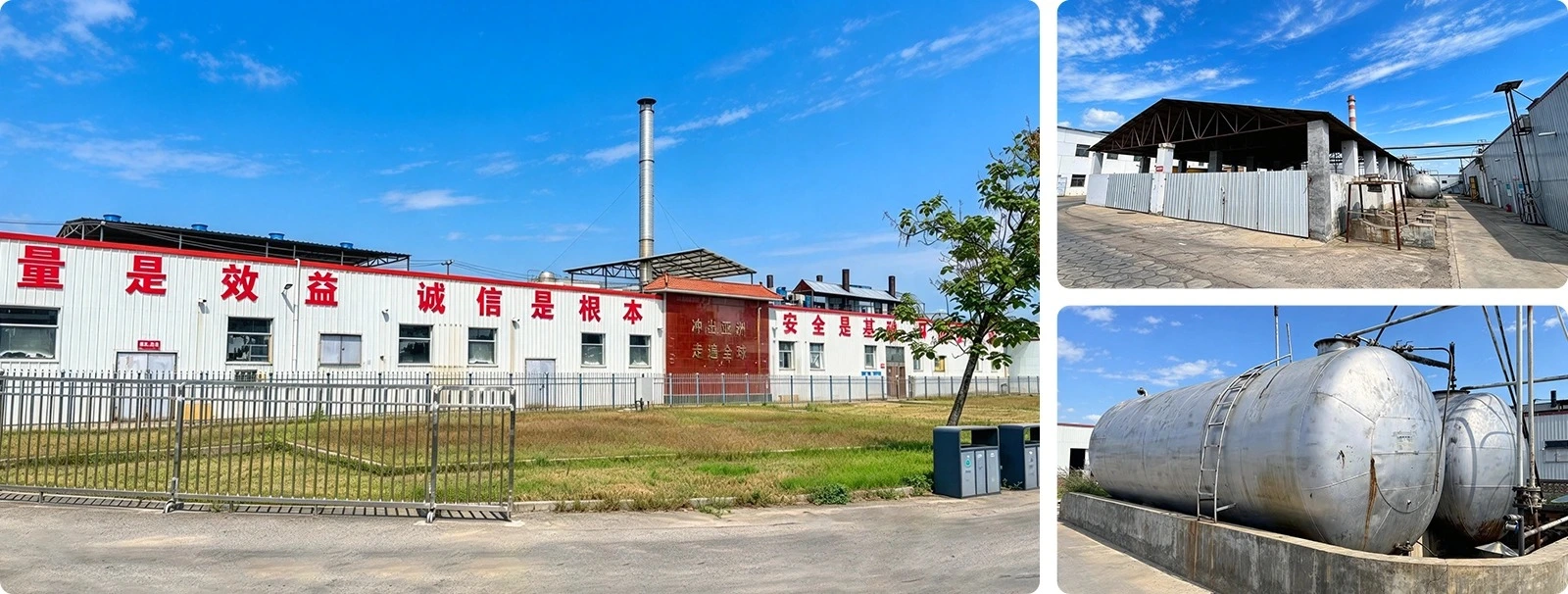
SHANXI ZHAOYI CHEMICAL CO., LTD has spent 36 years on raw materials for food-grade additives. Food processors can buy Sodium Acetate Trihydrate for Food Processing from us, and the purity runs 99-100%. GB2760 sets the food additive rule, and every product we ship meets it. Impurity levels stay quite low. Chloride comes in at ≤0.005%. Heavy metals sit at ≤0.0005%.
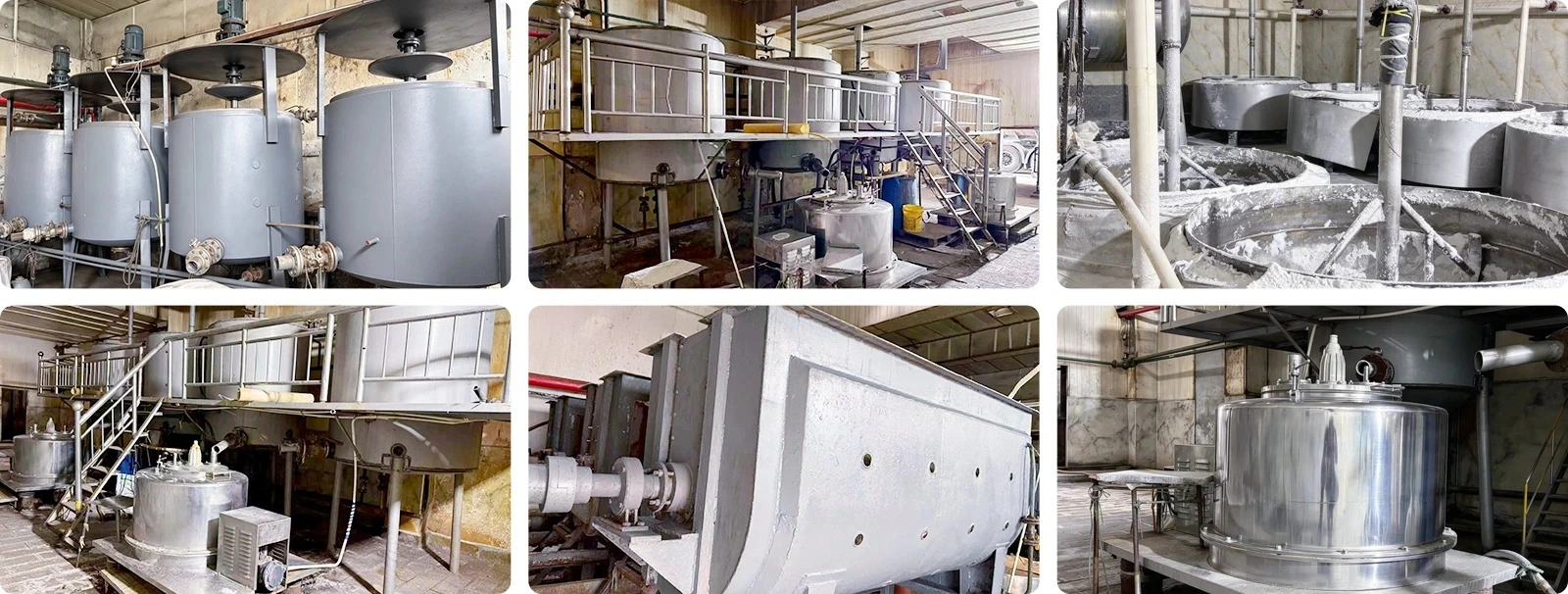
We make the product in a certified standardized plant of 27,000 ㎡. Acidity holds steady. Buffering performs well. Plants running large industrial food lines find that a good fit. Output reaches 150,000 tons a year. One batch matches the next. Plenty of stock stays on hand. Long-term food processing buyers across Europe, America and Asia order from us.
Key Features & Benefits
We blend this product with food manufacturing in mind. Ingredient control stays tight. A few practical functions can sharpen your formulas and the end product:
Purity Control That Meets Food-Grade Rules: The purity figure never drops under 99% and never goes past 100%. Free alkali stays below 0.12%. Free water sits at 0.1% or less. From one batch to the next, those numbers do not move. Processing performance in mass food production therefore stays the same. Halfway through, your formula will not shift.
Strong Antiseptic and Fresh-Keeping Action: Molds, yeasts, bacteria and other spoilage microorganisms find it hard to reproduce once it is in use. Shelf life of the finished product goes up 2-3 times. That number comes from a comparison with untreated food formulas. Food safety standards are still fully met.
Steady pH Buffering: You can set the pH with this, and it stays where you put it. During processing and long storage, the level resists drifting. Oxidation damage gets blocked, and so does flavor loss. Color holds as it was. The aroma, the taste, and the texture stay unchanged too.
Easy Industrial Compatibility: Water takes it up fast, and it spreads out evenly. So you can pour it straight into the lines you already have running. No awkward rework of the process is needed. The safe daily intake sits at 0-15mg/kg body weight. Most food categories can use it.
Technical Specifications
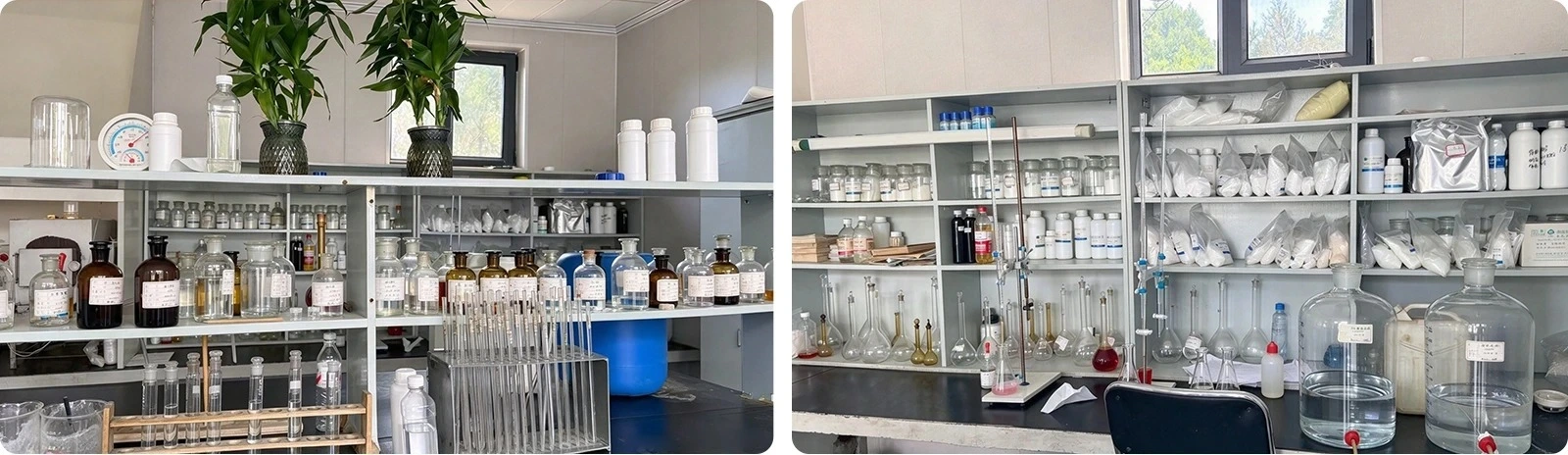
All technical indicators of our food-grade sodium acetate trihydrate are tested in accordance with national standard GB/T 694, with stable and reliable data that meets international food additive requirements. The detailed parameters are shown in the table below:
Parameter | Specification | Test Method |
|---|---|---|
Chemical Formula | CH₃COONa·3H₂O | |
CAS Number | 6131-90-4 | |
Molecular Weight | 136.08 g/mol | |
Content (CH₃COONa·3H₂O) | 99-100% | GB/T 694 |
Free Alkali | ≤0.12% | GB/T 694 |
Free Water | ≤0.1% | GB/T 694 |
Chloride (Cl) | ≤0.005% | GB/T 694 |
Iron (Fe) | ≤0.0003% | GB/T 694 |
Heavy Metals (as Pb) | ≤0.0005% | GB/T 694 |
Arsenic (As) | ≤0.0001% | GB/T 694 |
Potassium (K) | ≤0.01% | GB/T 694 |
Appearance | Colorless transparent crystals or white crystalline powder | Visual inspection |
How It Works
Sodium Acetate Trihydrate for Food Processing works as a food additive that handles more than one job. Four main mechanisms sit behind it. Each one raises the quality of a food system. Every part of your formula comes out better:
Precise Acidity Regulation: This ingredient acts as a reliable acidity regulator. pH values in food systems get adjusted and kept in balance by it. Better sweet and sour notes come through in the finished food. Flavor acceptance by consumers goes up as a result.
Stable Buffering Protection: Good buffering capacity gives strong resistance to pH shifts from high-temperature processing and long-term storage. Active nutritional ingredients are protected against degradation. Original sensory and nutritional value stays in the food.
Safe Antimicrobial Preservation: Spoilage bacteria cannot grow or reproduce freely. The way microbes are held back stays mild, and it is safe. Irritating chemical preservatives are not needed at all. Used alongside other preservation methods, the fresh-keeping effect gets stronger.
Chelating Anti-Deterioration: Metal ions sitting in raw ingredients get bound up tight. Oxidation that those ions would trigger simply stops. Colors hold. Odd flavors never get a chance to form. Batch after batch, the finished product stays consistent.
Applications
The formula behind this food-grade sodium acetate trihydrate is a safe one. Performance holds steady. Other ingredients in the mix give it no trouble. That is why many mainstream food processing fields use it so widely:
Sauces & Condiments: You will find this ingredient in vinegar dressings. Ketchup and marinades use it too. So do other condiments. Acidity readings hold steady. During long-term storage, pH does not drift. Sauce flavor stays the same.
Bakery Products: Bread gets this ingredient. Cakes and pastries contain it as well. Dough pH gets adjusted. Fermentation improves. Puffing improves too. Texture gets better. Baked goods stay fresh longer.
Processed Meat Products: Sausages use it. Ham and cured meat products do too. Color holds up better. Microbes affect the meat less. During thermal processing, protein activity stays protected.
Snack Foods: Seasoning mixes for puffed snacks rely on it. You will find it in chips and crackers as well. A light sour taste comes through. Shelf life of the oil improves too. Blends stay even in dry seasonings.
Dairy Applications: Cheese processing uses it, and so do fermented dairy products. pH can be held steady in the system. Starter cultures carry on working well. Texture and fermentation results come out the same each time.
Sodium Acetate Trihydrate for Food Processing vs Other Products
Compared with traditional food additives such as citric acid and sodium citrate, our food-grade sodium acetate trihydrate has more balanced performance, wider applicability and higher cost performance, which is more suitable for large-scale industrial food production:
Feature | Our Sodium Acetate Trihydrate | Citric Acid | Sodium Citrate | Acetic Acid |
|---|---|---|---|---|
Purity Level | 99-100% | 99.5% min | 99% min | 80-99.7% |
pH Buffering Capacity | Excellent (pH 6.5-8.5) | Moderate | Good | Limited |
Water Solubility | Rapid, complete | High | High | Complete |
Antimicrobial Effect | Moderate, sustained | Weak | Weak | Strong |
Taste Profile | Mild saline-vinegar | Sharp acidic | Mild saline | Harsh acidic |
Storage Stability | Excellent (crystalline) | Good | Excellent | Requires dilution |
Application Versatility | Broad spectrum | Limited to acidic foods | Medium | Restricted use |
Cost Efficiency | High (multi-functional) | Medium | Medium | Low |
Certifications & Compliance
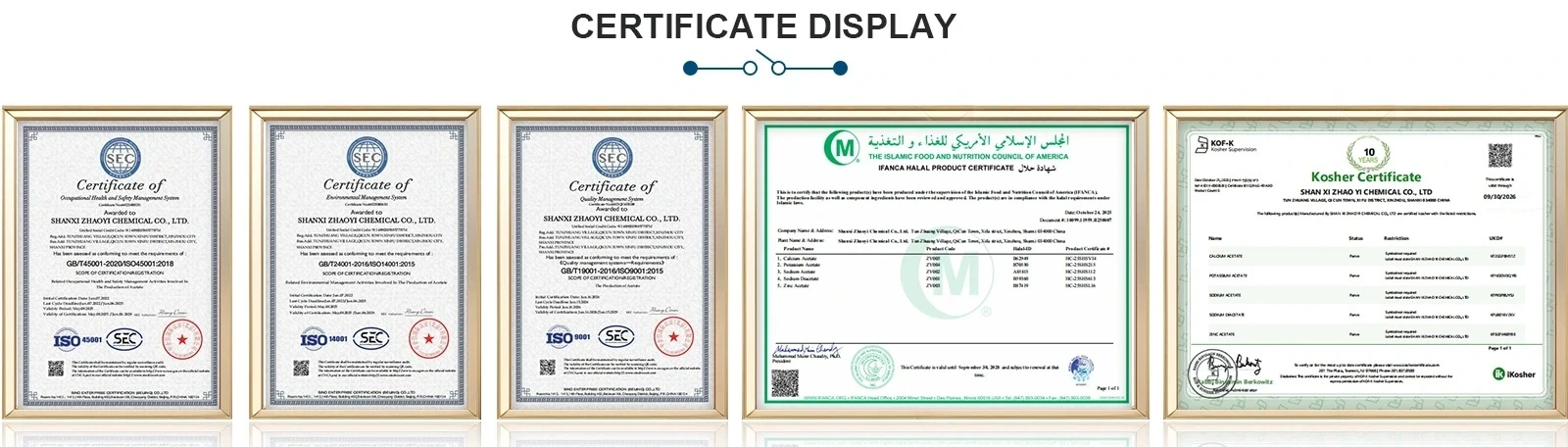
Standard Quality System Certification: ISO 9001:2015 quality management system certification is held by the factory. Set steps guide production and quality control from the first stage to the last. Batch quality stays even because of that.
Food Safety Standard Compliance: Every product follows China GB2760 food additive standards. It also meets the related US FDA GRAS rules. Food makers can use these products in processing around the world.
International Qualification Authorization: We have valid KOSHER and HALAL certificates. They open the door to plenty of markets worldwide. Different consumer groups get their needs met too.
Authoritative Third-Party Testing: Every batch gets checked by SGS and Intertek. Labs people trust elsewhere do the same job. Complete test reports sit ready for customer audits and regulatory filing.
Packaging Options
We provide standardized and customized food-grade packaging solutions, all complying with food contact safety standards, with good moisture-proof and pollution-proof performance to ensure product safety during transportation and storage:
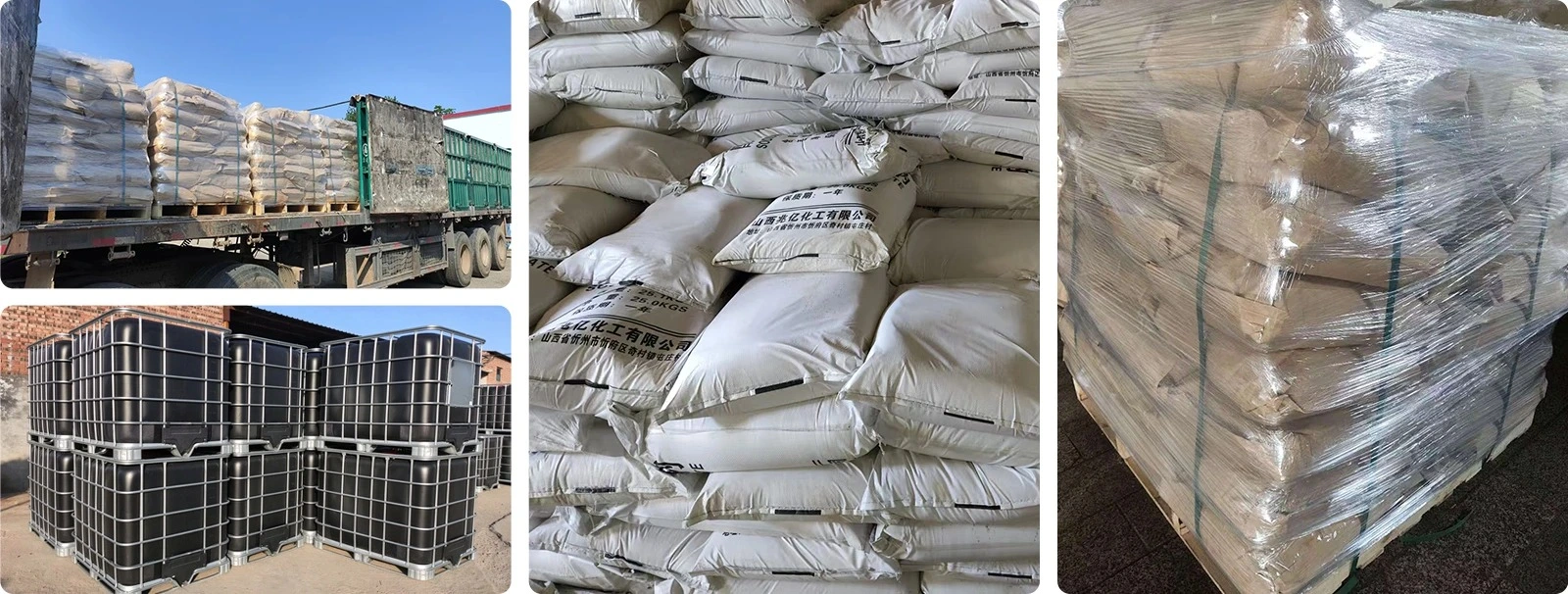
Export Packing as Standard: Every bag is 25kg. Food-grade paper makes up the outer layer. Inside sits a PE liner. That keeps moisture and dirt away. The bags stack neatly, so warehouse work is simpler each day.
Reinforced Packaging: These are 25kg plastic woven bags. The PE inner layers are thicker. They take more pressure and survive drops better. Long ocean shipments and export orders suit them.
Customized Service: Packaging can fit your needs. Tell us how your warehouse stores the goods. How does your production line run? Which brand labels do you want? We'll build the packing around those answers.
Complete Labeling & Palletization: Every package gets a clear mark in plain sight. Anyone can see it. The batch number goes there. So does the production date. Storage instructions are printed too. Goods ship on standard pallets. International logistics shipping rules ask for that.
Manufacturing Process
Refined food-grade technology drives our Sodium Acetate Trihydrate for Food Processing production. Tight control covers every step. It starts with picking the raw materials and ends with packing the finished product. Food safety and high purity come out of that:
Careful Raw Material Screening: Food-grade, high-purity acetic acid and sodium carbonate/sodium hydroxide come only from qualified suppliers. Raw material purity and safety get checked at the source this way.
We Control the Reaction Closely: The neutralization reaction runs at a steady temperature and a fixed pH. It goes all the way to completion, and impurity formation stays low.
Uniform Crystallization Purification: Adopt segmented temperature control crystallization technology to form uniform trihydrate crystal particles with stable structure and good solubility.
Multi-Stage Impurity Removal: Crystal separation, cleaning and centrifugation processes remove residual mother liquor and trace impurities to meet food-grade impurity indicators.
Constant-Temperature Drying & Sorting: Precise drying controls free water content without damaging the trihydrate structure. Milling and sieving ensure uniform particle size for even dispersion in food formulas.
Full-Batch Quality Inspection: The professional QA team conducts multi-index testing on chemical composition, physical properties and microbial safety of each batch to ensure full compliance with standards before delivery.
Why Choose Us
Decades of Mature Manufacturing Experience: Founded in 1988, we have 36 years of professional acetate production experience, focusing on food additive raw material manufacturing to provide stable and reliable products for the food industry.
Large-Scale Stable Supply: 27,000 ㎡ standardized factory and 150,000-ton annual output capacity fully meet customers' large-volume long-term order demands, with stable inventory and no stockout risk.
Professional Technical Customized Service: Our professional technical team is familiar with food processing formula requirements, providing one-stop services including formula optimization, dosage guidance and regulatory compliance consultation.
Global Mature Logistics System: Covering China, Europe, America, Asia and other global markets, we provide flexible shipping solutions, shorten delivery cycle, and support JIT production supply for customers.
Customer-Focused Custom Solutions: We support flexible order quantities and personalized customization, with efficient after-sales communication, and have established long-term stable cooperative relationships with many well-known food manufacturers.
FAQ
Q: We have sorted out 6 high-frequency consultation questions for global food processing B-end customers, with concise and professional answers for your reference:
Q: What is the shelf life of your food-grade sodium acetate trihydrate?
A: A1: Under standard cool, dry and sealed storage conditions, the product can maintain complete food-grade specifications and stable performance for 24 months from the production date.
Q: Can you provide free samples for formula testing?
A: A2: Yes, we support free sample provision within 500g, equipped with complete technical data sheets and batch COA certificates to facilitate your formula evaluation and testing.
Q: What is your minimum order quantity for formal cooperation?
A: A3: Our standard MOQ is 1 ton. We also support small-batch trial orders for new customers with flexible quotation solutions.
Q: Do you provide professional technical application support?
A: A4: Our technical team provides full-cycle services including additive dosage guidance, formula compatibility testing and production process optimization to solve your application problems.
Q: How do you guarantee stable batch-to-batch quality?
A: A5: We adopt full-process statistical monitoring and on-line quality control, and every batch of products passes internal and third-party dual testing to ensure consistent indicators.
Q: What safety certifications can you provide for customs clearance?
A: A6: We can provide ISO, KOSHER, HALAL, SGS test reports and other complete compliance documents to support global customs clearance and factory audit.
Request a Quote
If you are looking for reliable Sodium Acetate Trihydrate for Food Processing please feel free to contact our professional sales team via email at sxzy@sxzhaoyi.com.

USER EVALUATE
Here is the customer's evaluation of us