



Sodium Acetate Trihydrate AR Grade
CAS NO.: 6131-90-4
Molecular Formula: CH₃COONa·3H₂O
Molecular Weight: 136.08 g/mol
Grade: AR Grade
Character: Colorless or white crystalline material with high purity and controlled levels of chloride, sulfate, iron, heavy metals, and water-insoluble substances.
Usage: Used for analytical chemistry, buffer preparation, pH regulation, titration, biochemical experiments, reagent formulation, laboratory synthesis, and quality-control testing.
Package: 500 g, 1 kg, 5 kg, 25 kg, or customized reagent packaging.
Storage: Keep tightly sealed in a dry, cool, and ventilated place. Protect from moisture, contamination, and incompatible chemicals.
- Product Description
Sodium Acetate Trihydrate AR Grade – High Purity Laboratory Reagent for Analytical Applications
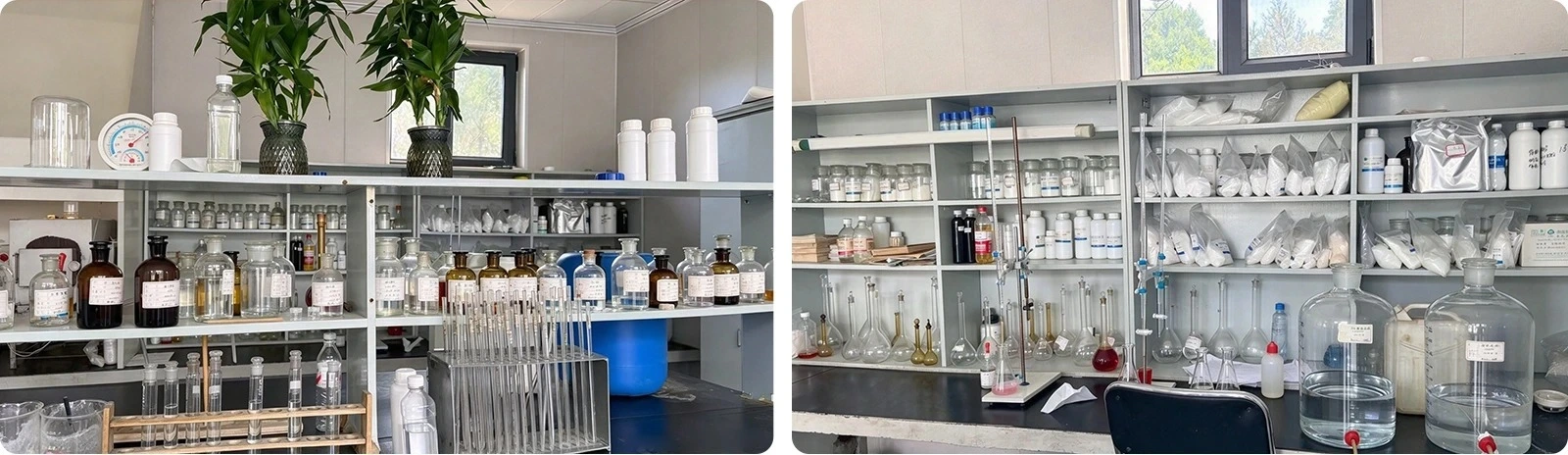
Lab reagents are the business of SHANXI ZHAOYI CHEMICAL CO., LTD. What we do best is high purity grades. Our production base runs with 27,000 people on site. Since 1988, 150,000 tons of acetate series products have come out of that site every year. Global analytical reagent rules are met by the Sodium Acetate Trihydrate AR Grade we supply, and purity lands between 99–100%. This crystalline reagent is what biochemistry and pharma labs everywhere depend on. Steady, reliable results come from it in buffer prep, fine pH tuning, and lab quality testing. Impurities are held to tight limits: chloride ≤0.005%, iron ≤0.0003%, heavy metals ≤0.0005%.

Key Features & Benefits
High precision analytical work is what our this product is built for. Crystals come out clean and colorless. Contaminants stay away, so test data stays accurate and repeats easily. Very tight limits hold each impurity marker in place. Sensitive assays then stay safe from wrong answers. It dissolves fast in water. Spread evenly through the mix, the parts let buffers form quickly and keep pH buffering steady. Store it for months, or use it right away, the chemistry will not move. Free water stays below 0.1%. Free alkali stays below 0.12%. That keeps quantitative analysis slip-ups from happening.
Technical Specifications
Parameter | Specification | Test Method |
|---|---|---|
Content (CH₃COONa·3H₂O) | 99-100% | Titration |
Chloride (Cl) | ≤0.005% | Ion Chromatography |
Iron (Fe) | ≤0.0003% | Spectrophotometry |
Heavy Metals (as Pb) | ≤0.0005% | Colorimetric Method |
Arsenic (As) | ≤0.0001% | Atomic Absorption |
Potassium (K) | ≤0.01% | Flame Photometry |
Free Alkali | ≤0.12% | Acid-Base Titration |
Free Water | ≤0.1% | Karl Fischer Method |
Appearance | Colorless/White Crystals | Visual Inspection |
Water Insoluble Matter | ≤0.005% | Gravimetric Analysis |

How It Works
In water systems, Sodium Acetate Trihydrate AR Grade works as a weak acid salt buffer and stays stable. Once dissolved all the way, it splits into sodium ions and acetate ions. With acetic acid, those ions pair up into a balanced acid-base buffer system. Normally a trace of acid or base would send pH jumping. Here the equilibrium absorbs the shift and holds solution pH where it was. Enzyme activation needs the right pH. Steady conditions like that let biochemical research produce results you can repeat. Such high purity also makes it a standard reagent that labs trust for titration calibration and quantitative analysis. Unknown sample amounts can then be measured accurately.
Applications
This AR reagent is very pure. Many precise lab jobs work well with it. Analytical labs count on it to standardize acid solutions. Quantitative titration tests are another thing they run with it. You can also make pH 3.6-5.6 acetate buffers from it. Chromatography runs on those buffers. So do electrophoresis and enzyme experiments. Biochemical research uses them for protein purification. DNA extraction is another job they handle. Pharmaceutical quality control needs it for formulation testing. Analytical method verification also depends on it. In teaching labs, it shows up in basic chemistry experiments.
Product Comparison
Feature | AR Grade | CP Grade | Industrial Grade |
|---|---|---|---|
Purity | 99-100% | 98-99% | 95-98% |
Chloride Content | ≤0.005% | ≤0.01% | ≤0.05% |
Heavy Metals | ≤0.0005% | ≤0.001% | ≤0.005% |
Iron Content | ≤0.0003% | ≤0.0005% | ≤0.002% |
Application | Analytical Testing | General Laboratory | Manufacturing |
Price Point | Premium | Moderate | Economy |
Certification | ISO/KOSHER/HALAL | ISO | Basic |
Certifications & Compliance
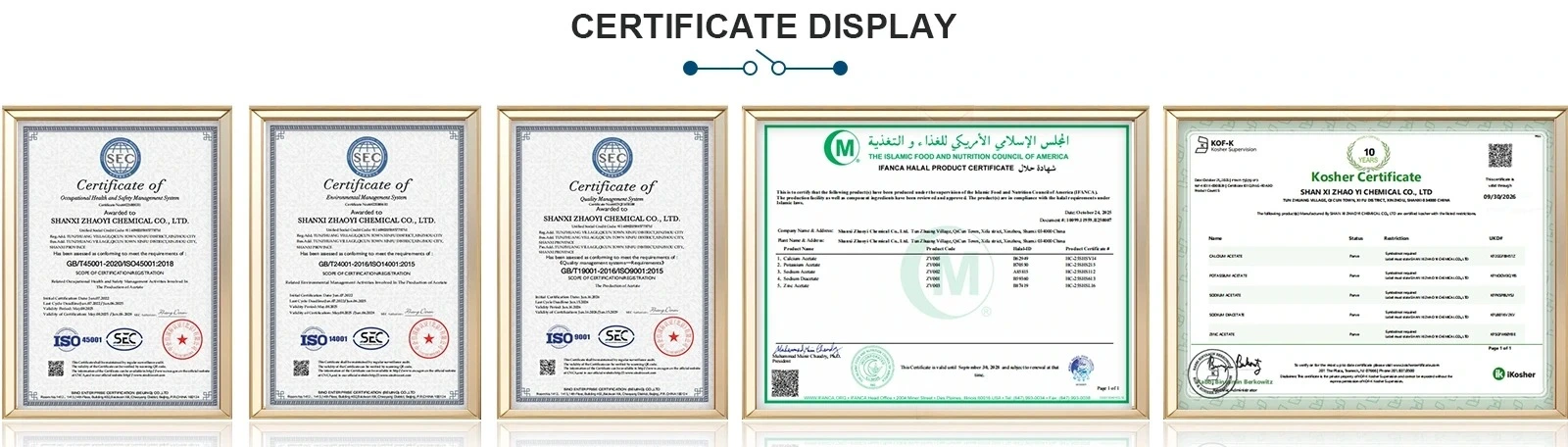
Two certifications sit with our production facility: ISO 9001 for quality management systems and ISO 14001 for environmental management. Quality gets controlled and traced through the whole process because of that. KOSHER and HALAL certificates also come with our reagents. Strict rules for pharmaceutical and biochemical research are met by them. At every step, fine chemical manufacturing follows GMP guidelines. Audits by third parties take place on a regular basis. Those audits confirm we fully meet international quality standards.
Packaging Options
Packaging for our lab products comes in professional grades. Daily conventional analytical experiments get 500g and 1kg sealed anti-counterfeiting bottles. For high-volume lab and institutional procurement, 5kg and 25kg sealed drums are available. Custom packaging specs can be arranged. They match how you use and store the product. Every package carries clear labels. The batch number is printed on them. So are the production date and the validity period. Lab quality audits and file management get support from this.
Sodium Acetate Trihydrate AR Grade Manufacturing Process

Every batch of material is inspected when it arrives. We use only high-purity raw materials, so unqualified material never makes it onto the production line. The neutralization reaction runs with tight control, at a steady temperature and with the pH value watched the whole time. Fewer by-products form because of that. Purity at the early reaction stage stays where it should be.
Cooling stays under control during crystallization. That gives crystals a uniform particle size and a stable structure, with high purity. Washing in several stages with deionized water pulls out trace impurities. Chloride and heavy metals are among them. Every AR grade reagent purity standard is met.
After precision constant atmosphere drying treatment, qualified sodium acetate trihydrate finished products are formed with stable water content and chemical properties. Every batch will go through full-index professional testing before packaging to ensure 100% compliance with all technical specifications, and complete COA reports are provided for each shipment.
Why Choose Us
Acetate manufacturing has been our trade for 35 years. Labs that work with high precision need reagent quality that stays stable and consistent, and that is where we put our attention. Yearly output of 150,000 tons covers bulk orders and repeat orders alike. Supply shortages and late project deliveries stop being a problem.
Our logistics network is well established. It reaches across Europe, America and Asia. Cross-border deliveries stay stable. Fast too, and overseas clients can rely on them. The technical team on our side handles the whole job, start to finish. We show you how to apply the product. We also help tune the process behind your experiments. That way, the problems you run into get solved.
We want partnerships that last. Both sides should win. Our AR grade reagents, such as Sodium Acetate Trihydrate AR Grade, come with high purity. The price stays competitive for the performance you get. After-sales support covers the whole cycle. Answers come back fast. Labs and industrial buyers around the world have trusted us for years.
FAQ
Q: How long does AR grade sodium acetate trihydrate last on the shelf?
A: A1: Leave the container closed and keep it in a cool, dry spot. Stored that way, it holds full spec for up to 3 years. The quality does not change.
Q: Can this reagent be used in molecular biology work?
A: A2: Yes. Heavy metals and other impurities stay at ultra low levels. That is why it passes the tough standards molecular biology labs use. Nucleic acid precipitation is one job it does well. It also works for making biological buffers.
Q: How do the trihydrate and anhydrous forms differ from each other?
A: A3: With the trihydrate form, the crystal water stays locked in place. That is what keeps it stable, and labs find it easy to handle. No water at all is held by the anhydrous type, so it pulls moisture out of the air with ease. For everyday analytical work, trihydrate is the better choice.
Q: Does every order come with a COA certificate?
A: A4: Of course, that is no trouble at all. Every shipment goes out with a complete certificate of analysis. All the actual test data sits inside it. That is how a batch gets traced back. The lab can keep the record on file too.
Q: Does this reagent work with automated analytical equipment?
A: A5: Yes. Purity stays steady and quality does not drop. Automatic titrators run it without trouble. Buffer preparation equipment is fine as well. So are laboratory robotic systems.
Request a Quote
Do you need pure Sodium Acetate Trihydrate AR Grade for lab research or analytical tests? Our sales team can help. Just email your request to sxzy@sxzhaoyi.com.

USER EVALUATE
Here is the customer's evaluation of us