



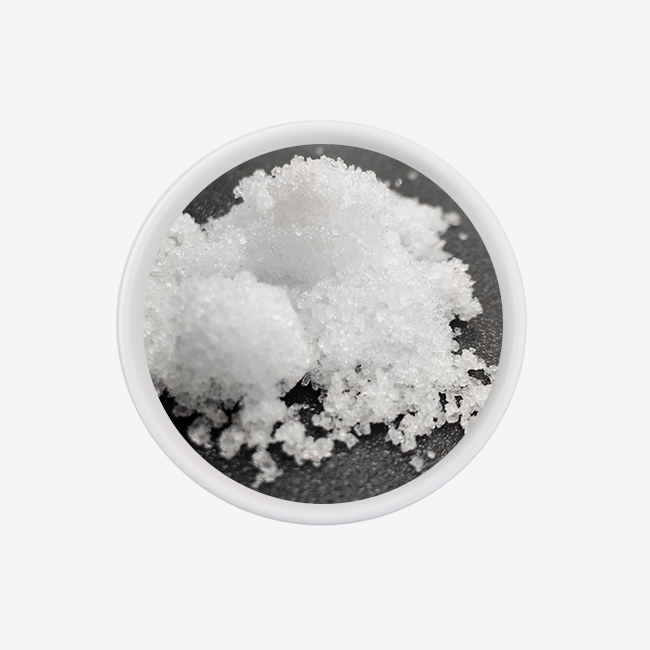
Pastry Sodium Acetate Trihydrate
CAS NO.: 6131-90-4
Molecular Formula: CH3COONa·3H2O
Molecular Weight: 136.08
Character: Colorless crystal, it is soluble in water and alcohol and lightly soluble in acetic acid; specific gravity:1.45; melting point: 58℃.
Usage:It should be stored in a dry and ventilative warehouse, kept away from heat and moisture during transportation, unloaded with care so as to avoid damage. Furthermore, it must be stored separately from poisonous substances.
Package: 25kg plastic woven bag or 1000kg Ton-bag
Storage: It should be stored in a dry and ventilative warehouse, kept away from heat and moisture during transportation, unloaded with care so as to avoid damage. Furthermore, it must be stored separately from poisonous substances.
- Product Description
Pastry Sodium Acetate Trihydrate for Bakery Applications — Food-Grade Preservative & pH Buffering Solution
Pastry Sodium Acetate Trihydrate (CAS 6131-90-4, CH3COONa•3H2O) is a food-grade acidity regulator and bacteriostatic preservative created for the bakery and pastry sectors. It’s a secret sodium acetate E262 that gives constant mould prevention, pH stabilisation and shelf life extension in a wide range of baked items. Molecular weight 136.08, melting point 58° C., specific gravity 1.45. It is a colourless crystalline substance that fits the accuracy requirements for industrial scale pastry manufacture. This product is manufactured by Shanxi Zhaoyi Chemical Co., Ltd. It was established in 1988 with an annual capacity of 150,000 tons in a 27,000 m² factory.

Technical Specifications
Parameter | Specification |
Chemical Name | Sodium Acetate Trihydrate (Food Grade) |
CAS Number | 6131-90-4 |
Molecular Formula | CH₃COONa·3H₂O |
Molecular Weight | 136.08 g/mol |
Appearance | Colorless crystal |
Content (CH₃COONa·3H₂O) | 99-100% |
Free Alkali | ≤0.12% |
Potassium (K) | ≤0.01% |
Lead (Pb) | ≤0.0005% |
Arsenic (As) | ≤0.0001% |
Free Water | ≤0.1% |
Specific Gravity | 1.45 |
Melting Point | 58℃ |
Solubility | Soluble in water and alcohol; slightly soluble in acetic acid |

What Is Pastry Sodium Acetate Trihydrate?
This substance is the trihydrate of the sodium salt of acetic acid, three molecules of water of crystallisation. It appears as colourless odourless crystals. It dissolves readily in water, in alcohol, and somewhat in acetic acid;
This is a special food grade formulation, not the same as the industrial sodium acetate. In baking conditions it acts as a pH regulator, buffering agent and preservative all at the same time. It’s a versatile substance, not a single purpose additive.”
It is permitted as a food additive in the EU and recognised as GRAS by the FDA providing it wide regulatory recognition in global export markets.

Key Product Characteristics
The trihydrate form is very soluble and distributes evenly in dough or batter systems. The buffering capacity guarantees a stable pH value, including in recipes with acidic fruit fillings, fermentation products or leavening agents.
It's less aggressive and buffers rather than acidifying, so it promotes yeast activity during fermentation – a huge benefit over alternatives like calcium propionate, which may decrease yeast performance and add a harsh off-note.
At appropriate levels this ingredient also helps to maintain the pH of the dough within the ideal range for the Maillard reaction to occur, not allowing excess acidity to result in a pale, undeveloped crust colour.
Applications in Pastry and Bakery Production
Sodium acetate is used to prevent mould in bakeries. It solves one of the most expensive problems in commercial baking – microbial deterioration after baking. Here's how this chemical works in several product categories:
Sweet Doughs and Puff Pastry: 0.1%-0.4% flour weight basis inhibits Bacillus spore germination post baking without affecting dough rheology during sheeting, laminating or folding.
Cakes & Sponge Cakes: Used at 0.3%-0.5% of flour weight, it stabilises the batter and creates a more open, fluffy crumb structure. It also extends shelf life in high moisture environments.
Biscuits & Pastries 0.5%-0.8% flour weight Preserves freshness, prevents moisture uptake, reduces strength.
Mooncakes & Pastry Fillings: Prevents mould formation and thus flavour degradation and colour instability throughout lengthy distribution periods (used at 0.8%–1.2% of the weight of filling) .
Fruit-Filled Danish A solution of sodium acetate trihydrate is used as a food preservative in berry danishes, lemon tarts and glazed products, functioning as a buffer for the acid filling, preventing the pastry structure from becoming soggy, and retaining the gel strength of pectin-based glazes.Speciality ingredient for bread & pastry recipes. In high-moisture systems it works synergistically with sodium diacetate to provide a wider antibacterial spectrum and a cleaner flavour profile than benzoate preservatives.

Pastry Sodium Acetate Trihydrate vs Other Products
Feature | Pastry Sodium Acetate Trihydrate | Calcium Propionate | Potassium Sorbate |
Impact on Yeast | Minimal – maintains fermentation volume | Moderate – can inhibit rise | Minimal |
Flavor Profile | Mild, salty-vinegar (blends well) | Bitter aftertaste | Neutral to slightly acidic |
pH Buffering | Excellent – stabilizes 5.0-6.5 range | Limited | Minimal |
Browning Support | Promotes consistent Maillard reaction | Can cause pale crust | Neutral effect |
Moisture Stability | Moderate – requires proper storage | High stability | High stability |
Clean Label Perception | Good – recognized as acidity regulator | Fair – chemical preservative image | Good |
Typical Dosage | 0.1%-0.5% flour weight | 0.1%-0.3% flour weight | 0.05%-0.2% product weight |
Primary Use | Rope prevention, pH control, buffering | Mold/rope inhibitor | Mold inhibitor (surface) |
Formulation and Usage Guidance
For most applications the typical dose range is 0.1% to 0.5% depending on flour weight. P>0.5% may increase the pH enough to decrease crumb whiteness and provide a soapy flavour.
Depending on local labelling rules, this ingredient may be labelled as "Acidity Regulator (E262)" or "Vinegar Salt"for clean-label positioning — an important consideration for premium and natural-positioned pastry firms.
The trihydrate form may effloresce in very dry air or cake in high humidity conditions. The trihydrate form should be stored at temperatures below 30 °C and relative humidity <= 65 % in multi-ply moisture-proof bags with a PE inner liner. Seal tightly after opening and use within 48 hours for continued flowability in automated dosing systems.
We suggest customers to do small scale experiments before full production deployment. Shanxi Zhaoyi Chemical offers technical help for the formulation test procedure.
Certifications & Compliance
Shanxi Zhaoyi Chemical Co., Ltd. holds the following management system and food safety certifications relevant to food-grade sodium acetate supply:
- ISO 9001 — Quality Management System Certification
- ISO 14001 — Environmental Management System Certification
- ISO 45001 — Occupational Health and Safety Management System Certification
- Kosher Certification
- Halal Certification (applicable food-grade products)
The Pastry Sodium Acetate Trihydrate is approved under EU food additive regulation (E262) and is consistent with FDA GRAS requirements, supporting global market entry for pastry manufacturers exporting to Europe, North America, and Asia. On-site factory audits by international customers are supported.

Why Source from Shanxi Zhaoyi Chemical?
Shanxi Zhaoyi Chemical is a professional manufacturer of direct food additive, with over 30 years of industry experience, a 27,000 m² production facility and an annual capacity of 150,000 tons. This scale of operation ensures consistent batch quality and stable supply, a requirement for industrial bakery procurement teams managing tight production schedules.
We normally manufacture within 5-7 working days. If we have stock we may despatch your order within 24 hours. Technical questions answered within 2 hours 24/7 consulting support.
International customers enjoy easy procurement with flexible packaging options like 25 kilogram woven bags or 1,000 kg ton bags. We also provide OEM labelling, multi-language COA and MSDS paperwork, and support for FOB, CIF and DAP trading terms.

Our Customer

FAQ
Q: How does product compare to calcium propionate to prevent mould?
A: Calcium Propionate inhibits the action of yeast and provides a bitter taste to sweet items. This product has a more mild taste profile and less impact on fermentation volume, making it a superior alternative for yeast-raised sweet pastries and Danishes.
Q: How much should I take?
A: Range: 0.1% - 0.5% on flour weight (normal) More over .5 % may elevate the pH too high, resulting in decreased crumb whiteness and a soapy off-taste.
Q: How should it be stored for best performance?
A: Store at <30°C, <65% relative humidity, moisture-proof sealed containers. Reseal after opening. Use within 48 hours to prevent clumping, which may interfere with auto-dosing systems.
Q: Can it be used in clean label products?
A: Yes. It is authorised by the EU (E262) and is GRAS. Depending on the local legislation it might be labelled as “Vinegar Salt” or “Acidity Regulator” for clean label placement.
Q: Will it make the crust brown?
A: Yes, but indirectly. Buffering dough pH away from high acidity maintains circumstances favourable to the Maillard reaction for continuous golden-brown crust growth.
Q: What is the minimum order quantity and leadtime?
A: We welcome both small and wholesale orders. Stock goods are available for next day delivery. Standard production orders are sent within 5-7 working days.
Contact Us
Ready to source food-grade pastry sodium acetate for your Pastry Sodium Acetate Trihydrate? Email our team at sxzy@sxzhaoyi.com — we respond within 2 hours.

USER EVALUATE
Here is the customer's evaluation of us