



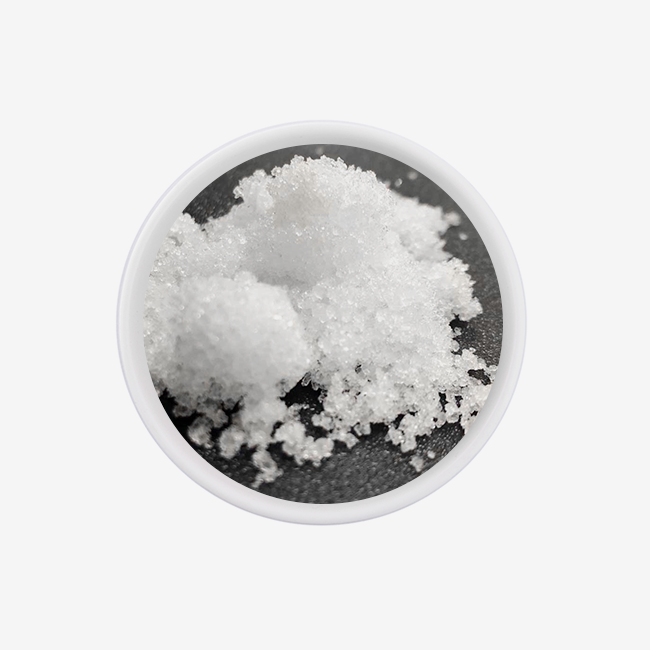
Bread Sodium Acetate Trihydrate
CAS NO.: 6131-90-4
Molecular Formula: CH3COONa·3H2O
Molecular Weight: 136.08
Character: Colorless crystal, it is soluble in water and alcohol and lightly soluble in acetic acid; specific gravity:1.45; melting point: 58℃.
Usage:It should be stored in a dry and ventilative warehouse, kept away from heat and moisture during transportation, unloaded with care so as to avoid damage. Furthermore, it must be stored separately from poisonous substances.
Package: 25kg plastic woven bag or 1000kg Ton-bag
Storage: It should be stored in a dry and ventilative warehouse, kept away from heat and moisture during transportation, unloaded with care so as to avoid damage. Furthermore, it must be stored separately from poisonous substances.
- Product Description
Bread Sodium Acetate Trihydrate for Bakery — Food-Grade Preservation & pH Control Solution
Bread Sodium Acetate Trihydrate (CH3COONa3H2O, CAS 6131-90-4) is an acetate salt that is safe for food and was made to work best in bakeries and mills. Produced by Shanxi Zhaoyi Chemical Co., Ltd. — More than 30 years expertise in the synthesis of acetate salts, and an annual output of 150,000 tons. This product provides perfect buffering of pH, efficient prevention of rope deterioration and longer shelf life. It is tested to have an assay of ≥99.0%, dry basis and heavy metal level rigorously regulated below 2ppm, meeting the quality standards of industrial bakers and food ingredient purchasers globally.

Technical Specifications
Parameter | Specification | Test Method |
Content (CH3COONa·3H2O) | 99-100% | Titration |
Free Alkali (as Na2CO3) | ≤0.12% | Acid-base titration |
Potassium (K) | ≤0.01% | Flame photometry |
Lead (Pb) | ≤0.0005% | ICP-MS |
Arsenic (As) | ≤0.0001% | ICP-MS |
Free Water | ≤0.1% | Karl Fischer |
Molecular Weight | 136.08 g/mol | Calculated |
Melting Point | 58°C | DSC |
Specific Gravity | 1.45 | Pycnometer |
Solubility in Water (20°C) | 123g/100ml | Gravimetric |

What Is Bread Sodium Acetate Trihydrate?
It is the tri-hydrate crystal form of the sodium salt of acetic acid and is classified as food additive E262i. It is not a broad industrial chemical, it is a particular formulation for the unique pH and preservation requirements of bread manufacture.
A pH regulator, buffer, and bacteriostatic preservative, it does it all. It supports gluten and yeast development by maintaining a dough pH of 4.5-5.5. It also prevents heat-resistant Bacillus subtilis from causing "rope" spoiling, which causes sticky and foul-smelling crumb after baking.
Sodium acetate for bread preservation isn't pungent like vinegar or acetic acid. It extends shelf life without compromising flavour, smell, or fermentation.

Product Characteristics
Appearance: The product is colorless and clear monoclinic crystals or white granular powder. It has a faint acetic odor and a somewhat cold, saline flavor. Key physical and functional properties include:
High water solubility: 123g/100ml at 20°C, enabling rapid, homogeneous distribution within the gluten matrix during dough mixing
Low melting point: approximately 58°C, where the crystals dissolve in their own water of crystallization — precise temperature control during storage is therefore essential
Good fluidity: the granular shape enables precise weighing and steady feeding in automated manufacturing lines
Versatile: Works with wheat, yeast and other common bread materials without interfering with the fermentation
These qualities make food grade sodium acetate trihydrate for baking simpler to handle, dose and integrate than liquid acidulants or anhydrous alternatives.
Application in Bread Production
Sodium acetate E262 bakery applications span a wide range of product types, and the addition ratio can be adjusted to suit each formulation:
Sweet bread: 0.4% flour weight enhances shelf life to 7–10 days with no change in sweetness or crumb quality.
Whole wheat bread: 0.5% enhances fermentation efficiency and creates a more equal interior crumb structure, especially in high-fiber doughs that are more difficult to leaven uniformly.
General recommendation: For most common forms of bread, the normal addition of 0.3%–0.5% of flour weight. Small trials should be done to verify the correct dose. In this procedure, the technical staff of Shanxi Zhaoyi can also give formulation help.
It does not add severe acidity, but buffers pH. It is suitable for high moisture goods, where the danger of spoiling is increased and taste sensitivity is high.
Bread Sodium Acetate Trihydrate vs Other Products
Feature | Our Trihydrate | Anhydrous Form | Calcium Propionate | Acetic Acid |
Water Solubility | Excellent (123g/100ml) | Good (46g/100ml) | Moderate | Complete |
Dissolution Speed | Fast (58°C melting) | Slower | Moderate | Instant |
pH Buffering | Strong (4.5-5.5) | Strong | Weak | Harsh/Unstable |
Flavor Impact | Mild, neutral | Mild, neutral | Slightly bitter | Strong, pungent |
Cost Efficiency | High | Moderate | High | Low |
Rope Inhibition | Excellent | Excellent | Good | Excellent |
Handling Safety | Safe | Safe | Safe | Requires caution |
Typical Dosage | 0.3-0.5% | 0.25-0.4% | 0.2-0.4% | 0.1-0.3% |
Certifications & Compliance
Shanxi Zhaoyi Chemical Co., Ltd. maintains the following certifications applicable to this product:
- ISO 9001 — Quality Management System
- ISO 14001 — Environmental Management System
- ISO 45001 — Occupational Health and Safety Management System
Kosher Certification
Halal Certification (applicable food-grade products)
Full documentation including COA, MSDS, and conformity documents is available in multiple languages. On-site factory audits by domestic and international customers are supported.

Packaging & Storage
Proper handling preserves both performance and compliance:
- Packaging options: 25kg inner plastic / outer woven bag, or 1,000kg ton bag; food-grade sealed format with food additive labeling
- Storage conditions: Cool, dry environment with relative humidity ≤65%; store away from toxic, harmful, or odorous substances
- After opening: Reseal immediately and use within 48 hours to prevent moisture absorption and caking
- Shelf life: 12 months unopened; re-inspection recommended before use if the shelf life has elapsed
- Transport: Keep away from heat and moisture; handle with care to avoid packaging damage

Why Choose This Grade for Bakery Use?
Industrial bakers and food ingredient purchasers are looking for more than just a simple preservative. What's special about this grade is:
Multi-functional performance One ingredient may provide pH management, preservation and moisture retention – no need for additional additions, decreasing the cost of your formulation per unit.
Strict impurity control: Cl concentration ≤0.03% Alkalinity less than 0.05% Heavy metals less than 2ppm. These tight limits protect both your product safety records and your production consistency.
Stable content: Active content is held at 58–60%, ensuring predictable dosing results batch after batch.
No fermentation interference: Compatible with commercial yeast strains and standard bread improvers, Bread Sodium Acetate Trihydrate supports rather than disrupts the fermentation environment.

Our Exhibitions

FAQ
Q: What makes the product different from industrial-grade sodium acetate?
A:The bread grade is produced under food-additive quality controls, with tightly regulated impurity levels — including chloride ≤0.03% and heavy metals below 2ppm. Industrial grades do not carry these assurance levels and are not suitable for food applications.
Q: How does sodium acetate for bread preservation prevent rope spoilage?
A:It lowers and buffers the pH of the dough producing a bacteriostatic environment against heat-resistant Bacillus subtilis . These bacteria survive baking at normal temperatures but growth is limited throughout the product's shelf life by the acidic buffered environment.
Q: Will it effect yeast activity or fermentation time?
A: Not really. At the recommended addition level of 0.3% to 0.5%, it works well with normal yeast strains. It doesn't stop fermentation; instead, it helps by bringing the pH level to a place where yeast can work best.
Q: Can I use it to make gluten-free or speciality bread?
A Yes. A lot of different baking bases can be used with this product. For non-standard formulations, we suggest small-scale trials to confirm dosage. Our technical team can help with this.
Q: What is the recommended storage condition after the bag is opened?
A:Re-seal after opening and use within 48 hours. Store at a relative humidity of ≤65 % in a cool, dry place to avoid caking and loss of function.
Q: What lead time and minimum order quantity should I expect?
A:Standard orders are fulfilled within 5–7 working days. For in-stock quantities, delivery can be arranged within 24 hours. Contact us at sxzy@sxzhaoyi.com for MOQ details and pricing based on your order volume.
Contact Us
Ready to source reliable Bread Sodium Acetate Trihydrate for your bakery supply chain? Reach out to our team at sxzy@sxzhaoyi.com — we respond within 2 hours.

USER EVALUATE
Here is the customer's evaluation of us