



Analytical Reagent (AR) Sodium Acetate Trihydrate
CAS NO.: 6131-90-4
Molecular Formula: CH₃COONa·3H₂O
Molecular Weight: 136.08 g/mol
Character: Colorless transparent crystals or white crystalline powder with controlled impurity levels. It is readily soluble in water and slightly soluble in alcohol.
Grade: Analytical Reagent Grade
Usage: Used in quantitative chemical analysis, preparation of standard and buffer solutions, pH calibration, biochemical testing, chromatography, laboratory synthesis, and research applications.
Package: 500 g, 1 kg, 5 kg, 25 kg, or customized reagent-grade packaging.
Storage: Store in a tightly closed container in a dry and ventilated laboratory or warehouse. Avoid moisture, heat, contamination, acids, and oxidizing substances.
- Product Description
High-Purity Analytical Reagent (AR) Sodium Acetate Trihydrate for Laboratory & Research Applications
SHANXI ZHAOYI CHEMICAL CO., LTD is a professional manufacturer specializing in high-standard laboratory chemical reagents. We supply premium Analytical Reagent (AR) Sodium Acetate Trihydrate (CAS: 6131-90-4) that fully complies with strict international laboratory standards, featuring a purity of over 99.0%. This AR-grade product is strictly controlled with heavy metal impurities below 10 ppm and chloride content under 0.005%, delivering stable and accurate test data for quantitative analysis and biochemical research.
Our factory opened back in 1988, which gives us 37 years in this industry. Each year we turn out 150,000 tons. ISO, KOSHER, and HALAL certifications are all in place. The crystal we make has no color, it is transparent, and purity stays high. Buyers in more than 40 countries and regions import it. Labs use it to calibrate pH. Buffer solution preparation is another common job for it, and so is chromatographic analysis.

Key Features & Benefits
We made our this product for high-precision laboratory research and analytical testing. Several core advantages come with it, and they solve the problems that turn up most often during experiments:
Guaranteed AR-Grade Analytical Purity: Every batch follows the global AR-grade reagent specs. We run full lab tests on each one. Heavy metal impurities stay under the detection limit. Contamination never happens, so your experimental data will not drift.
Fast & Complete Water Solubility: A stable trihydrate crystal structure is used here. In water at 20°C, the product dissolves fast and all the way through. Buffer prep takes less mixing and stirring time. That speeds up lab work by a lot.
Stable Crystal Storage Performance: This product is made with tightly controlled production methods. Crystals will not effloresce. Caking does not happen. They also do not break down during storage. Particle size stays even all the way through. Manual weighing remains accurate. So does instrument weighing. That keeps experiment results consistent.
Stable pH Buffering Capacity: It can form an acetate buffer system that holds steady. The pH range is 3.6–5.6. pH values do not drift. Enzyme experiments get steady, reliable conditions from this. So does microbial culture medium preparation.
Ultra-Low Trace Impurities: Chloride, sulfate, phosphate and any other impurity that interferes all stay under 0.005%. Background interference is wiped out at purity this high. Ion chromatography and spectroscopic analysis need tight precision, and it fits them well.

Technical Specifications
Our AR-grade sodium acetate trihydrate implements strict production and testing standards, with standardized core technical parameters as shown below:
Parameter | Specification |
|---|---|
CAS Number | 6131-90-4 |
Molecular Formula | CH₃COONa·3H₂O |
Molecular Weight | 136.08 g/mol |
Appearance | Colorless crystals/white powder |
Purity (Assay) | ≥99.0% |
Heavy Metals (as Pb) | ≤10 ppm |
Chloride (Cl) | ≤0.005% |
Sulfate (SO₄) | ≤0.005% |
pH (5% solution, 25°C) | 8.0–9.5 |
Water Solubility | 46.5 g/100 mL at 20°C |
Loss on Drying | 36.0%–41.0% |

How It Works
This reagent meets AR grade, and it is very pure. Its ions come apart in a slow, steady way, so the acid-base balance stays put. That is what keeps your results the same each time. Lab work that calls for close accuracy depends on this:
Ion Dissociation & Buffer Equilibrium: Drop Analytical Reagent (AR) Sodium Acetate Trihydrate into water. It splits into acetate ions and sodium ions. The acetate then joins up with acetic acid. Together the two make a weak acid-conjugate base pair, and that pair holds steady. Pour in acid or base from outside, and the pH barely moves.
Stable Experimental Environment: Buffering here is strong, so pH holds steady through titration tests and enzyme reactions. Readings stop shifting around from pH drift. Fewer errors come out of it, and each run is easier to repeat.
Accurate Molecular Calibration: The full trihydrate crystal structure locks in a fixed amount of crystallization water. Because of that, the molecular weight comes out correct. Weigh out 136.08g and you have exactly one mole of the compound. Precision in calculating and preparing experimental reagents follows from this.
Applications
Benefiting from ultra-low impurity and stable buffering performance, our Analytical Reagent (AR) Sodium Acetate Trihydrate AR-grade product covers multiple high-precision laboratory application scenarios:
Biochemical Research: For protein purification and enzyme kinetics studies, it does the job well. You can also use it in other lab experiments. In biochemical reaction systems, it supplies a stable, reliable acetate buffer.
Analytical Chemistry Testing: In titration analysis it serves as a primary standard reagent. It has a second job too. When you prepare the mobile phase for HPLC, it acts as an auxiliary reagent. Both roles keep analytical data accurate and stable.
Molecular Biology Experiments: DNA/RNA precipitation solution can be made with it. Gel electrophoresis buffer is another option. That way, pH stays under precise control for molecular experiments.
Microbiological Culture: Inside bacterial culture medium, it serves as a safe carbon source. The pH stays steady as well, so microbes can grow and reproduce normally.
Industrial Quality Control: Drug plants keep these in their QC labs. Staff use them to calibrate pH meters. Analytical instruments get checked with them too. These units meet what industrial quality inspection calls for.
Analytical Reagent (AR) Sodium Acetate Trihydrate vs Other Products
Compared with technical grade, anhydrous type and potassium acetate products, our AR-grade sodium acetate trihydrate has more comprehensive performance and higher laboratory applicability:
Feature | AR Sodium Acetate Trihydrate | Technical Grade | Anhydrous Form | Potassium Acetate |
|---|---|---|---|---|
Purity Level | ≥99.0% | 97.0%–98.5% | ≥99.0% | ≥99.0% |
Heavy Metals | ≤10 ppm | ≤50 ppm | ≤10 ppm | ≤10 ppm |
Water Content | 36.0%–41.0% | Variable | <1.0% | Variable |
Price Point | Moderate | Low | Higher | Higher |
Hygroscopicity | Moderate | High | Low | High |
Lab Suitability | Excellent | Limited | Excellent | Specialty use |
Certifications & Compliance
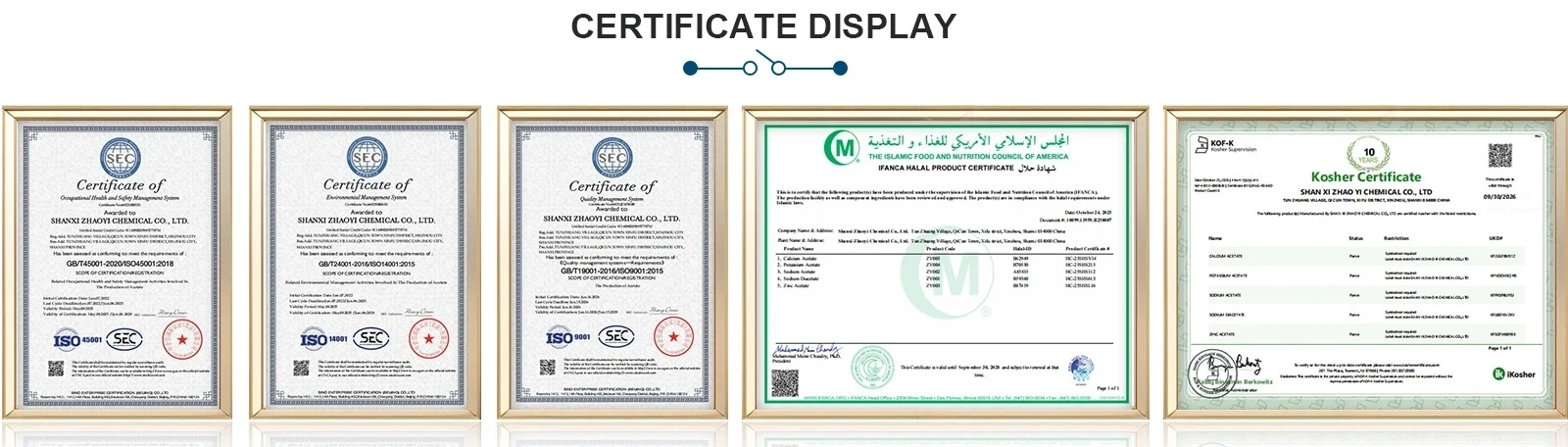
ISO Quality Certification: Our production base holds ISO 9001:2015 certification for quality management. Control standards stay the same at every step. That starts with raw material coming in. It ends with the finished product going out.
Industry Standard Compliance: Our products meet FCC food chemical specifications, and they meet USP pharmacopoeia standards as well. Qualification requirements for high-end laboratories and pharmaceutical research scenarios are fully met.
International Qualification Authorization: Valid KOSHER and HALAL certificates are in our hands. They help the product reach special regions and industries, and they allow its use there.
Full Traceability System: Every batch gets its own full traceability file. Into it go raw material sources, production parameters, and test data. Customers can then pull these records when they run a quality audit.
Packaging Options
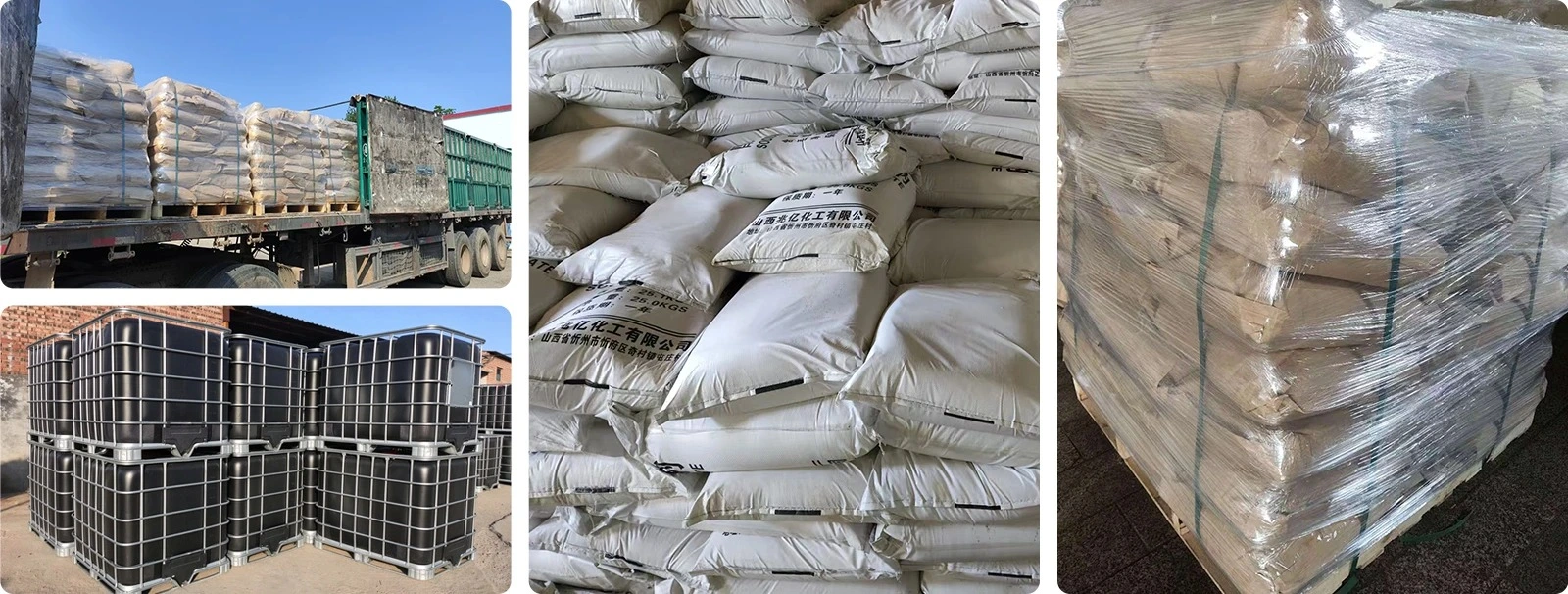
Labs work with different volumes and different setups. So we offer packaging in several grades to match. Every option keeps moisture out and stops contamination:
Conventional Lab Packaging: Amber glass bottles come in 500g and 1kg. A sealed cover and anti-counterfeiting marks are on every bottle. For daily bench work and routine testing, they work well.
Medium Research Packaging: 5kg HDPE buckets. A moisture-proof lining is built into each one. Mid-size and large research labs that take material out often will find these handy.
Institutional Bulk Packaging: 25kg multi-layer kraft paper bags with PE inner layer, meeting the bulk procurement needs of scientific research institutions and large laboratory centers.
Customized Packaging Service: We support personalized packaging customization according to customers' special storage conditions and automatic feeding system requirements.
Manufacturing Process
Our AR-grade reagents come from production methods that are more refined. Every step stays under tight control. Purity ends up very high that way, and the Analytical Reagent (AR) Sodium Acetate Trihydrate crystal structure holds stable:
High-Purity Raw Material Reaction: We pick sodium hydroxide and acetic acid that are pharmaceutical grade and meet a strict standard. The two undergo a neutralization reaction. High purity comes out of the first solution, which means fewer impurities enter right at the start.
Triple Recrystallization Purification: The crude sodium acetate solution passes through three rounds of crystallization and purification. Out go trace impurities, chloride and sulfate among them.
Precision Crystal Formation: The crystallization rate is controlled by graded constant-temperature cooling technology. That produces trihydrate crystal particles that are uniform and stable.
Low-Temperature Drying & Screening: Centrifugal separation takes out the mother liquor first. Vacuum drying then runs below 40°C. The trihydrate structure stays complete this way. A 20-mesh screen keeps particle size consistent.
Full-Item Batch Testing: Every batch gets 18 professional indicator tests before it leaves the factory. It can be warehoused and delivered only after it fully meets AR-grade standards.
Why Choose Us
Decades of Professional Manufacturing Experience: We have focused on acetate product R&D and production since 1988. With mature production technology accumulated in our 27,000 ㎡ factory, we ensure stable batch quality of reagents.
High Precision & Stable Supply: 150,000-ton annual production capacity realizes large-scale production while maintaining AR-grade high-precision standards, avoiding stock shortage and quality fluctuation.
Mature Global Service System: Our products are exported to Europe, America, Asia and other global regions, with stable logistics channels and complete export documents to support one-stop procurement services.
Professional Technical Support: Our professional chemical technical team provides targeted guidance for buffer solution preparation and experimental scheme optimization to solve customers' application problems.
Cost-Effective Direct Supply: As a direct manufacturer, we eliminate intermediate distributors' markup, providing high-purity AR-grade products at competitive factory prices.
FAQ
Q: Below are the most frequently asked questions from global laboratory customers and research institutions, sorted and optimized for B-end reference:
Q: What are the core differences between AR grade and technical grade sodium acetate trihydrate?
A: A1: AR-grade products feature far stricter impurity control. The heavy metal content is controlled within 10 ppm (technical grade ≤50 ppm), while chloride and sulfate impurities are below 0.005%, which can completely avoid data interference in high-precision analytical experiments.
Q: How to store the product correctly after opening the package?
A: A2: Please seal the container tightly after each use and store it in a dry environment below 25°C. Although the trihydrate structure is stable, long-term low-humidity exposure may cause loss of crystal water and affect experimental accuracy.
Q: Is this AR-grade product applicable for cell culture experiments?
A: A3: Yes, its high purity fully meets the preparation requirements of conventional cell culture buffers. For mammalian cell lines sensitive to pyrogen contamination, please contact us to obtain endotoxin test data for verification.
Q: What is the shelf life of unopened sealed products?
A: A4: Under standard dry and cool storage conditions, unopened products can maintain complete technical specifications and stable performance for 36 months. The specific valid period is subject to the batch label on the package.
Q: Can you provide official batch test documents?
A: A5: Absolutely. Each batch of shipment is accompanied with a formal batch-specific COA certificate, covering all test indicators. We can retrieve historical batch documents to support your institutional regulatory audits.
Q: Do you support sample testing and customized services?
A: A6: We provide free product samples for customer experimental verification, and support customized packaging and indicator adjustment according to special laboratory research needs.

Request a Quote
If you are looking for Analytical Reagent (AR) Sodium Acetate Trihydrate feel free to contact our professional technical sales team via email at sxzy@sxzhaoyi.com.

USER EVALUATE
Here is the customer's evaluation of us