



acetic acid and sodium acetate trihydrate
CAS NO.: 6131-90-4
Molecular Formula: CH₃COONa·3H₂O
Molecular Weight: 136.08
Character: Colorless or white transparent crystals. It is readily soluble in water and slightly soluble in alcohol. It has hygroscopic properties, a specific gravity of approximately 1.45, and a melting point of approximately 58°C.
Usage: It is commonly used with acetic acid to prepare acetate buffer solutions. It is also used in textile dyeing, electroplating, pharmaceutical production, chemical synthesis, laboratory analysis, concrete additives, and wastewater treatment.
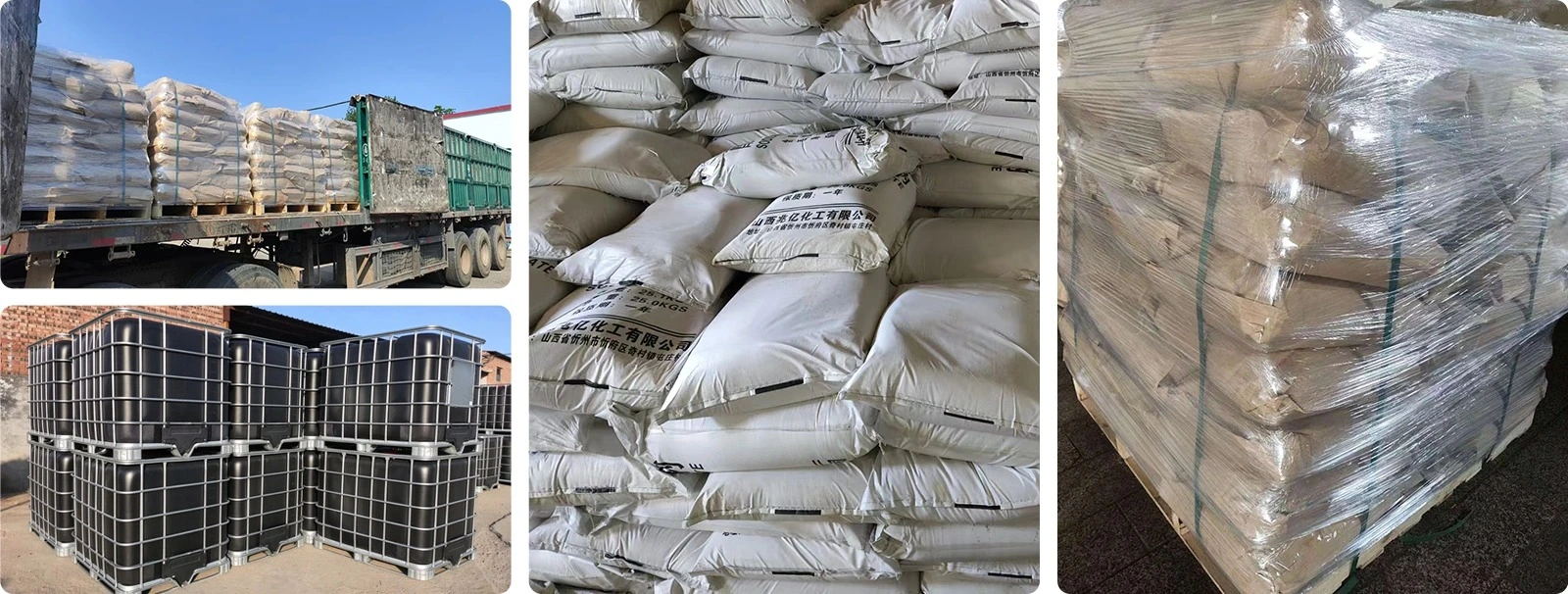
Package: 25 kg plastic woven bag with inner polyethylene liner or 1000 kg ton bag.
Storage: It should be stored in a dry and well-ventilated warehouse. Keep away from heat, moisture, strong oxidizing agents, and poisonous substances. Handle carefully during transportation to prevent package damage.
- Product Description
Acetic Acid and Sodium Acetate Trihydrate Solution | High-Purity Buffer System for Industrial & Laboratory Applications
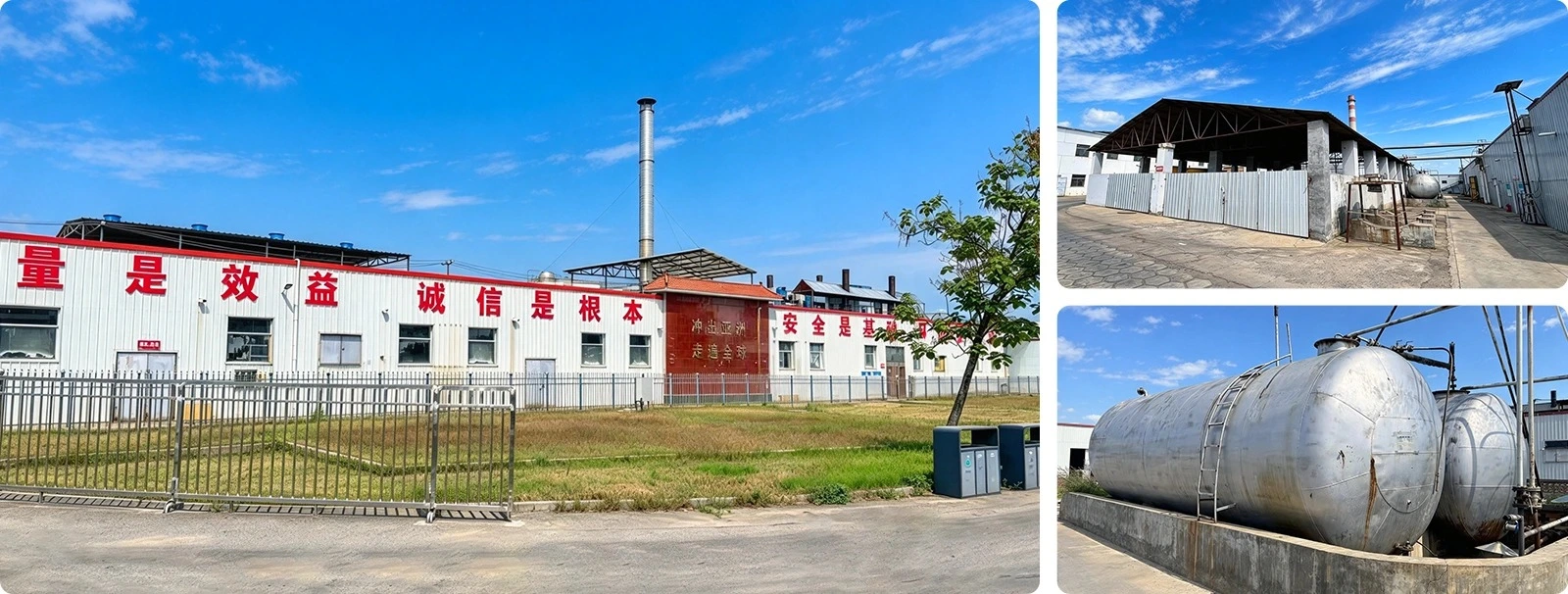
SHANXI ZHAOYI CHEMICAL CO., LTD. started making acetate back in 1988. That works out to more than 35 years spent on one narrow field. Industrial plants buy from us. Drug makers buy too, and so do laboratories, spread all over the world. Our Acetic Acid and Sodium Acetate Trihydrate Solution buffer systems get blended to each buyer's own recipe. Good glacial acetic acid goes in. High-purity sodium acetate trihydrate (CAS 6131-90-4) goes in as well. Combine the two and pH stays where a process needs it, across a wide spread of uses. The production site covers 27,000 ㎡. Output holds at 150,000 tons a year, steady. Products pass ISO checks. KOSHER and HALAL certificates sit on file. Buyers in Europe, America and Asia get steady supply from us. They can count on the quality. Our service stays professional.
Key Features & Benefits
Strong pH Buffering Capacity
The two parts are matched on purpose. Together they build an acetate buffer system that holds steady. pH stays inside the 4.0–5.8 range, which is where it works best. Over time, acid levels hold where you set them. Enzymatic reactions care about that. So does fine chemical synthesis. Other high-precision processes gain from it too. A standard trihydrate structure (CH₃COONa·3H₂O) gives our this product Solution a dissolution rate you can predict, and the same one every time. Buffering then stops drifting the way it does when a material dissolves at an uneven speed.
Multi-Industry Versatility
A range of plant settings suit this buffer system. Textile dyeing counts as one of them, and so does mordanting. Holding pH steady in an electroplating bath is another. Concrete setting speeds up with it too. Pharmaceutical intermediate synthesis uses it as well. Formula stability problems that single-salt buffers could never fix get handled here. For your production, process options open up that are more flexible and more reliable.
Enhanced Purity Standards
Every stage of production keeps impurity control tight. Heavy metal levels sit well below industry limits (Pb <2 mg/kg, As <3 mg/kg). Little impurity is left in the product. That cuts contamination risk sharply in sensitive work, such as biological wastewater treatment and lab standard solution calibration. Results come out accurate and stay steady.
Cost-Effective Manufacturing
We mix the buffer to a set ratio before it ships. That removes pH drift and formula mistakes from manual mixing on site. Inventory management gets simpler for the customer. Repeat quality checks cost less. Purchase and production costs drop overall.
Technical Specifications
Parameter | Specification |
|---|---|
Sodium Acetate Trihydrate CAS | 6131-90-4 |
Molecular Formula | CH₃COONa·3H₂O + CH₃COOH |
Molecular Weight (Trihydrate) | 136.08 g/mol |
Appearance | Colorless/White Crystals + Clear Liquid |
Water Solubility | 46.5 g/100 mL (20°C) |
Specific Gravity | ~1.45 (trihydrate) |
Melting Point | 58°C (trihydrate) |
pH (1% Solution) | 8.0–9.5 (salt alone) |
Loss on Drying | 36.0%–41.0% |
Heavy Metals | Pb <2 mg/kg, As <3 mg/kg |
How It Works
The Acetic Acid and Sodium Acetate Trihydrate Solution relies on the classic Henderson-Hasselbalch buffering principle. Once in water, it forms a reversible acid-base equilibrium. That balance sits between weak acetic acid and its conjugate base, the acetate ions. An acidic substance added to the mix has its extra hydrogen ions soaked up by the acetate ions. When an alkaline one comes in, the acetic acid molecules push back against it. pH stays locked in a stable, dynamic balance.
This buffer system gives microbes in biological wastewater treatment a carbon source. They absorb it easily. It stays stable too. pH also holds at the level microbial enzymes need to work. Bacteria then turn acetate substances into biomass and carbon dioxide at a fast rate. Treatment efficiency rises a lot as a result.
Mordanting treatment keeps dyeing baths in textile processing under pH control. Acidity stays mild and steady, so fibers do not get damaged. Dye take-up works better. Fixation improves as well. The method also suits high-temperature dyeing below 58°C. At that point, temperature resistance and process stability both hold up well.
Applications
Biological Wastewater Treatment: Sewage plants use it as a carbon source that microbes can break down. That supports denitrification and dephosphorization. Municipal sewage plants have taken it up widely. Biological oxygen demand reduction can rise by 25–40%. In practice, that means environmental discharge standards are met.
Textile & Leather Processing: The pH value of dye baths gets tight control here, in both reactive dyeing and acid dyeing. Buffering balance holds hydrolysis reactions in check. That stops chromium from precipitating during leather tanning. Product quality stays stable.
Electroplating Operations: Plating baths for zinc and nickel hold a steady acid-base environment. Metal deposits at an even rate. Hydroxide sludge forms in smaller amounts. Workpieces end up flatter. Their finish looks better too.
Pharmaceutical Manufacturing: Sterile buffer solutions for injection preparations are made with it. It meets USP and EP pharmacopoeia standards in full for pH adjustment of parenteral drugs. Safety and compliance are high.
Concrete Admixtures: Speeds up the cement hydration reaction, which makes it a good fit for concrete pouring work in cold weather. Setting time drops by 15–30%. Long-term compressive strength and structural stability stay the same.
Laboratory Analysis: A good pick for making the standard buffer solutions that chromatographic mobile phase setup and spectral calibration call for. Experimental data comes out accurate and repeatable.
Acetic Acid and Sodium Acetate Trihydrate vs Other Products
Feature | Acetic Acid + Sodium Acetate Trihydrate | Citric Acid Buffers | Phosphate Buffers | Calcium Propionate |
|---|---|---|---|---|
pH Range | 4.0–5.8 (optimal) | 3.0–6.2 | 6.0–8.0 | N/A (preservative) |
Biodegradability | Excellent (100%) | Good (85%+) | Poor (phosphate eutrophication) | Moderate |
Metal Compatibility | High (non-chelating) | Low (metal complexation) | Moderate | High |
Temperature Stability | Good (<58°C) | Excellent | Excellent | Limited |
Cost Efficiency | High | Moderate | Low | High |
Bacterial Inhibition | Moderate (bacteriostatic) | Low | None | High (mold specific) |
Certifications & Compliance
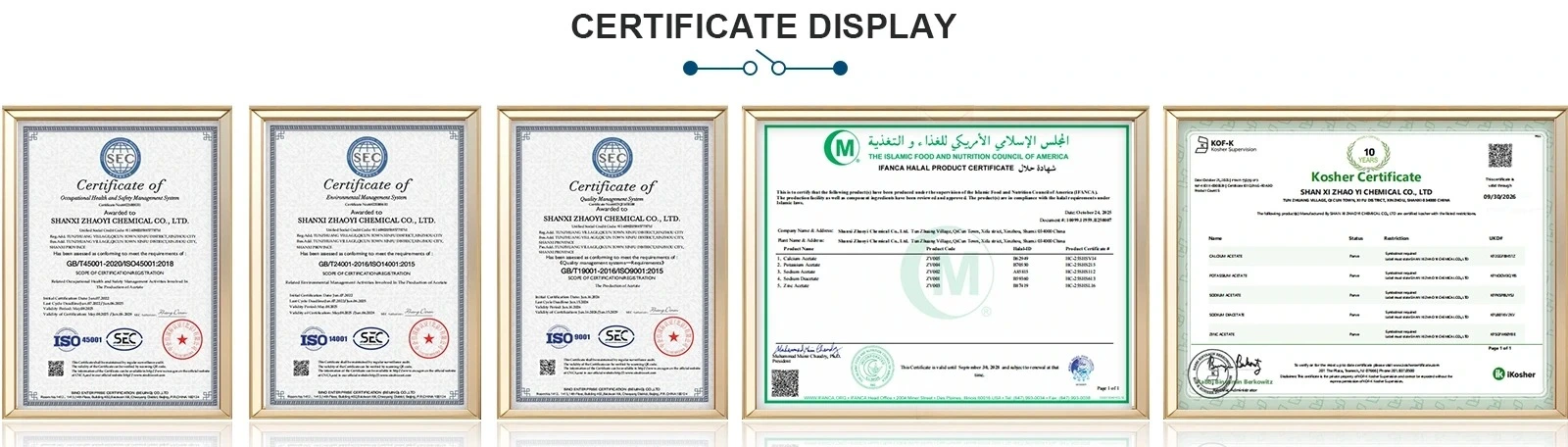
ISO 9001:2015 certification is held by our production system. That is the international standard for quality management. Control of quality is standardised at every step of the process. Valid KOSHER and HALAL certificates come with our food-grade products. Rules for different regions are met that way.
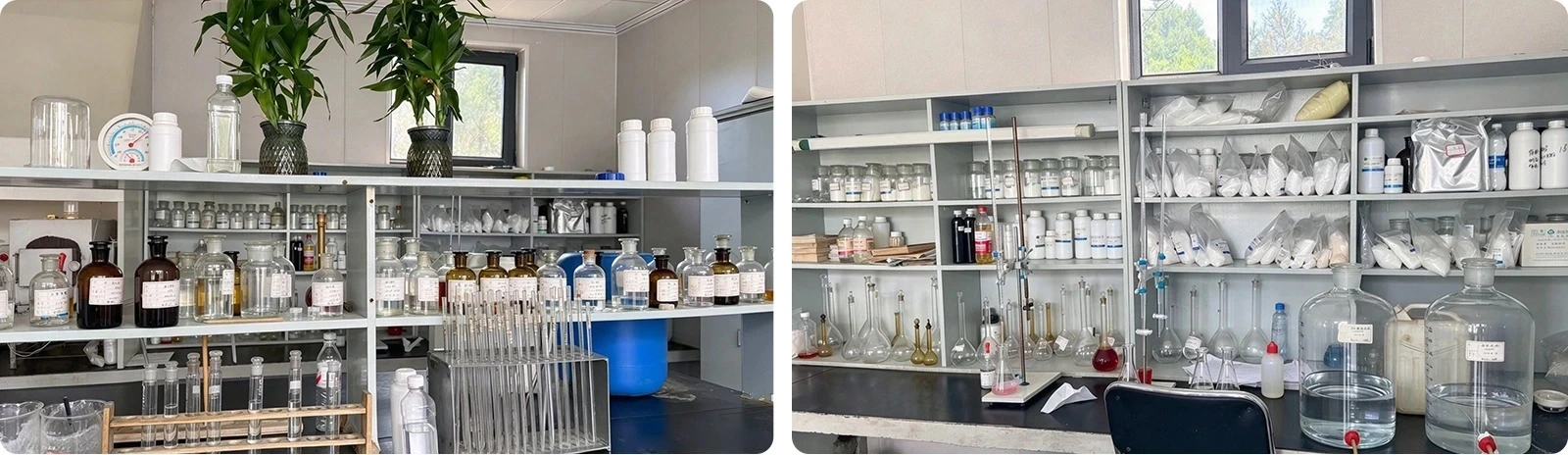
Every product we make meets EU REACH pre-registration rules. FDA GRAS food contact safety standards are met too. Each batch goes through lab testing. Purity, impurity levels, and buffering performance get checked against industrial and pharmaceutical grade limits used worldwide. Full compliance documents come with the shipment.
Packaging Options
Standard Industrial Grade: 25kg plastic woven bags are what we pack it in. Inside each bag sits a polyethylene liner. Moisture cannot get through it. Product will not soak up water or cake up during transport and storage, thanks to this sealed setup. Performance lasts the whole way through.
Bulk Shipments: We provide 1000kg FIBC ton bags, suitable for large-scale procurement by wastewater treatment plants, textile factories and other bulk users. Bulk packaging reduces unit cost and supports automated feeding of production lines.
Custom Formulations: Supports customized pre-mixed buffer concentrated solutions packed in 200L HDPE drums. The pre-configured solution is ready for dilution on site, with a stable shelf life of more than 18 months, saving your batching time and labor costs.
Manufacturing Process
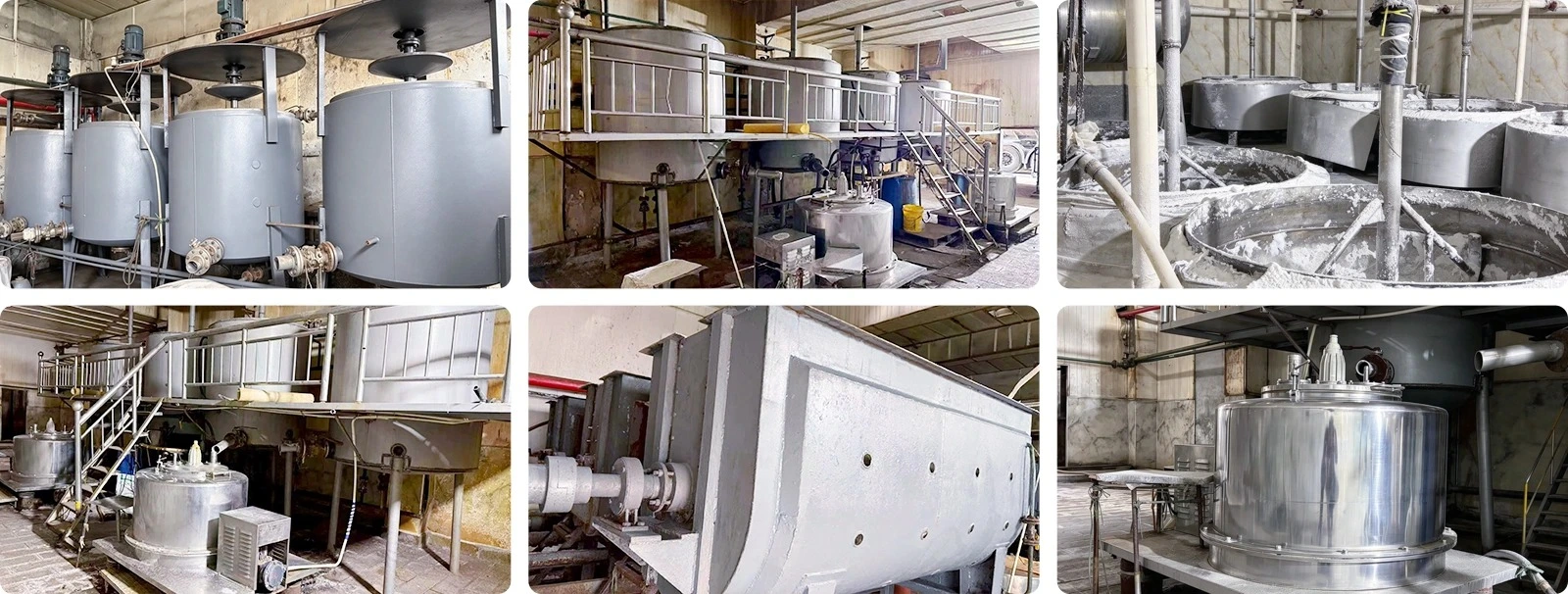
Raw acetic acid is purified by triple distillation technology to thoroughly remove impurities such as aldehydes and formic acid. Sodium acetate trihydrate is synthesized by neutralization reaction of high-purity sodium hydroxide and acetic acid, with uniform and stable crystal particles formed through controlled evaporative cooling crystallization process.
Five key quality checkpoints sit along the full production run. Data gets tracked at each one in real time. Our closed-loop water recycling system reaches a 92% process water reuse rate. Fine polishing with ion exchange resin holds heavy metal impurities well below the limit.
15 strict inspection items are run on every finished batch. Packing and sending it to the warehouse happen only after that. Batch stability holds up. Over years of industrial use, buffering performance of acetic acid and sodium acetate trihydrate stays the same.
Why Choose Us
Three Decades of Manufacturing Behind Us: Acetate R&D and production has been our focus since 1988, and we keep refining the way we make it. The process is steady and proven. Quality holds up even when the market shifts.
Production on a Huge Scale: Every year we turn out 150,000 tons. Stock sits on hand, so supply keeps moving with no gaps. Emergency inventory is held in reserve too. A big urgent order gets filled fast.
Distribution That Covers the World: Our logistics partners have worked with us for years, and their reach runs past 40 countries. Multimodal transport plans cut the delivery cycle by 20–35% and pull logistics costs down.
Professional Technical Support Team: Free formula advice comes from senior chemists here, and it is built around your own case. Dosage fine-tuning is part of the job too. So is running compatibility tests on your product. Any technical problem that shows up in your application gets worked out together with you.
FAQ
Q: Which ratio of acetic acid to sodium acetate trihydrate gives a pH 4.75 buffer?
A: A1: Mix the two at a 1:1 molar ratio, and at 25°C the pH comes out at about 4.75. Need a ±0.3 pH shift? Then move the ratio to 1:1.5 or 2:1, depending on what your process actually calls for.
Q: When you prepare a buffer, what is the difference between the trihydrate and anhydrous forms of sodium acetate?
A: A2: Bound water is 41% of the trihydrate. Count that share when you calculate molarity. For the same buffering effect as 1g of anhydrous sodium acetate, weigh out 1.645g of the trihydrate.
Q: How should you store buffer solutions after you mix them?
A: A3: The container needs a tight seal. A cool, dry place under 25°C is the right spot. Keep it away from direct sunlight. Strong oxidants also need to stay away. With this storage method, the solution has a stable shelf life of up to 12 months.
Q: Can this buffer system replace phosphate buffers in biological treatment?
A: A4: Yes, it is a good substitute. Water eutrophication risks from phosphate discharge are fully avoided. Microbial flora adapt quickly. The initial pH debugging period takes only 3–5 days.
Q: Which safety steps do I need when handling the product?
A: A5: Wear nitrile gloves and safety goggles. Both are part of the standard PPE. If you work with concentrated acetic acid, check that the area has enough ventilation. Sodium acetate is a low safety risk. You can handle that with normal dust control steps.
Request a Quote
We support custom formula ratios for acetic acid and sodium acetate trihydrate. For procurement needs, contact our sales team at sxzy@sxzhaoyi.com for a solution within 24 hours.

USER EVALUATE
Here is the customer's evaluation of us