



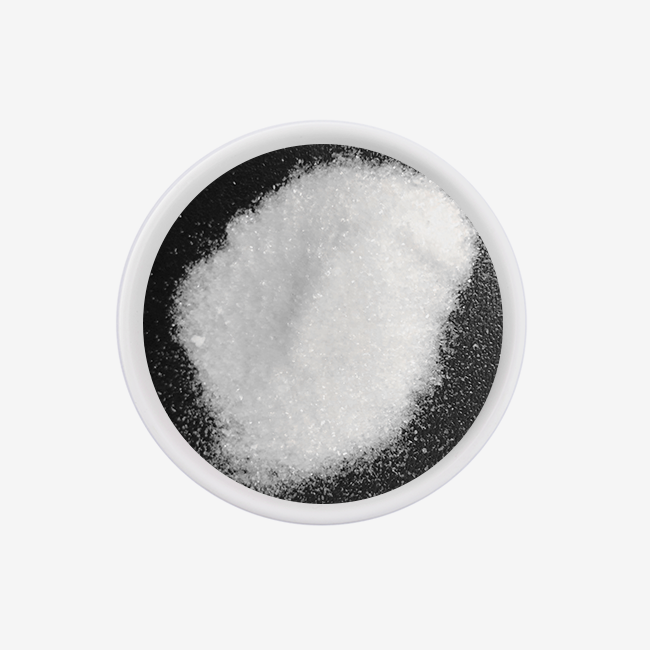
Dyeing Sodium Acetate Anhydrous
CAS NO.: 127-09-3
Molecular Formula: CH3COONa
Molecular Weight: 82.03
Character: white crystal powder; specific gravity is 1.528 and melting point is 324℃.
Usage: It is a kind of chemical raw material and is widely used in dye, pharmaceutical, chemical reagent fields, sewagement and etc.
Package: 25kg plastic woven bag or 1000kg Ton-bag
Storage: It should be stored in a dry and ventilative warehouse, kept away from heat and moisture during transportation, unloaded with care so as to avoid damage. Furthermore, it must be stored separately from poisonous substances.
- Product Description
Dyeing Sodium Acetate Anhydrous for Textile Industry — High-Purity pH Buffer & Dye Auxiliary
Dyeing Sodium Acetate Anhydrous (CAS 127-09-3, CH3COONa, MW 82.03) Dyeing is a high purity white crystalline powder for textile wet processing applications. It has a purity of ≥99.0%, iron level ≤0.001% and insoluble matter ≤0.05%, and provides constant pH buffering performance in acid dyeing, reactive dyeing and blended fabric processes. Its specific gravity is 1.528 and melting point 324° C. Produced by Shanxi Zhaoyi Chemical Co., Ltd. — founded in 1988 with 150,000 tons annual capacity — this product supports stable, large-volume supply with a 5–7 working day lead time.

Technical Specifications
Parameter | Specification | Significance |
Content (CH₃COONa) | ≥99.0% | Maximum buffering efficiency per kilogram |
Free Alkali | ≤0.03% | Prevents excessive pH elevation |
Water Insoluble Matter | ≤0.04% | Ensures equipment compatibility |
Chloride (Cl) | ≤0.08% | Minimizes stainless steel corrosion risk |
Iron (Fe) | ≤0.006% | Critical for bright shade preservation |
Molecular Weight | 82.03 g/mol | Standard calculation reference |
Melting Point | 324°C | High thermal processing capability |
Specific Gravity | 1.528 | Density for formulation calculations |
Appearance | White crystal powder | Quality visual indicator |

What Is Dyeing Sodium Acetate Anhydrous and Why Does It Matter?
pH management of the bath is one of the most important factors in current textile colouration. Even little variations in the heating cycle might result in uneven dye uptake, barré markings, or fibre degradation, issues that can cost mills considerable time in rework and waste of material.
Dyeing Sodium Acetate Anhydrous is a dyeing buffer and pH regulator of precision grade. This dyeing-grade product is not a general industrial grade sodium acetate but minimises metallic contaminants, especially iron, to avoid dulling of shades in delicate colour applications. It's been built to suit the tough needs of commercial textile manufacturing.
Key Product Characteristics
High temperature thermal stability
Sodium acetate trihydrate dissolves in its own crystallisation water at around 58 °C and is not suitable for continuous dyeing ranges (CDR). It is stable at drying and curing temperatures so continual performance without interruption of the process.
Iron Content Adjusted for Colour Stability
The most common cause of a loss of brilliance in the shade of vivid textile hues is contamination by iron. With this solution, we guarantee colour consistency with acid dyes, reactive dyes and complex blended fabric compositions with Fe < 0.001% (10 ppm) .
Low Insoluble Matter Protects Equipment
Insoluble particles in jet dyeing equipment and automated dosing systems may block nozzles and cause a loss of production. The ≤0.05% insoluble matter requirement directly solves this problem and keeps your equipment running in a clean state.
Efficient buffering of acetic acid systems
It forms stable buffer system with acetic acid and it is used as sodium acetate buffer for reactive dyeing or acid dyeing. This keeps the dye bath pH at the critical 4.5–5.5 level for acid dye exhaustion on wool, nylon and synthetic fibre blends without damaging protein fibres.

Application Scenarios in Textile Processing
Sodium acetate anhydrous textile dyeing applications cover the full spectrum of wet processing stages.
Pre-Dyeing Treatment
Used to neutralise remaining mineral acids following carbonising or impurity removing operations. This inhibits acid hydrolysis that breaks down fibre tensile strength and causes long-term fabric quality problems.
Acid Dyeing of Wool, Nylon, and Synthetic Blends
During the heating phase of acid dyeing cycles the pH of the bath tends to change fast. The solution keeps the bath pH within the appropriate range, avoiding barré stains and uneven colour absorption on delicate protein fibre textiles.
Dyeing Reactive
It is a sodium acetate buffer for reactive dyeing, maintaining the alkaline or near-neutral pH required for the formation of strong covalent bonds between reactive dye molecules and cellulose fibres. Better dye-fiber combinations offer better colour fastness and reduced wastage of dye.
Blended Fabric Dyeing (Cotton-Polyester)
For cotton-polyester and other mixed substrates the product maintains the pH of the dye bath in the 7.0-8.0 range. This allows a homogeneous dye absorption across both kinds of fibres, without any colour variation between the zones of the fabric and an overall improvement of the fastness.
Preparation of Auxiliaries and Fixing after Dyeing
It is utilised not only in active phases of dyeing, but also in post-dyeing fixing baths and is an important component in the creation of sodium acetate anhydrous dye auxiliaries for complicated formulations.
Dyeing Sodium Acetate Anhydrous vs Other Products
F eature | Our Anhydrous Grade | Sodium Acetate Trihydrate | Generic Buffer Salts |
Active Content | ≥99.0% | ~60% | Variable (70-85%) |
Iron Content | ≤0.006% (60ppm) | Often >100ppm | Typically >200ppm |
Thermal Stability | Stable to 324°C | Melts at 58°C | Limited to 100°C |
Dosage Requirement | Base reference (1x) | 1.65x higher | 1.2-1.4x higher |
Storage Space | Minimal | 65% more volume | 30% more volume |
Chloride Content | ≤0.08% | Often >0.15% | Highly variable |
Equipment Clogging Risk | ≤0.04% insolubles | Higher residue | Frequent issues |
Certifications & Compliance
Shanxi Zhaoyi Chemical maintains internationally recognized management system certifications, supporting your supplier qualification and compliance requirements:
· ISO 9001 — Quality Management System
· ISO 14001 — Environmental Management System
· ISO 45001 — Occupational Health and Safety Management System
· Kosher Certification
· Halal Certification (applicable grades)
Full documentation including COA, MSDS, and conformity documents is available in multiple languages. On-site factory audits by international customers are also supported.

Core Problems It Solves for Your Production
Textile mills and dye houses frequently face these challenges. Here is how this product directly addresses each one:
· Unstable dye bath pH → Precise buffering capacity keeps pH within target range throughout the full dyeing cycle
· Uneven color absorption and barré marks → Consistent pH prevents differential dye uptake across fabric sections
· Poor color fastness → Stable pH promotes stronger dye-fiber bonding, reducing washout and bleeding
· Shade deviation from iron contamination → Ultra-low Fe content (≤0.001%) protects bright and pastel shade accuracy
· Nozzle blockages in jet machines → Low insoluble matter (≤0.05%) prevents particle-related equipment issues
· High moisture interference from trihydrate grades → The anhydrous form eliminates water-content variability in dosing calculations

FAQ
Q: How does sodium acetate trihydrate vary from anhydrous sodium acetate when dyeing textiles?
A: The anhydrous version does not include any crystal water, hence it has a greater active content per kilogram and heat stability over 324 °C. The trihydrate melts at ~58oC and so cannot be used for high temperature continuous procedures. In industrial dyeing, the anhydrous grade is recommended because of the precision of dosing and dependability of the process.
Q: What is the pH range of this product in an acid dye bath?
A: It is a sodium acetate buffer for reactive dyeing and acid dyeing, maintaining the pH of the dye bath in the range of 4.5–5.5 for acid dye systems and 7.0–8.0 for blended fabric processes depending on the ratio of acetic acid and the circumstances of the bath.
Q: Why is it so crucial to have low iron concentration in dyeing grade sodium acetate?
A: At even low quantities, iron ions may react with dye molecules and cause shade dulling, off tones and colour inconsistency – notably in bright or light hues. This product is formulated with a ≤0.001% Fe standard for shade accuracy over the complete colour spectrum.
Q: What kind of material/fiber can it be used for?
A: It is good for wool, nylon, polyester, cotton, linen and mixed materials. It is employed in the pre-dyeing treatment, active dyeing and post-fixing steps in both batch and continuous dyeing equipment.
Q: Can I get samples before I make a big order?
A: Yes. Sample assistance is provided for review and lab scale testing. You also get technical assistance and application support throughout your trial time. Contact us for a sample request.
Q: What about the packing and delivery?
A: Standard packing is 25 kilogram woven bags or 1,000 kg tonne bags Standard orders with 150,000 tonnes yearly production capacity and maintained safety stock may often be supplied within 5–7 working days. We can organise your stock orders within 24 hours. Support FOB, CIF and DAP trading terms.
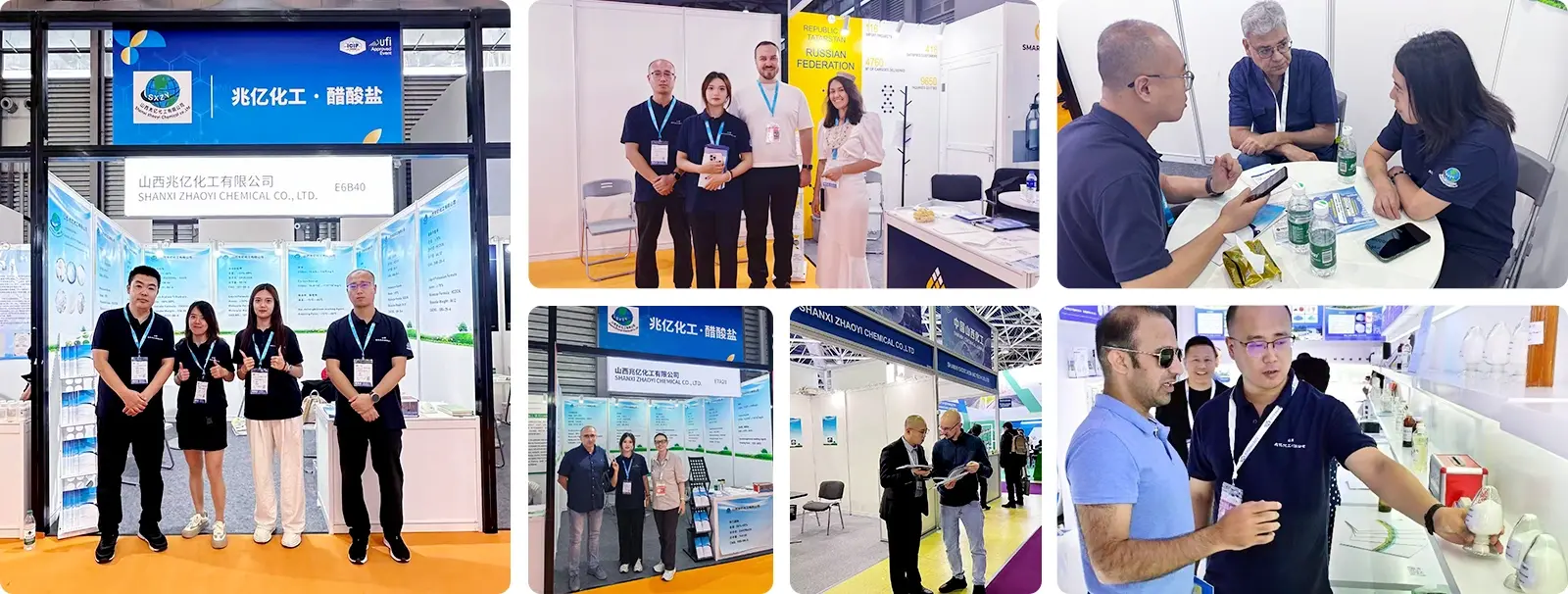
Our Exhibitions
Contact Us
Ready to source reliable Dyeing Sodium Acetate Anhydrous for your textile operations? Contact our team at sxzy@sxzhaoyi.com — we respond within 2 hours.

USER EVALUATE
Here is the customer's evaluation of us