



Anhydrous sodium acetate (solid)
CAS NO.: 127-09-3
Molecular Formula: CH₃COONa
Molecular Weight: 82.03 g/mol
Character: White solid crystalline powder or granules. It contains no crystallization water and is readily soluble in water. The product is hygroscopic and may absorb moisture from the air.
Usage: Used in buffer preparation, textile dyeing, pharmaceutical production, chemical synthesis, laboratory analysis, food processing where permitted, and industrial wastewater treatment.
Package: 25 kg paper bag or plastic woven bag with an inner polyethylene liner, or 1000 kg ton bag.
Storage: Keep the package tightly sealed and store in a dry, cool, and ventilated warehouse. Avoid prolonged exposure to humid air.
- Product Description
Anhydrous Sodium Acetate (Solid) - Premium Industrial Grade Chemical from Trusted Manufacturer
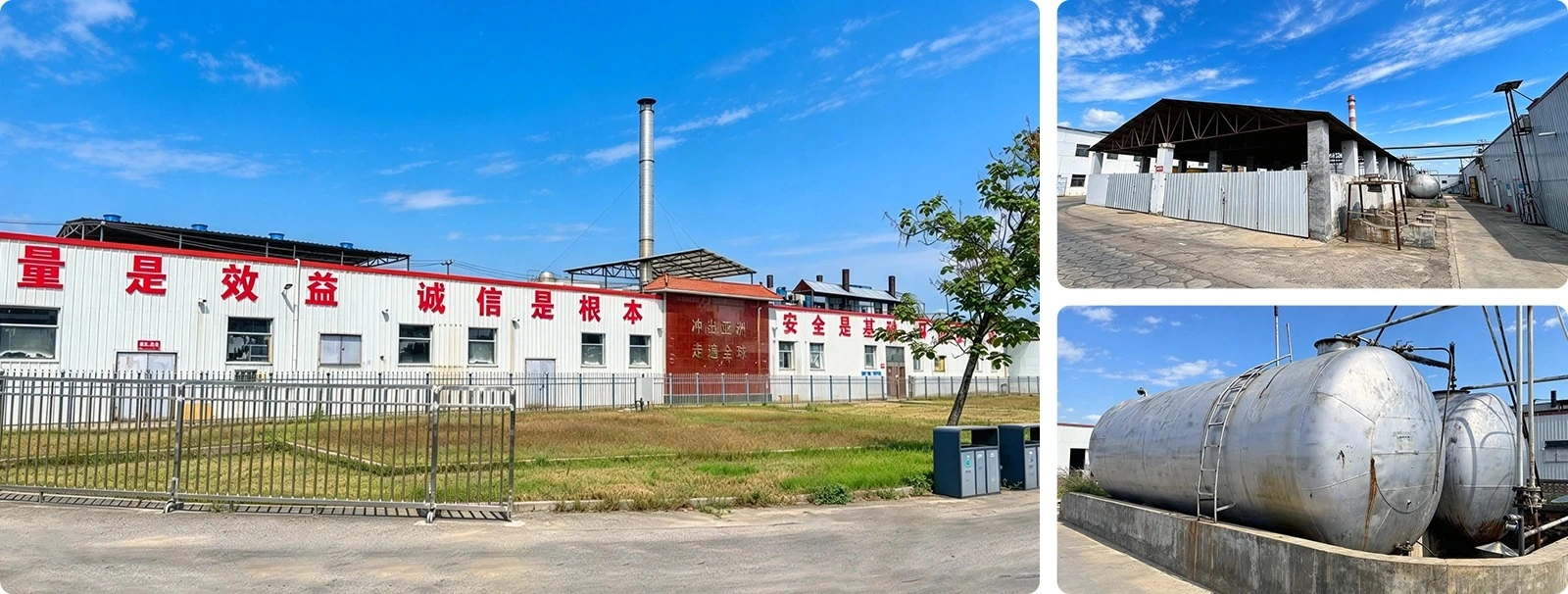
SHANXI ZHAOYI CHEMICAL CO., LTD began in 1988. Acetate chemicals are our focus. Research comes first. Then large-scale production follows. The plant covers 27,000 ㎡. Output stays steady at 150,000 tons a year. From us, industrial buyers worldwide get high-purity Anhydrous sodium acetate (solid) . Its CAS number is 127-09-3 (CH₃COONa). The powder is crystalline. It holds no water at all. Purity is ≥99.0%. Moisture-sensitive processes can count on it. Wastewater treatment uses it. So does textile dyeing. Pharmaceutical synthesis relies on it too. Why? It has more active content. Faster dissolving also sets it apart from trihydrate sodium acetate. That grade holds 40% crystal water.
Key Features & Benefits
More Active Content & Cheaper Logistics
Hydrated grades hold crystal water. This product does not. So its active component concentration comes out much higher. Buy in bulk. You can also plan a long-term purchase. Either way, you get 30%–40% more valid acetate content than sodium acetate trihydrate. That gap pulls down your packaging spend. Shipping costs drop too. Warehousing costs fall as well.
Fast to Dissolve & Steady in Heat
It arrives as a white crystalline powder. Water breaks it down quickly, and it spreads through evenly, so pre-dissolving is not needed. Batching gets easier. Production also runs faster. Heat is no problem either, since the powder holds its chemical stability up to 324°C. That fits a lot of high-temperature industrial processes. Next to trihydrate substitutes, it takes heat far better too.
Very Low Impurities & Same Quality Every Batch
Two things plague textile dyeing: color variation and dulling. Precision purification technology is how we hold them down. It keeps iron levels under 10 ppm. Every production batch holds a steady quality, with ISO, KOSHER, HALAL certifications behind it. Across many industrial productions, that means dependable performance.
Technical Specifications
Parameter | Specification |
|---|---|
CAS Number | 127-09-3 |
Molecular Formula | CH₃COONa |
Molecular Weight | 82.03 g/mol |
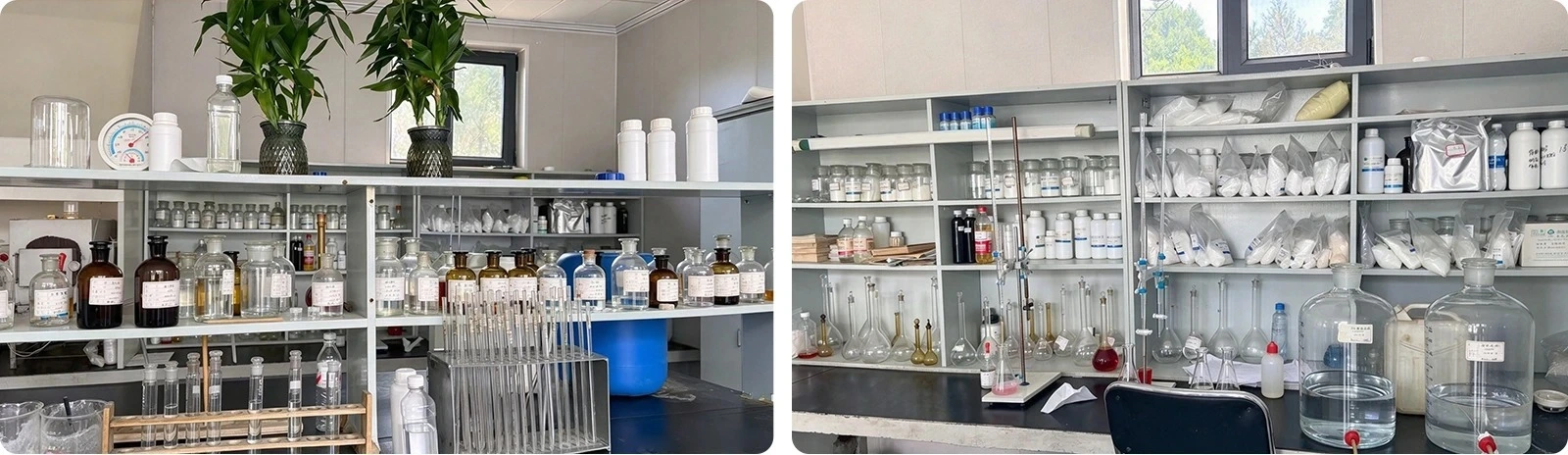
Assay (Purity) | ≥99.0% |
Appearance | White crystalline powder/granules |
Moisture Content | ≤0.5% |
Iron (Fe) Content | ≤0.001% (10 ppm) |
Water Insoluble Matter | ≤0.05% |
pH Value (5% solution) | 8.0-9.5 |
Solubility | Readily soluble in water |
How It Works
Through its active acetate ions, anhydrous sodium acetate (solid) serves industry as a pH buffer that adapts and a source of carbon. Put it in water and a stable acetic acid-acetate buffer system forms. Neutral solutions hold pH at 8.0–9.5. Acidic ones sit at 4.5–5.5. Sudden swings stop, and pH stays steady across many industrial production processes.
In wastewater biological denitrification, the acetate ions work as an easy carbon source for denitrifying bacteria. Methanol systems are the baseline: this product lifts denitrification efficiency by 20%–30%. No acclimation is needed first for the bacteria. That means a wastewater treatment system starts up fast. Operating efficiency holds stable over time as well.
In acid dyeing of textiles, this product keeps a stable buffer for protein fibers like wool and silk. Colors come out level. The dye takes evenly too. It has zero crystal water. Because of that, dyeing results stay steady. High-temperature curing can water the solution down. This product stops that from happening. As a result, the textiles made are more consistent and of better quality.
Applications
Wastewater Treatment
Perfect for biological denitrification systems with low C/N ratio issues. Only 5–6 kg of the product is required to remove 1 kilogram of nitrate nitrogen with a steady C/N ratio of 4:1 to 5:1, assisting businesses in consistently meeting total nitrogen discharge requirements.
Pharmaceutical Synthesis
used in API synthesis as a pH buffer and a water-free acetylation reagent. Its ultra-low moisture content supports precise pharmaceutical synthesis. Moisture contamination can cut reaction yield and create impurities. This ingredient stops that.
Textile & Dyeing Industry
It holds pH values steady when wool and silk fabrics go through acid dyeing. Ultra-low iron content stops fabric colors from turning dull or shifting off shade. Fiber activity stays protected. Dyeing results come out even and bright.
Food Preservation
Clean-label meat processing mixes it with lactate. Harmful bacteria in vacuum-packed food get stopped. Clostridium botulinum is one target. Listeria is another. Shelf life goes up. The original flavor and taste do not change.
Chemical Synthesis
A stable catalyst is one role it plays. It also serves as a reaction reagent. Esterification is one common use. Another is adhesive production. Labs use it to make buffer solutions. Its activity holds steady. It blends well with many formulas.
Anhydrous Sodium Acetate (Solid) vs Other Products
Feature | Anhydrous Sodium Acetate | Sodium Acetate Trihydrate | Methanol |
|---|---|---|---|
Active Content | ≥99% | 58-60% | Variable |
Water Content | ≤0.5% | ~40% | N/A |
Storage Volume | Compact (30% less space) | Bulky | Liquid storage required |
Safety Classification | Non-hazardous | Non-hazardous | Flammable/Toxic |
Dissolution Speed | Rapid, no pre-treatment | Slower, may need pre-dissolution | Immediate (liquid) |
Thermal Stability | Stable to 324°C | Melts at 58°C | Volatile |
Cost Efficiency | Higher upfront, lower logistics | Lower price, higher shipping costs | Cheapest per COD unit |
Certifications & Compliance
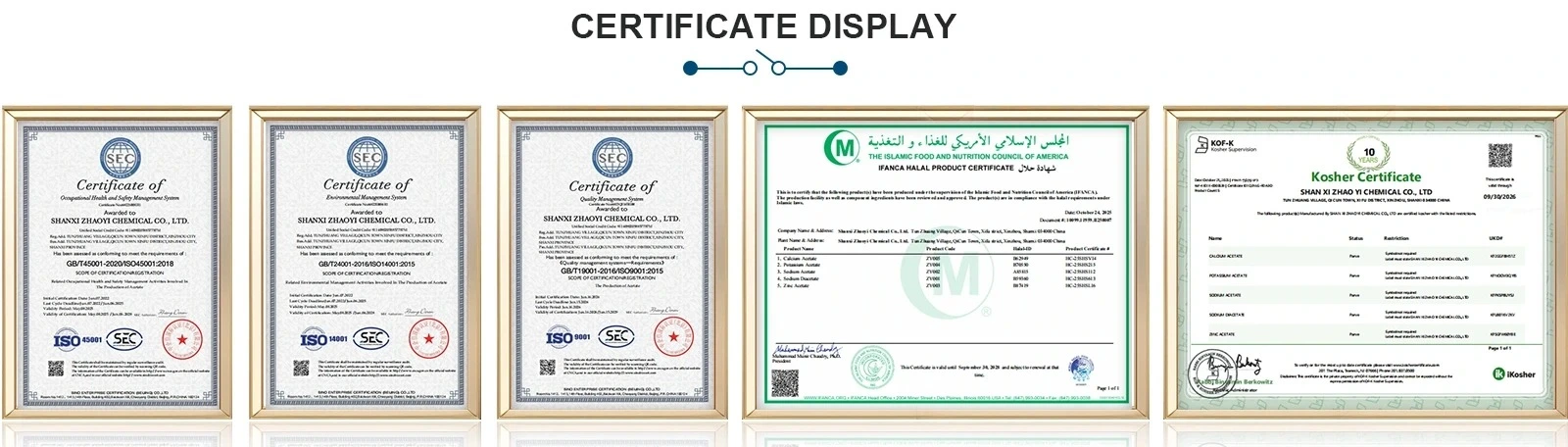
Our plant holds ISO 9001:2015 certification. Every production step runs under standardized quality control. Valid KOSHER and HALAL certificates are in place too. That makes the product fit for food-grade industrial use.
Every product we make follows EU REACH registration rules and the FDA standard for indirect food additives. Each shipment comes with a full COA for that batch. Those papers help customers sell into markets abroad, pass quality checks, and clear customs.
Packaging Options
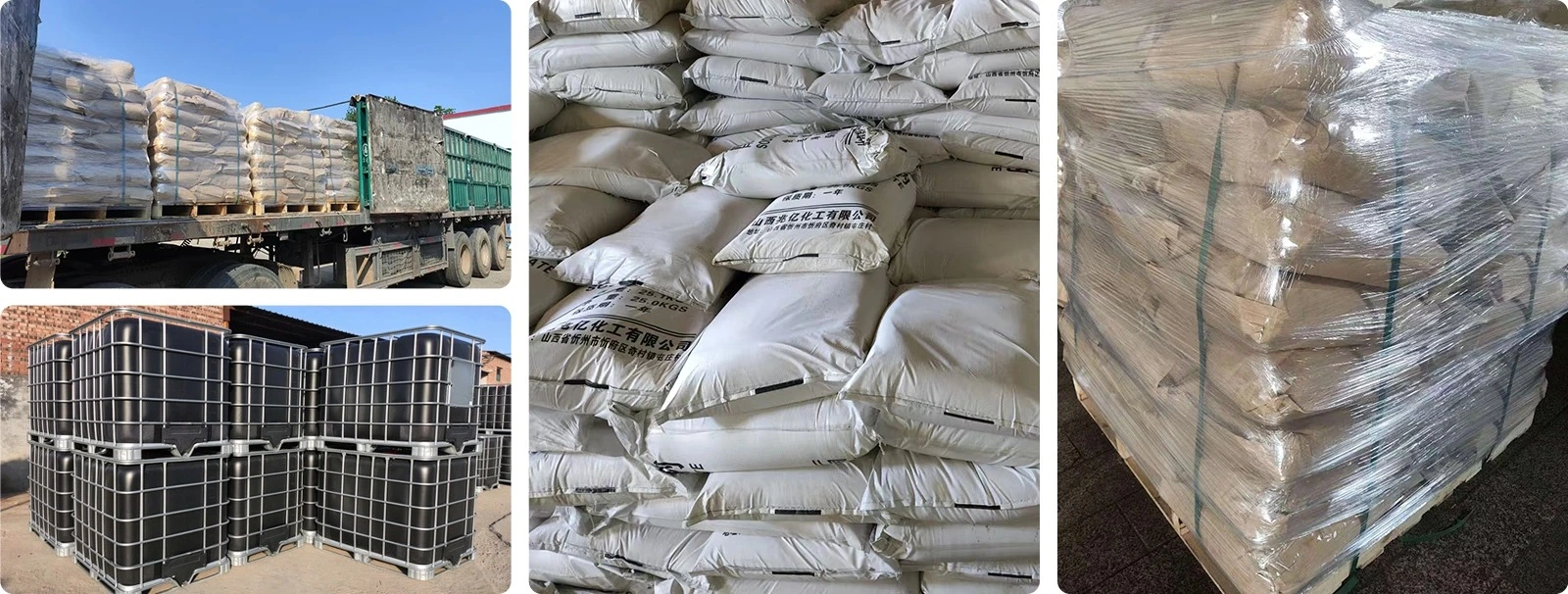
Standard Industrial Packaging We fill 25kg kraft paper bags or PP woven bags. A PE liner sits inside each bag to keep damp out. Moisture and dirt from outside cannot get in. So the product holds up well while shipped and while stored.
Bulk Industrial Packaging Big industrial buyers can order 1000kg anti-static FIBC jumbo bags. Ordering this way keeps repeated packaging costs down. Loading and unloading also go faster.
Customized Packaging Packaging can be built around special working conditions. Small trial orders are no problem either. Every package gets a clear batch number. The production date is printed on the label as well. Safety operation instructions go on it too. That way the whole chain stays traceable.
Manufacturing Process
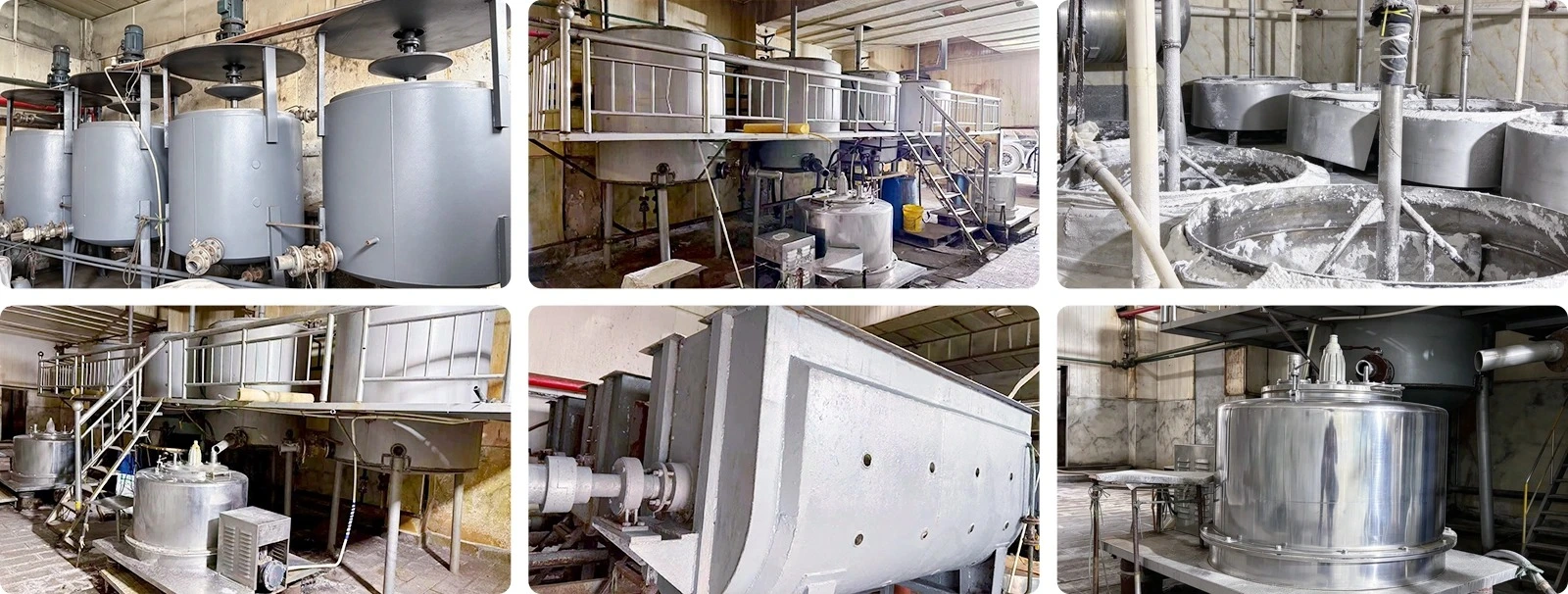
We begin with high-purity acetic acid and refined sodium-based raw materials. They react together in a precise neutralization step. The crude solution then moves through precision filtration in several stages. This is where trace impurities come out, iron ions included. Impurity levels in the finished product end up low.
First the material is crystallized with care. That step gives us trihydrate sodium acetate. Then it goes through vacuum dehydration equipment of a complex design. Heating at a constant temperature drives off all the crystal water. Nothing breaks down from heat at this stage. Low-humidity cooling follows, and it stops a second round of moisture absorption.
The last steps for Anhydrous sodium acetate (solid) are milling and sieving, which give a uniform powder and particle specifications. Every finished product is sealed and packed automatically. The packing line sits in a low-humidity, dust-free workshop. That holds the moisture index below 0.5% all the way along the supply chain.
Why Choose Us
Decades of Professional Experience Acetate is all we do, and we have done it for more than 35 years. That stretch of time gave us production technology that holds up, plus a quality control system we trust. Output reaches 150,000 tons a year. We also keep plenty of stock on hand. So supply keeps moving without a break, even when demand peaks.
Fair Prices, Shipped Direct The goods come off our own line, so the ex-factory price is plain to see. Nobody in the middle adds a markup. MOQ can be worked out to suit you. Start with a small trial order if that helps. Long-term bulk contracts suit us just as well.
Years of Logistics and Service Experience Buyers in many countries come to us. The logistics partners we work with carry a solid reputation. Shipments turn up on schedule and undamaged. Europe, America, Asia, and other continents all get the same result.
Backing From Our Tech Crew We stick with partners for years, not just for a single order. Our people are trained, and they handle the whole job for you. Need dosing numbers? You get those, plus a hand when your formula has to be adjusted. If a problem pops up at your site, we take care of that too.
FAQ
Q: How do I store anhydrous sodium acetate so it does not take in moisture?
A: A1: We advise keeping the goods in completely sealed packaging in dry, cool warehouses with ambient temperatures below 25°C and relative humidity levels below 50%. As soon as the package is opened, store any leftover materials in airtight containers. The product's chemical characteristics and practical application effects will not be affected by minor caking brought on by moisture absorption.
Q: Can anhydrous grade replace sodium acetate trihydrate in existing formulas?
A: A2: Yes, it can. In most of the formulas you already run, anhydrous sodium acetate can stand in for the trihydrate grade. About 40% of trihydrate sodium acetate is crystal water. So with the anhydrous type, you need only 60% of the trihydrate dose to reach the same active acetate ion content. A small tweak to your formula also helps you get the best results.
Q: What shelf life does the product have?
A: A3: Store the product sealed and dry, the way the standard requires, and it keeps for 2 years from the manufacturing date. Past that point the chemistry still holds. Even so, check the moisture level before use, so performance stays consistent.
Q: Is this product applicable for food contact scenarios?
A: A4: Yes. Our food-grade anhydrous sodium acetate meets the main food contact safety rules and standards used around the world. Need food-grade specs for your application? Tell us what you need when you order. We will send the full set of certification documents and test reports.
Q: In wastewater denitrification, why does sodium acetate beat methanol?
A: A5: Yes, methanol has a lower unit COD cost. In actual wastewater treatment, though, anhydrous sodium acetate brings more advantages you can use. It speeds up denitrification efficiency by 20-30%, and no bacterial acclimation period is needed when the system starts up. It will not burn either, and it is not toxic. So you can skip costly explosion-proof equipment and complex safety management. Your overall operational costs drop as a result.
Request a Quote
Send your detailed technical requirements and your order demands for Anhydrous sodium acetate (solid) to sxzy@sxzhaoyi.com. We will reply with a complete solution within 24 hours.

USER EVALUATE
Here is the customer's evaluation of us