



Nātrija acetāta pārtikas konservants
CAS NR.: 6131-90-4
Molekulārā formula: CH3COONa·3H2O
Molekulmasa: 136.08 g / mol
Raksturojums: Bezkrāsaini caurspīdīgi kristāli vai balta kristāliska viela. Tas viegli šķīst ūdenī un tam ir maiga sāļa un etiķa garša.
Pakāpe: Pārtikas kategorija
Lietojums: Izmanto, kur atļauts, kā skābuma regulatoru, pH buferšķīdumu, aromatizētāju un konservantu atbalsta līdzekli. To parasti lieto garšvielās, mērcēs, maizes izstrādājumos, uzkodās un pārstrādātos pārtikas produktos. Devai jāatbilst galamērķa tirgus pārtikas noteikumiem.
Iepakojums: 25 kg pārtikas kvalitātes papīra maisiņš vai plastmasas auduma maisiņš ar iekšējo pārtikas kontaktam paredzēto polietilēna oderi.
Uzglabāšana: Uzglabāt tīrā, sausā, vēsā, bez smaržas un labi vēdināmā noliktavā. Sargāt no mitruma, piesārņojuma, toksiskām vielām un spēcīgi smakojošiem materiāliem.
- Produkta apraksts
Augstas tīrības pakāpes nātrija acetāta pārtikas konservants tīru etiķešu lietošanai – rūpnieciskas kvalitātes pH kontroles risinājums
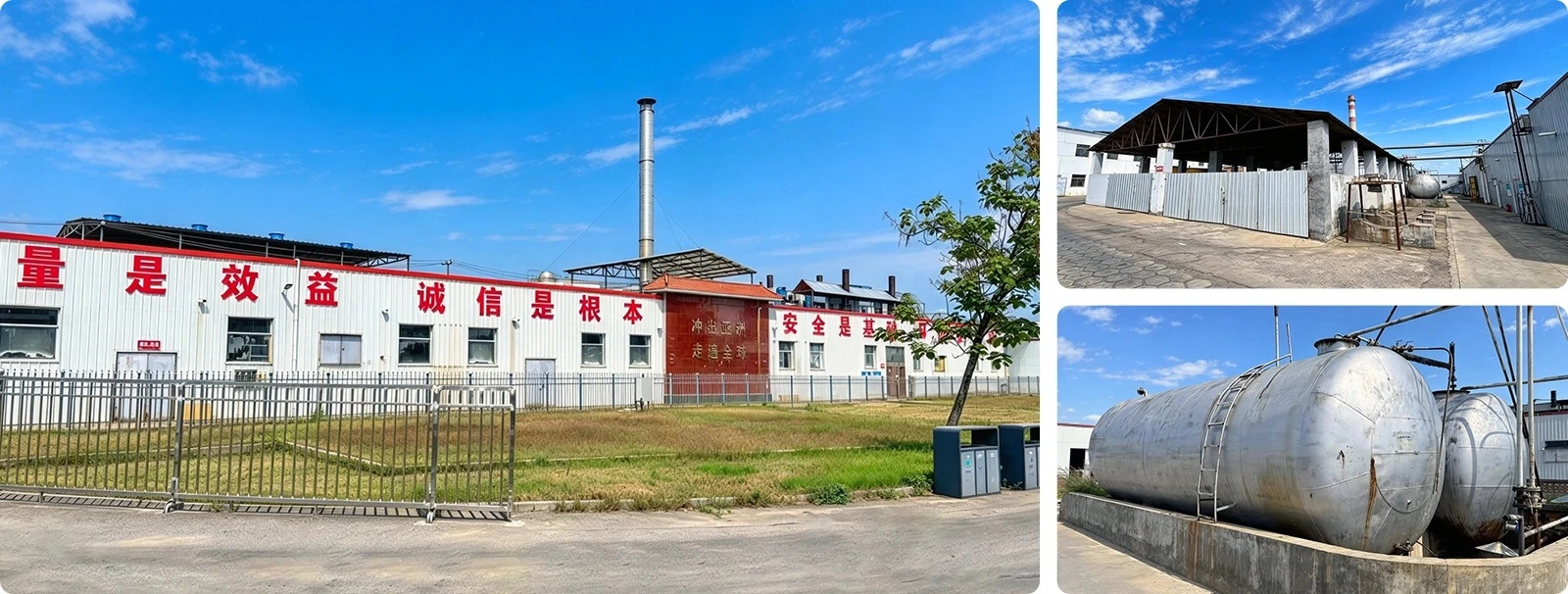
Shanxi Zhaoyi Chemical Co., Ltd. has made food additives for many years. Our production site dates back to 1988. It covers 27,000 ㎡ and holds ISO certification. Every year, 150,000 tons of acetate leave our plant. That number stays the same. Nātrija acetāta pārtikas konservants is one of our main items. It comes as a trihydrate crystal. The CAS number is 6131-90-4, and the molecular weight is 136.08 g/mol.
Purity comes in at 99.5%. The compound acts as an acidity regulator and gives preservatives a boost. pH stays steady too, even when storage conditions change. More than 40 countries buy our goods. KOSHER and HALAL certificates stand behind them. Commercial baking relies on it. Sauce makers use it, and meat processors do too.
Galvenās iezīmes un ieguvumi
Our this product differs from the additives most plants rely on. It suits clean label formulas. Two jobs get done at once, and the compound holds up well. Food makers save on cost and end up with better quality:
- Fits Clean Label Recipes: This product can fully replace artificial preservatives in clean label food formulas. Deli products and vacuum-packed meat get strong antibacterial cover. Makers can then serve the clean food market. They also avoid the synthetic ingredients they don't want.
- One Ingredient Does Two Jobs, So Costs Go Down: It keeps pH from moving and stops microbes by itself. Most recipes call for several chemical additives. Those add expense. Use this one instead, and a client can cut total ingredient spending by 18–25%. The final product still holds up and stays the same.
- Stands Up to Heat During Thermal Processing: Common acetate products fall apart here. Our crystal structure is built to take processing heat up to 120°C. When used in baked goods, it blocks rope spoilage from Bacillus spores. Yeast fermentation keeps working like it always does.
- Works With Neutral & Mild Flavors: Its taste runs a bit salty and has a vinegar-like edge. That means it fits many savory recipes with no problem. Sauces and finished dishes keep the flavor they started with. You will not get the metallic note potassium sorbate can leave. A sharp sour bite from citric acid is not there either.
Tehniskās specifikācijas
Visi mūsu pārtikas kvalitātes nātrija acetāta tehniskie rādītāji tiek stingri pārbaudīti saskaņā ar nozares standarta metodēm, ar stabiliem un uzticamiem parametriem, kas piemēroti rūpnieciskai masveida ražošanai. Detalizētas specifikācijas ir norādītas tabulā zemāk:
Parametrs | specifikācija | Testa metode |
|---|---|---|
Izskats | Bezkrāsaini caurspīdīgi kristāli / balts kristālisks pulveris | Vizuālā pārbaude |
Tīrība (kā CH₃COONa·3H₂O) | ≥ 99.0% | Titrēšana |
pH vērtība (5% šķīdums) | 7.5-9.2 | pH metrs |
Ūdenī nešķīstoša viela | ≤0.05% | Filtrācija |
Smagie metāli (kā Pb) | ≤ 5 ppm | ICP-MS |
Arsēns (As) | ≤ 1 ppm | AFS |
Zaudējumi žāvējot | 36.0-40.0% | Gravimetriska |
Uzglabāšanas laiks | 24 mēnešiem | Stabilitātes pārbaude |
Kā tas darbojas
This high-efficiency food preservative and pH regulator keeps food quality steady and stretches shelf life. Three core working mechanisms do the job. They hold up in many food processing and storage environments:
Targeted Microbial Inhibition: The buffer keeps pH in the 5.8 to 6.2 range. Water activity in the food system drops as well. Germs like Listeria monocytogenes and Clostridium botulinum can't grow under those conditions. That is what makes the preservation safe. You don't need a heavy salt load.
Synergistic Preservation with Hurdle Technology: Pair it with lactate substances. The count of harmful germs falls by three orders of magnitude. Cell membranes of microbes get damaged by acetate ions. Bacteria then stop multiplying. Refrigerated items stay good for more than 90 days.
Temperature-Adaptive pH Buffering: The upgraded trihydrate formula holds pH steady. Temperatures can swing between 4 and 40°C and it still holds. Convenience meals often travel long distances and sit at different temperatures. Emulsion stratification and flavor loss never get a chance to start.
Aplikācijas
Ar tīrām etiķetēm, izturību pret augstu temperatūru un garšas neitralitāti mūsu produkts tiek plaši izmantots vairākās pārtikas pārstrādes jomās, nodrošinot stabilu kvalitāti un uzlabojot gala produktu glabāšanas laiku:
Pārstrādāti gaļas un mājputnu produkti : pagarina iepriekš termiski apstrādātas šķiņķa, desu un citu gaļas produktu uzglabāšanas laiku par 40–60 dienām. Tas efektīvi kavē oksidatīvo "pārkarsēto garšu" vakuuma iepakojumā, vienlaikus palīdzot ražotājiem sasniegt nātrija samazināšanas mērķus.
Komerciālie maizes izstrādājumi: Rope spoilage hits moist bread and tortillas a lot. This product stops it. The product itself does not ferment. The dough still ferments, and the rise is not affected. Mold does not grow on the baked goods, and shelf life holds steady at 21 days.
Mērces un garšvielas: Mayonnaise works with it. Salad dressing and tomato sauce do too. The emulsion does not break. Color keeps its brightness as well. At normal temperature, quality holds for 18 months. You never need a fridge.
Uzkodu pārklājumi un garšvielas: In potato chips and in seasonings for extruded snacks, it can serve as a functional ingredient. A mild tang comes through in the taste. Aspergillus growth gets held back as well. What comes out is snacks with steady, qualified quality.
Nātrija acetāta pārtikas konservants salīdzinājumā ar citiem konservantiem
Salīdzinot ar tradicionālajiem pārtikas konservantiem, mūsu nātrija acetāta pārtikas konservantam ir acīmredzamas priekšrocības temperatūras izturībā, saderībā, tīras etiķetes kvalitātē un izmaksu ziņā, padarot to piemērotāku mūsdienu augstas kvalitātes pārtikas ražošanai:
iezīme | Nātrija acetāts | Kālija sorbāts | Nātrija benzoāts | Kalcija propionāts |
|---|---|---|---|---|
pH diapazona efektivitāte | 5.5-9.0 | 4.0-6.5 | 2.5-4.0 | 5.0-6.0 |
Karstuma stabilitāte (°C) | Līdz 120 | Sadalās >80 | Stabils līdz 100 | Stabils līdz 110 |
Rauga saderība | Neinhibējošs | Inhibē >0.1% | neitrāla | Traucē >0.3% |
Tīras etiķetes statuss | Jā | Sintētiskā uztvere | Bažas par alergēniem | Jā |
Izmaksas par kg (USD) | $ 1.20-1.80 | $ 3.50-4.20 | $ 2.10-2.60 | $ 1.40-2.00 |
Ūdens aktivitātes kontrole | Spēcīgs | mērens | Vājš | mērens |
Sertifikāti un atbilstība
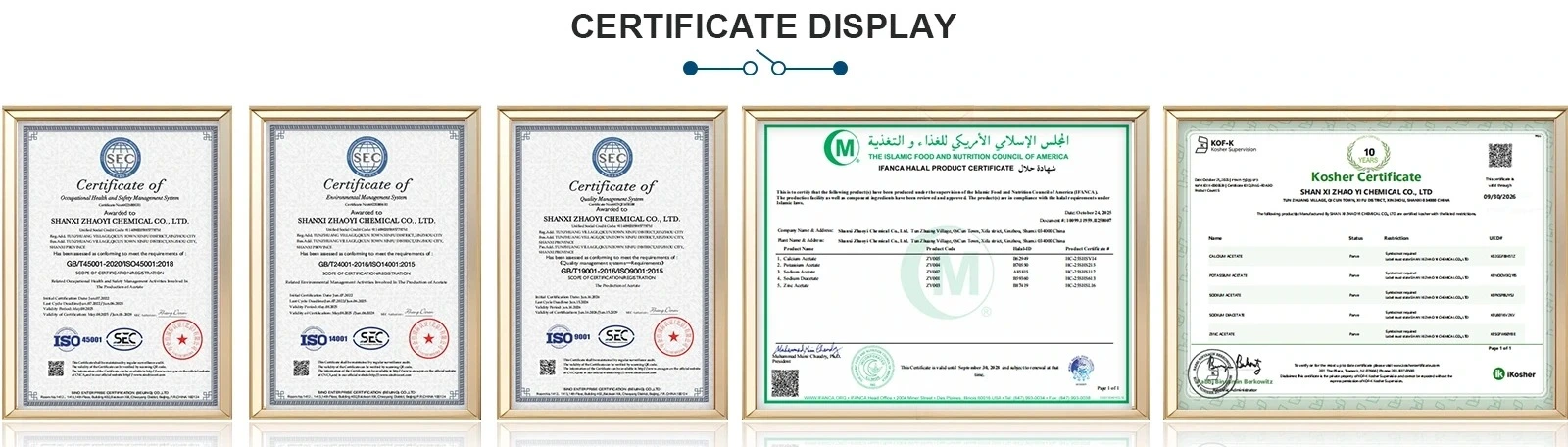
Certificates for the whole system: Our plant holds real KOSHER and HALAL religious certificates, and these cover what international markets ask for. We also have recognized certificates, such as ISO 9001:2015 for quality management and ISO 22000 for food safety management.
Following rules worldwide: The product meets a number of international food safety rules. China's GB 1886.28-2016 national standard is one of them. So is the EU EC 1333/2008 food additive regulation (E262). Under US rules, it holds FDA 21 CFR 184.1721 (GRAS status).
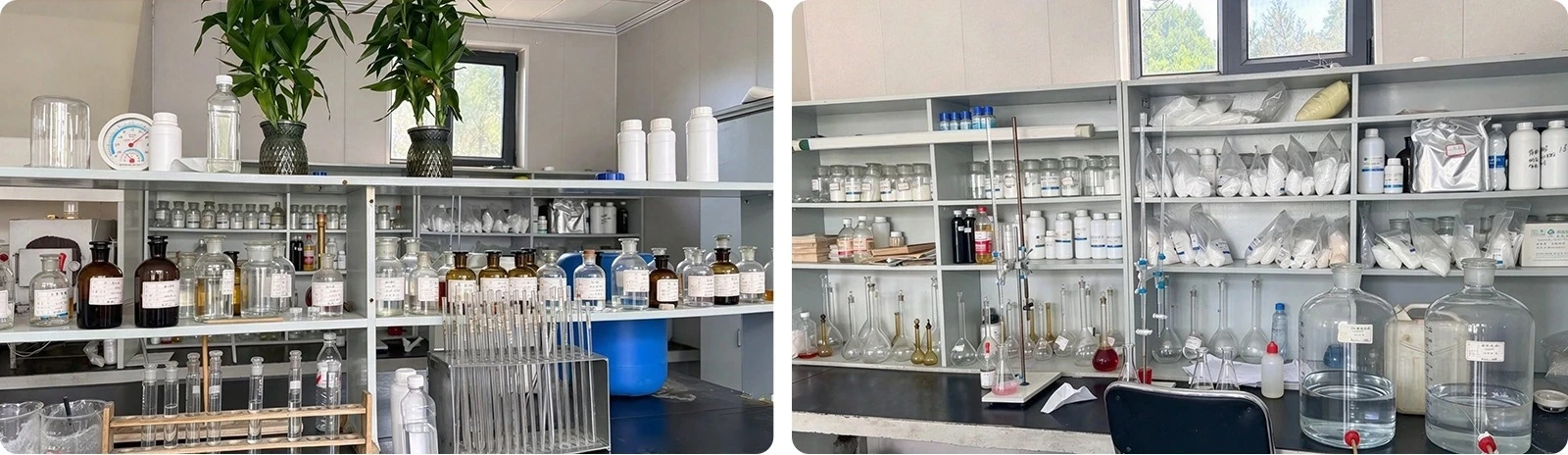
Testing on every batch: Each batch we make goes through expert third-party testing. That way we can be sure it fully matches international food production standards. The checks cover purity, heavy metal content and microbial safety.
Iesaiņošanas iespējas
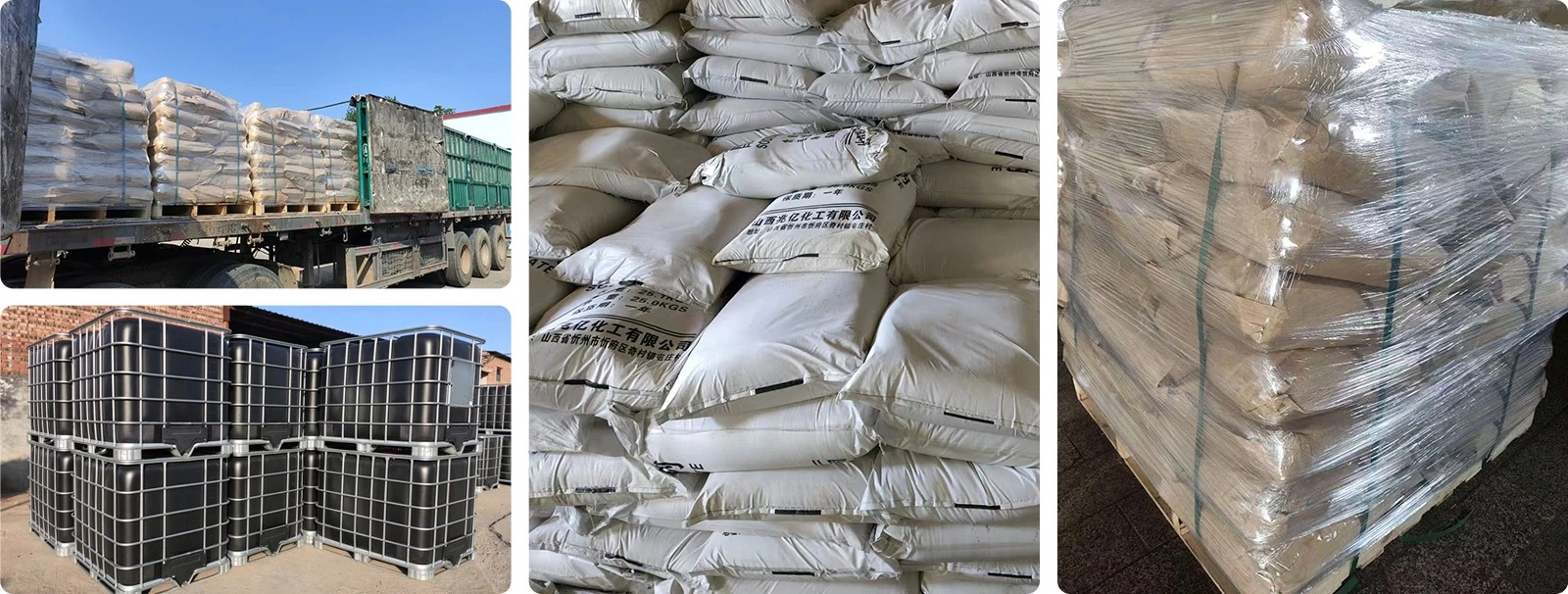
Mēs piedāvājam daudzveidīgus, diferencētus iepakojuma risinājumus dažādiem ražošanas apjomiem, un visi iepakojuma materiāli atbilst pārtikas saskares drošības standartiem, lai nodrošinātu produktu uzglabāšanas stabilitāti un transportēšanas drošību:
Standarta rūpnieciskais iepakojums: The product goes into 25kg food-grade kraft paper bags. Inside each bag, a PE liner is heat-sealed. Leave those bags sealed for 12 months and moisture uptake stays below 0.5%. Damp gets held back by that moisture-proof barrier. This pack works well for standard industrial runs.
Lielapjoma konteineru risinājumi: 500kg jumbo bags, and their inner liners hold FDA certification. These are made for food processing factories that run at high volume. Packaging waste goes down by 70%, and secondary pollution during material handling is avoided.
Pielāgots privātās etiķetes iepakojums: We do personalized packaging too. Small retail packs start at 1kg. Bigger formats reach 1000kg IBC ton containers. Your logo and specs can be added to them. Packs made this way fit automated production and filling lines.
Ražošanas procesa
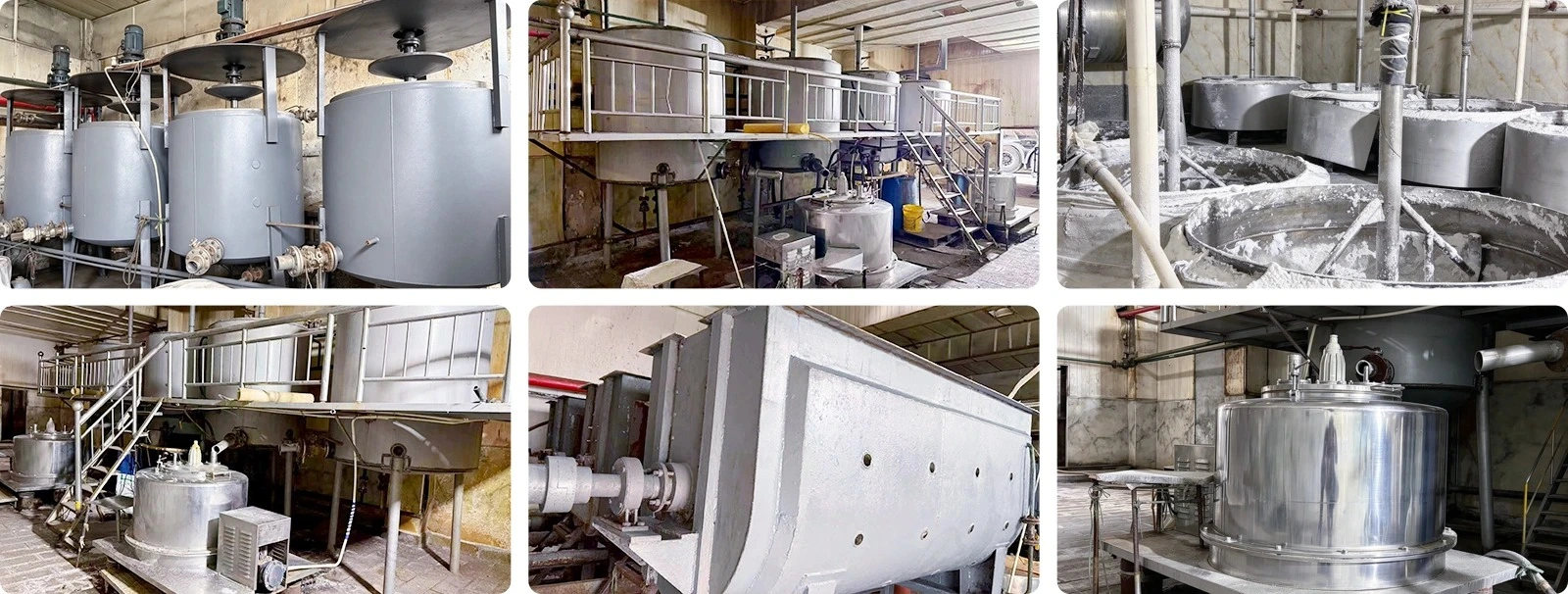
Closed-loop production technology runs at our plant. That process keeps getting better as we go. Checks start with raw material screening and carry on until the finished product ships. Every batch leaves pure. Its performance stays steady too:
Stingra izejvielu pārbaude: For raw materials, we start with glacial acetic acid at 99.8% purity. The sodium hydroxide we buy is pharmaceutical-grade. Spectral testing and verification happen on every batch that comes in, before production starts.
Precīza nemainīgas temperatūras kristalizācija: Inside a tank, the reaction holds a steady 60-65°C. That is what keeps crystal particles even and stable. Three-stage centrifugation takes out leftover impurities. Purity stays above 99.5%.
Full Batch Quality Inspection: Every finished batch goes through 17 professional inspection elements. Microbial safety testing is one of them. Others include dissolving rate and particle size distribution. Each shipment ships with a traceable CoA certificate.
Kāpēc izvēlēties mums
36 Years of Professional Manufacturing Experience: Our company started in 1988. Since then, acetate products have been our focus, in R&D and production both. More than 2,400 food producers around the world rely on our production technology. It is dependable and advanced.
Vertical Integration & Stable Supply: Yearly output capacity hits 150,000 tons. Our own upstream raw materials mean supply swings do not slow us down. Thanks to that, we hold a 98% on-time delivery record.
Expert Custom Technical Support: Our food R&D team has deep knowledge in this area. Send us your product details, and in under 48 hours we will put together a fresh-keeping plan for it. Formula consulting is included too, all under one roof, from setting pH value to telling you the right dose.
Flexible Order MOQ Policy: Clients can run R&D tests without carrying more stock than they need. We do that by working with Nātrija acetāta pārtikas konservants and flexible order modes. These start at 500 kg for a small trial batch and go up to large-volume container shipments.
FAQ
Q: We have sorted out 6 high-frequency professional questions for global B-end food processing customers, with concise and industry-targeted answers for your reference:
Q: For meat product production, what dosage of this product do you recommend?
A: A1: Most people add 0.1-0.5% of the total food weight. That number changes based on the pH you want and the shelf life you need. In ready-to-eat meat, if you add 1.5-2.5% lactate too, it does a much better job against Listeria.
Q: What does sodium acetate do to the texture of baked goods?
A: A2: No clear downside has turned up. The water balance in the dough stays steady, thanks to the anhydrous equivalent content in our product. Outside labs ran their own tests. Add 0.4% or less, measured against flour weight, and the crumb structure holds. The taste holds too.
Q: Can it take vinegar's place from start to finish when you pickle?
A: A3: When you need to control pH and keep things from spoiling, it can handle part of what vinegar does. Liquid dosage drops by 60% that way. What it can't do is mimic the volatile aroma that acetic acid releases. So if flavor matters most in your pickled goods, don't replace all the vinegar.
Q: What's the upper limit for use in markets around the world?
A: A4: Most food categories in the EU sit under quantum satis rules. The FDA lists it as GRAS, and GMP sets the usage amount. China's GB 2760 puts the dose at 1.0-3.0g/kg. Check the rules where you are before you use it.
Q: How should the product be stored once the package is open?
A: A5: Seal the pack tight after you open it. Use heat sealing, or put it in an airtight container right away. Keep it in a dry place. The temperature must stay below 25°C, and the relative humidity below 65%. Use it up within 60 days. That stops crystal caking and keeps performance from dropping.
Q: Can you provide customized formula guidance and batch test reports?
A: A6: Yes. We provide exclusive formula optimization guidance according to customer product types, and each batch is equipped with official CoA test reports to support factory audits and customs clearance.
Pieprasīt Quote
Ja jums nepieciešama augsta stabilitāte un tīra etiķete Nātrija acetāta pārtikas konservants Jūsu rūpnieciskās pārtikas ražošanas jautājumos sazinieties ar mūsu profesionālo eksporta komandu, rakstot uz e-pastu sxzy@sxzhaoyi.com.

LIETOTĀJS NOVĒRTĒT
Šeit ir klienta vērtējums par mums